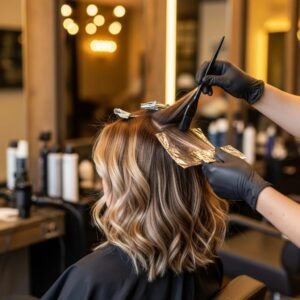
Growing a pixie into a bob often involves selective shape maintenance: retaining the crown and front length you need while discussing whether the nape or areas around the ears would benefit from a small cleanup. The aim is a wearable shape as the proportions change. What needs trimming depends on your starting cut, texture and preferred bob, rather than a fixed calendar.
Key takeaways
Choose a target bob and a comfortable intermediate shape with your stylist.
Identify which sections need to gain length before deciding what to trim.
Nape cleanup may help balance the outline without shortening every section.
Trims change shape; they do not make hair grow faster.
Review the dry shape and your styling effort as you go, without promising a completion date.
Choose the next wearable shape
A pixie usually starts with different lengths at the crown, fringe, sides and nape. Those starting proportions affect the route toward a bob. The front may need more length to frame your face, while the back may already extend beyond the outline you want. Waiting for every section to look the same is not the only way to manage the transition.
Bring reference photos of the bob you eventually want and shorter shapes you would be happy to wear along the way. An extended pixie or a pixie-bob hybrid, often called a bixie, may be a useful intermediate option. It is an option to discuss, rather than a required stage for everyone.
Explain what you like about the reference: the neckline, the fringe, the length near the jaw or the amount of volume. The model’s density, texture and styling may differ from yours. Ask which details are practical now, which need more length, and how the shape might look with your everyday routine.
Decide which length to protect
Before a trim, make the goal explicit: “I am growing toward a bob and want to retain the length that helps me get there.” Ask the stylist to separate areas that need to grow from areas where reshaping would improve the current outline. A request to “tidy everything” can be too vague if preserving particular sections matters to you.
Crown and front
The crown and front often need length to connect with a bob shape. Ask how much can be retained and whether any proposed trimming there is necessary for condition or the chosen design. This is more useful than an absolute instruction never to touch the top. If an end needs attention, discuss the amount and tradeoff before it is cut.
Fringe choices matter too. Growing a fringe toward a longer side section is a different goal from keeping shorter bangs with a bob. Tell your stylist whether the front should eventually tuck behind your ears, frame your jaw or remain a distinct fringe. These decisions help identify which length is most valuable.
Sides and around the ears
Side sections can feel bulky before they are long enough to tuck comfortably. Sometimes a change in styling is enough; sometimes a little reshaping helps. Ask whether removing bulk would support your eventual outline or make the sides feel too short again. Fine hair and denser hair may need different approaches to weight removal.
You do not need to trim both sides to an identical short length simply because one area looks awkward. Review the whole shape and your preferred part before deciding. Some asymmetry may be comfortable during the transition, while another person may prefer a more balanced outline.
Discuss nape cleanup separately
The nape can appear long compared with shorter upper sections because of the starting haircut and the changing proportions. That appearance does not establish that hair at the nape biologically grows faster. If the back is extending farther than you want, ask whether a small neckline adjustment could make the outline more comfortable while the crown and front gain length.
Modern Salon’s discussion of growing out a pixie describes selective maintenance that keeps length in the upper and front areas while addressing the nape. Its useful principle is that every section does not need cutting at every visit. Apply that idea through an individual consultation rather than adopting a universal appointment schedule.
Nape cleanup is still a haircut decision with tradeoffs. Taking too much off can change the shape you are working toward; leaving it alone may be fine if you like the current outline. Ask the stylist to show which edge would be adjusted and how it relates to the side lengths. Leave neckline cutting to the professional rather than attempting to match it at home.
Understand maintenance versus returning to a pixie
Selective maintenance preserves the sections needed for your longer goal while adjusting areas that no longer fit the current shape. Returning to a shorter pixie usually means choosing shorter proportions again. A pixie itself does not have to be uniform in length, and a small trim does not automatically erase all progress.
At each visit, discuss the purpose of each change. Is the nape being brought closer to the developing outline? Are the sides being shaped for comfort? Is a small amount being removed from an end for condition? Knowing the reason helps you weigh an immediate improvement against retaining length.
There is no need to cut every section simply because an appointment is booked. Equally, preserving length does not mean ignoring an area that needs attention. Agree on the amount to remove and the priorities for the next stage before cutting begins.
Let the shape guide appointment timing
Discuss timing with your stylist according to how the cut behaves between visits. The neckline may bother you before the front needs attention, or your intermediate shape may remain comfortable for longer. A routine that suits another person’s pixie may not suit your starting length, texture or goal.
Useful reasons to reassess include an outline you no longer enjoy, difficulty arranging the sides, or styling effort that has become inconvenient. These are prompts for a conversation, rather than proof that you need a full haircut. Ask the salon what appointment to book and what it includes; do not assume a special grow-out service or reduced cleanup price is available.
Trimming does not accelerate growth at the scalp. It removes length from the ends and can improve the outline or address ends that need attention. The time needed to reach your preferred bob varies, so avoid a promised month-by-month transformation or a guaranteed finish date.
Try flexible, gentle styling between visits
A small part change, a loose tuck behind one ear or a comfortable headband may make an intermediate shape easier to wear. Pins or small clips can hold sections once there is enough length, provided they do not pull at the scalp. You do not have to hide every uneven section or reproduce the same finish each day.
Work with your natural texture when that suits your routine. Air-dried waves, curls or a softly arranged straight style can offer different ways to wear the changing length. Ask your stylist to demonstrate an option using the tools and products you already feel comfortable with.
If you choose heat styling, discuss heat protection and an appropriate setting for your hair and tool. Avoid repeated high heat or forceful pulling to make a short section behave like a longer one. A professional finish changes the temporary appearance of the strands; it does not add growth or guarantee several more weeks before a trim.
Review progress in ordinary dry-hair photos
Occasional photos from the front, sides and back can help you compare the shape over time. Use similar lighting and your usual dry styling where possible. You do not need a strict photo schedule. The aim is to notice how the outline changes and explain what is working or becoming difficult.
Look at the relationship between the crown, front, sides and neckline. Is the front closer to the length you want? Are the sides beginning to connect with the back? Does the shape suit your routine? Your answers are more useful than checking whether your hair matches a calendar prediction.
For waves and curls, explain how the visible length changes after drying and how you normally wear your texture. A polished salon finish and an ordinary wash day may look different. Review both when deciding whether the next appointment should focus on shape, condition or simply continuing to retain length.
Plan your next haircut at Kylie Studio Salon
Kylie Studio Salon’s Women’s Haircut and Blow-Dry service includes a consultation and a cut tailored to hair texture, face shape and lifestyle. Bring your target photos, your current concerns and a clear explanation that you are growing toward a bob.
Identify the crown and front length you want to preserve.
Discuss the nape separately from the rest of the haircut.
Ask whether the sides need reshaping or a different styling approach.
Agree on any length removal before the cut begins.
Confirm the appointment type, timing and price directly with the salon.
Frequently asked questions
Should I stop getting haircuts until I have a bob?
Not necessarily. Selective maintenance may help you enjoy the changing shape, but the amount and timing should follow your individual needs. You may not need every section trimmed at every visit.
Should the crown and front stay completely untouched?
Retaining those sections is often useful, but it is not an absolute rule. Discuss the target shape and any condition concerns before deciding whether a small adjustment is worthwhile.
Does a long-looking nape mean it grows faster?
No. The starting lengths and changing proportions can make the back look longer relative to the top and sides. Judge whether you like the outline rather than assuming a different biological growth rate.
How will I know I have reached my bob goal?
Compare the dry shape with the length and outline you agreed on. You may reach a wearable shorter bob before every layer matches, or choose to keep some layering. The goal is a shape you enjoy wearing and maintaining.