Professional Hair Relaxer & Smoothing Services in Bethesda — Safe, Effective Solutions for Straight, Manageable Hair
Salon-performed hair relaxers and smoothing treatments change either the hair’s internal structure or the surface of each strand to give you straighter, easier-to-style hair with less frizz and more shine. Some services permanently alter protein bonds; others build a smoothing layer that delivers immediate slip and polish. This guide walks through how traditional chemical relaxers differ from modern smoothing systems like keratin treatments and Brazilian Blowouts, outlines safety considerations and 2024 updates, and explains practical aftercare and booking steps. You’ll learn how each method works, which hair types respond best, and how to keep results looking great while reducing risk. After a brief overview, we explain how Kylie Studio Salon approaches keratin smoothing in Bethesda, compare key attributes, and finish with booking tips and client notes to help you choose with confidence.
What Are Professional Hair Relaxer Treatments and Their Alternatives?
Professional relaxer treatments are salon procedures designed to permanently change curl pattern by altering the hair’s internal bonds. Modern alternatives aim to smooth and tame hair without removing the curl entirely. The difference comes down to mechanism and outcome: chemical relaxers break and re-form disulfide bonds for permanent straightening, while keratin and Brazilian-style systems coat the hair or temporarily modify bonds to reduce frizz and improve manageability. Knowing these differences helps you pick a service that matches your priorities for permanence, safety, and daily styling time. Below we summarize the main options and explain why many people searching for “hair relaxer” now consider semi-permanent treatments that offer similar straightening benefits with less long-term risk.
How Do Traditional Hair Relaxers Work to Straighten Hair?
Traditional chemical relaxers straighten hair by breaking and re-forming disulfide bonds inside each strand, changing the hair’s internal protein structure so it remains straight until new growth appears. The process uses strong alkaline agents that open the cuticle so active ingredients can reach the cortex, where bonds are reduced and then re-bonded in a straighter pattern. The payoff is long-lasting straight hair, but the chemistry can make hair more fragile if not applied and neutralized correctly. Because of these trade-offs, many clients now weigh smoothing alternatives that reduce frizz and preserve more of the hair’s natural strength.
What Are Safer Alternatives Like Keratin Treatments and Brazilian Blowouts?
Keratin treatments and Brazilian Blowouts rely on protein-rich or polymer formulas that bind to the hair’s surface and temporarily fill porosity. The result: smoother strands, added shine, and faster styling without permanently changing curl pattern. Keratin services typically deposit keratin and are heat-sealed to create a smoothing layer that lasts weeks to months, depending on care. Brazilian-style systems use customizable formulas to control the level of smoothing with immediate frizz reduction. Both approaches can cut down on daily heat styling and often complement color-treated hair — though we recommend checking for formaldehyde-free options and reviewing ingredient lists with your stylist. These semi-permanent choices balance strong visual results with lower long-term structural risk compared with chemical relaxers.
How Does Kylie Studio Salon Provide Expert Keratin Treatment in Bethesda?
At Kylie Studio Salon, our keratin smoothing services start with a one-on-one consultation, careful application, and clear aftercare plans so you get smoother, more manageable hair with minimal risk. We assess hair type and history, choose a keratin system that matches your porosity and goals, and use controlled heat-sealing to boost longevity while protecting strand integrity. Owner and stylist Ruth leads consultations to personalize each service and set realistic expectations for outcomes and maintenance. Below is a compact summary that outlines processing times, expected results, suitable hair types, and typical maintenance recommendations for our salon keratin treatment.
This snapshot clarifies what to expect from a professional keratin service and frames the treatment as a styling investment that works best with salon guidance and consistent at-home care.
What Is the Keratin Treatment Process and Its Benefits?
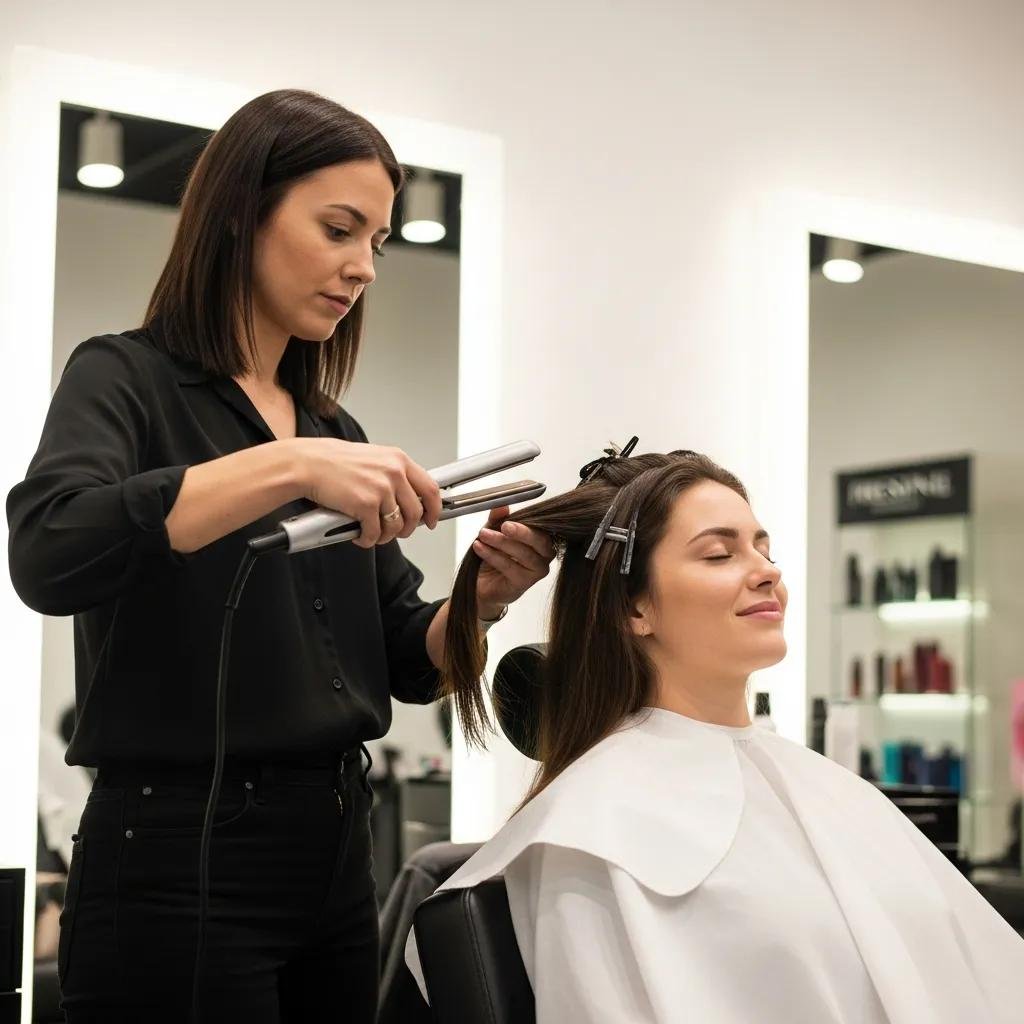
A professional keratin treatment begins with a consultation to review hair history, strand condition, and your desired result. We follow with a clarifying wash to remove product buildup and prime the cuticle for product uptake. After sectioning, the keratin formula is applied evenly from roots to ends, processed according to the product instructions, and then rinsed or partially rinsed before heat-sealing with a flat iron to bond the proteins to the hair surface. Benefits include noticeably less frizz, more shine, and shorter daily styling time because the hair behaves more smoothly. Throughout the service, your stylist adjusts timing and heat to match porosity and minimize stress on the hair.
- Consultation and hair assessment: We evaluate history and strand health to guide product choice and timing.
- Preparation and application: Clarifying wash and even product distribution ensure uniform results.
- Sealing and finishing: Controlled heat bonds the keratin and locks in the smoothing layer.
Following these steps helps produce predictable results and makes it easier to plan maintenance that preserves benefits between salon visits.
Who Is an Ideal Candidate for Keratin Treatment?
Keratin treatments suit clients with frizz-prone, porous, or naturally wavy to curly hair who want smoother texture and shorter styling time without permanently removing their curl pattern. Color-treated hair and hair with moderate chemical history often respond well, as long as the hair still has enough strength and elasticity for heat-sealing. We avoid smoothing services on hair with active breakage or scalp conditions and recommend restorative trims or conditioning protocols first. A thorough consultation helps us decide whether keratin, a Brazilian-style system, or another approach is the best fit for your hair and goals.
What Are the Key Differences Between Hair Relaxers and Modern Smoothing Treatments?
Chemical relaxers and modern smoothing treatments differ in permanence, chemistry, safety profile, and maintenance needs — so your choice depends on long-term styling goals and risk tolerance. Relaxers permanently change the hair by breaking disulfide bonds and require precise timing and neutralization. Keratin and Brazilian systems focus on surface modification or temporary bond-smoothing, with results that fade over time. The table below lays out a clear comparison to help you weigh longevity, safety, and predictability when choosing a service.
This comparison shows how modern smoothing services offer flexibility and less permanent structural impact — a key factor for clients who want straight-looking hair while protecting hair health.
How Do Keratin Treatments Compare to Chemical Relaxers in Safety and Results?
Keratin treatments have a different safety profile than chemical relaxers because they don’t rely on strong alkali chemistry to permanently break disulfide bonds. Instead, they use proteins and polymers to smooth and seal the hair surface. Growing consumer interest and legal scrutiny in 2024 have pushed brands and salons toward formaldehyde-free or low-emission systems, improving workplace and client safety; we encourage you to ask about ingredient lists and ventilation during your appointment. In short: keratin offers noticeable frizz control and semi-permanent results, while relaxers deliver permanent straightening but carry higher long-term fragility risk if overused. For many clients, smoothing treatments strike the best balance between look and hair health.
- Lower chemical aggressiveness: Keratin avoids the alkali chemistry used in permanent relaxers.
- Semi-permanent results: Keratin lasts months; relaxers last until regrowth.
- Safety considerations: Ingredient transparency and good ventilation reduce exposure risk.
These distinctions explain why many clients now favor smoothing services when they want both style and healthier-looking hair.
What Are the Advantages of Brazilian Blowout Over Traditional Relaxers?
Brazilian Blowout-style systems give you customizable smoothing with shorter processing times, instant shine, and easier styling while keeping natural movement rather than forcing a locked-in straight texture. You can choose subtle frizz control or a near-straight finish without committing to permanent chemical restructuring. Compared with relaxers, Brazilian-style treatments usually mean fewer aggressive touch-ups and can be gentler on color-treated hair when the right formula is chosen. If you value quick recovery, less daily styling time, and tailored results, a Brazilian-style treatment can be an excellent middle ground.
- Customizable smoothing: Tailor results to your preference.
- Quicker processing: Shorter chair time with immediate polish.
- Preserves natural movement: Avoids rigid, permanently straight texture.
Use this lens to match a treatment to your lifestyle and how much maintenance you want.
How Can You Control Frizz and Maintain Smooth Hair After Treatment?
Keeping frizz under control and extending smoothing results comes down to consistent aftercare, the right salon maintenance schedule, and simple lifestyle adjustments that limit moisture-related swelling in the hair shaft. Effective aftercare combines humidity-smart routines, sulfate-free cleansing, and periodic professional refreshes to protect the smoothing layer. The table below compares in-salon maintenance, at-home products, and lifestyle factors so you can plan a routine that preserves results between visits.
Combining salon maintenance with mindful at-home care gives you the longest-lasting, healthiest-looking results.
What Are Effective Frizz Control Treatments Available in Bethesda?
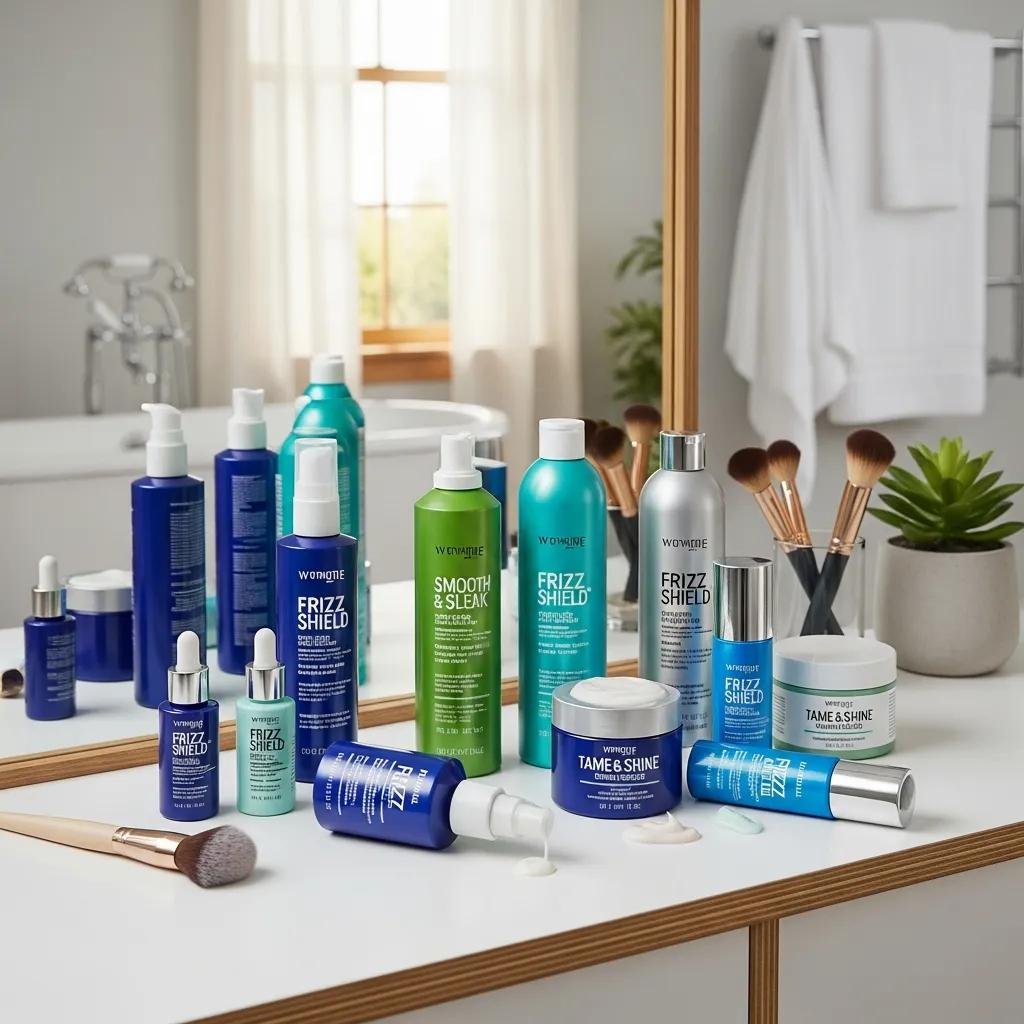
In Bethesda, effective frizz-control options include keratin touch-ups, smoothing glosses that replenish surface polymers, and targeted conditioning treatments that repair porosity and improve elasticity over a series of visits. These in-salon services restore the smoothing layer and address breakage or uneven texture that shorten treatment life. Many clients adopt a rhythm of periodic touch-ups and deep-conditioning sessions to keep hair manageable between full smoothing services. Planning maintenance around these options helps you protect your investment in smoother hair.
- Keratin touch-ups: Targeted refreshes to restore smoothing where you need it.
- Smoothing glosses: Add shine and temporarily seal the cuticle.
- Deep-conditioning sequences: Improve elasticity and reduce breakage over time.
Regularly scheduled maintenance preserves results and keeps hair healthier between major services.
What Aftercare Practices Enhance Treatment Longevity and Hair Health?
To prolong results and protect hair health, use sulfate-free shampoos, cut back on very high heat, shield hair from prolonged humidity, and choose lightweight, silicone-free serums that add slip without weight. A steady routine that balances protein and moisture preserves the keratin coating while preventing dryness and breakage. We also recommend professional glosses or conditioning treatments every 8–12 weeks to support cumulative improvement. Avoiding heavy chlorine exposure or wearing a protective barrier while swimming will help your smoothing effects last longer. These habits translate to longer intervals between salon visits and stronger-looking hair overall.
- Sulfate-free cleansing: Prevents stripping of smoothing agents.
- Reduced heat exposure: Limits extra thermal stress on sealed hair.
- Routine professional maintenance: Keeps surface polymers replenished.
These practical steps connect daily care with salon-level maintenance, which is especially important given recent safety and legal developments.
What Are the Health Concerns and Legal Updates Related to Hair Relaxers in 2024?
In 2024, research and legal activity continue to shape consumer awareness and product formulation for hair-straightening systems, pushing the industry toward clearer labeling and lower-emission alternatives. Studies and litigation have increased demand for formaldehyde-free systems and better ingredient transparency, prompting many manufacturers to reformulate and provide clearer guidance for salons. When choosing a service, consider reported risks, ask your stylist about ingredients and ventilation, and favor salons that are open about their products. Understanding this evolving landscape helps you balance desired results with health considerations.
What Are the Known Risks Associated with Chemical Hair Relaxers?
Risks associated with chemical relaxers can include scalp irritation, increased fragility and breakage, and potential long-term concerns noted in epidemiological research. These risks vary by formulation, frequency of use, and individual sensitivity. Recent regulatory attention and lawsuits have spotlighted certain ingredients and long-term exposure, leading to calls for improved labeling and alternative formulas. To reduce risk, salon professionals recommend patch tests, selecting lower-emission products, and spacing aggressive chemical services so hair has time to recover. If you have medical concerns, consult a healthcare provider before undergoing permanent chemical restructuring.
- Scalp and strand damage: Incorrect application can cause burns or weakening.
- Long-term exposure concerns: Emerging research calls for caution and transparency.
- Risk mitigation: Patch testing and spacing services help reduce harm.
These categories shape how clients choose services and how salons respond with safer options.
How Do Lawsuits Impact Consumer Choices for Hair Straightening?
Lawsuits and regulatory scrutiny influence consumer decisions by increasing demand for ingredient transparency, encouraging adoption of formaldehyde-free systems, and pushing salons to document safety protocols. As public awareness grows, many clients prefer semi-permanent options that reduce aggressive chemistry or choose salons that disclose product sourcing and ventilation practices. This legal pressure has prompted brands to reformulate and pursue third-party testing, enabling salons to recommend options that align with current standards and client expectations. That transparency is now part of how we help clients decide on a service.
How to Book Professional Hair Smoothing Services at Kylie Studio Salon in Bethesda?
Booking a keratin or Brazilian-style smoothing service at Kylie Studio Salon starts with a focused consultation to clarify goals, review hair history, and set realistic expectations for results and upkeep. Our website lists services and scheduling options; when you book, share details about prior chemical treatments and hair condition so we can allocate the right appointment length. We welcome in-person consultations at our Bethesda studio when needed, and our recommendations are tailored to your hair type and lifestyle. The steps below outline an easy booking path to secure a smoothing appointment.
What Is the Online Booking Process for Keratin and Brazilian Blowout Treatments?
Booking online is straightforward: choose the smoothing service you want, pick a stylist or note that you’d like a consultation, select a date and time, and confirm the appointment with any preparation notes. Tell us about recent chemical work and current concerns so we can plan the correct service length and products; this avoids surprises on the day of your appointment and helps ensure the best outcome. Appointment times vary based on hair density and the level of service chosen, so clear communication in the booking notes helps us prepare for a focused, efficient visit.
- Select service and stylist: Choose keratin or Brazilian-style smoothing and your preferred stylist.
- Provide hair history: Note previous color or chemical services in the appointment details.
- Confirm and prepare: Receive pre-service instructions and come in for a consultation before treatment.
Following these steps keeps booking predictable and helps us meet your expectations on treatment day.
What Do Clients Say About Their Hair Transformation Experiences?
Clients commonly report faster morning routines, more shine, and better control over frizz after smoothing services. The best results come from personalized consultations and careful application, paired with recommended maintenance. Transformations often mean less heat styling, longer-lasting looks, and easier upkeep — and clients tell us that clear aftercare advice and scheduled follow-ups make a big difference. If you’re new to smoothing services, viewing before-and-after photos and talking through expectations with your stylist will help you feel prepared.
- Faster styling: Many clients notice significantly reduced blow-dry times.
- Improved manageability: Hair behaves better and resists humidity more than before.
- Sustained results: Maintenance and the right products determine how long benefits last.
These client experiences underscore the value of informed booking and ongoing upkeep.
Frequently Asked Questions
1. How often should I get a keratin treatment for optimal results?
Most clients schedule keratin treatments every 3 to 6 months, depending on hair type, growth rate, and how you care for your hair at home. Regular touch-ups help maintain smoothing benefits and keep hair looking polished; your stylist can recommend a plan tailored to your needs.
2. Can I color my hair after a keratin treatment?
Yes — but waiting at least two weeks after a keratin treatment is usually best so the keratin can fully bond. Timing helps ensure color takes evenly and you preserve the smoothing results. Always check with your stylist for the ideal schedule based on the products used.
3. Are there any specific products I should avoid after a keratin treatment?
Avoid shampoos and conditioners with sulfates, which can strip keratin and shorten treatment life. Also limit high-alcohol or harsh-chemical products that dry the hair. Choose sulfate-free, moisturizing formulas and gentle styling products to keep your smoothing treatment in good shape.
4. How can I manage my hair in humid conditions after treatment?
Use lightweight anti-frizz serums or oils to create a moisture barrier, and consider styles like a loose bun or braid to limit exposure. Consistently using sulfate-free cleansing products will also help maintain the treatment’s effects so your hair resists humidity better.
5. What should I do if I experience irritation after a chemical relaxer?
If you have irritation, rinse your scalp and hair immediately with cool water to remove any remaining product. Apply a soothing conditioner or aloe vera to calm the area. If symptoms persist, seek medical advice. In future services, request a patch test to check sensitivity before full application.
6. How do I choose between a keratin treatment and a Brazilian Blowout?
Choice depends on hair type, desired finish, and maintenance preference. Keratin treatments deliver strong frizz reduction with a natural look; Brazilian-style treatments are highly customizable and often have shorter processing times. Book a consultation and your stylist will help match the right option to your goals.
7. Can I use heat styling tools after a keratin treatment?
Yes — but wait at least 72 hours before heat styling so the keratin can set. When you do style, use lower heat settings and a heat protectant to avoid unnecessary stress and preserve the treatment’s benefits.
Conclusion
Choosing between chemical relaxers and modern smoothing alternatives can transform how you style and care for your hair. Knowing the differences — and the trade-offs around permanence, safety, and maintenance — helps you pick a service that fits your lifestyle. If you’d like personalized guidance, book a consultation at Kylie Studio Salon in Bethesda. We’ll talk through your goals and create a plan to give you smoother, more manageable hair that works for your routine.