Long-Lasting Platinum Blonde: Expert Care and Styling
Platinum blonde is a striking, cool-toned look that demands precise technique, consistent upkeep, and a health-first approach to stay bright and resilient. This guide walks you through how we safely create icy blondes, why staged bleaching and professional toning matter, and how to build a maintenance routine that keeps brassiness and damage to a minimum. You’ll get a step-by-step overview of the transformation, practical at-home and in-salon care, anti-brass strategies, and the repair treatments that rebuild strength after lightening. We also include clear checklists and service overviews so you know when to use purple shampoo at home and when to book professional toning or bond-building sessions. Throughout, we reference salon-best practices and the personalized blonde services offered at Kylie Studio Salon in Bethesda, where Ruth leads with a focus on healthy, long-lasting results.
How We Transform Hair to Platinum Blonde
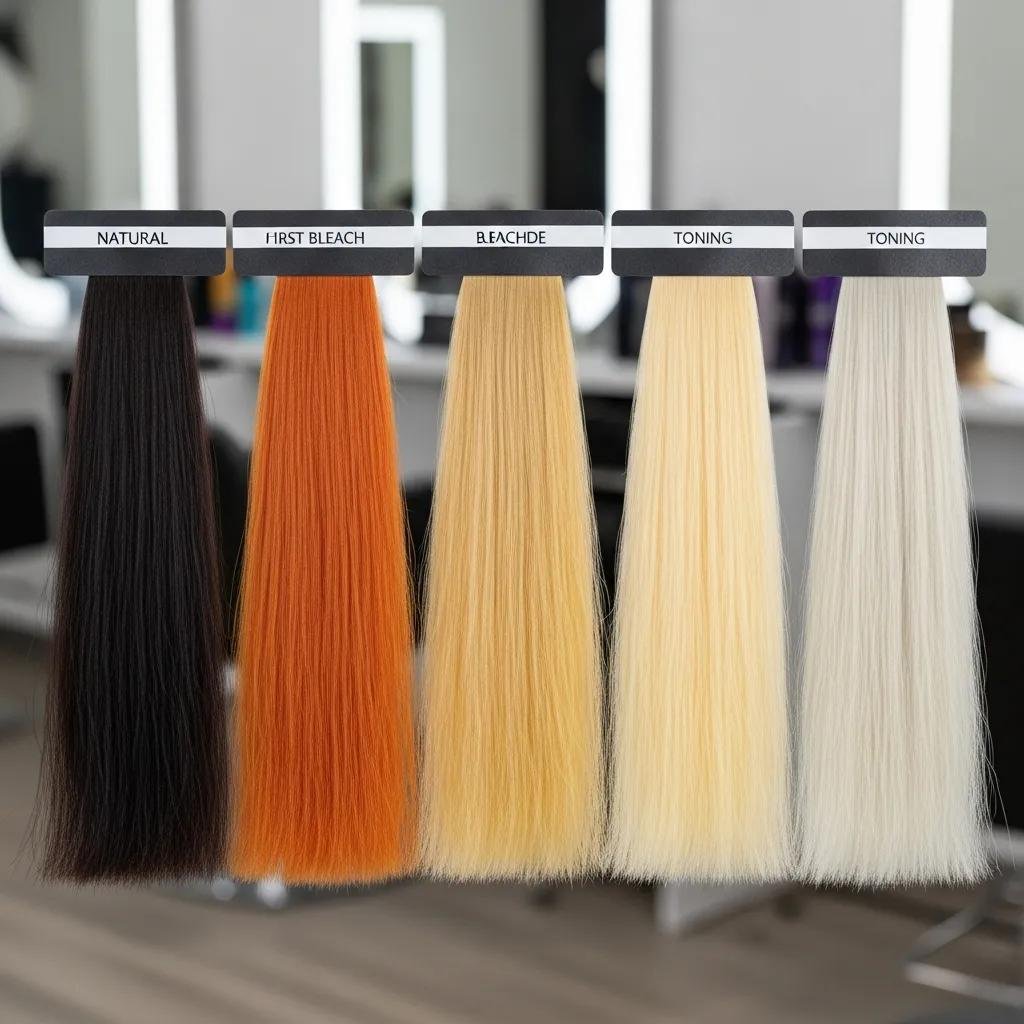
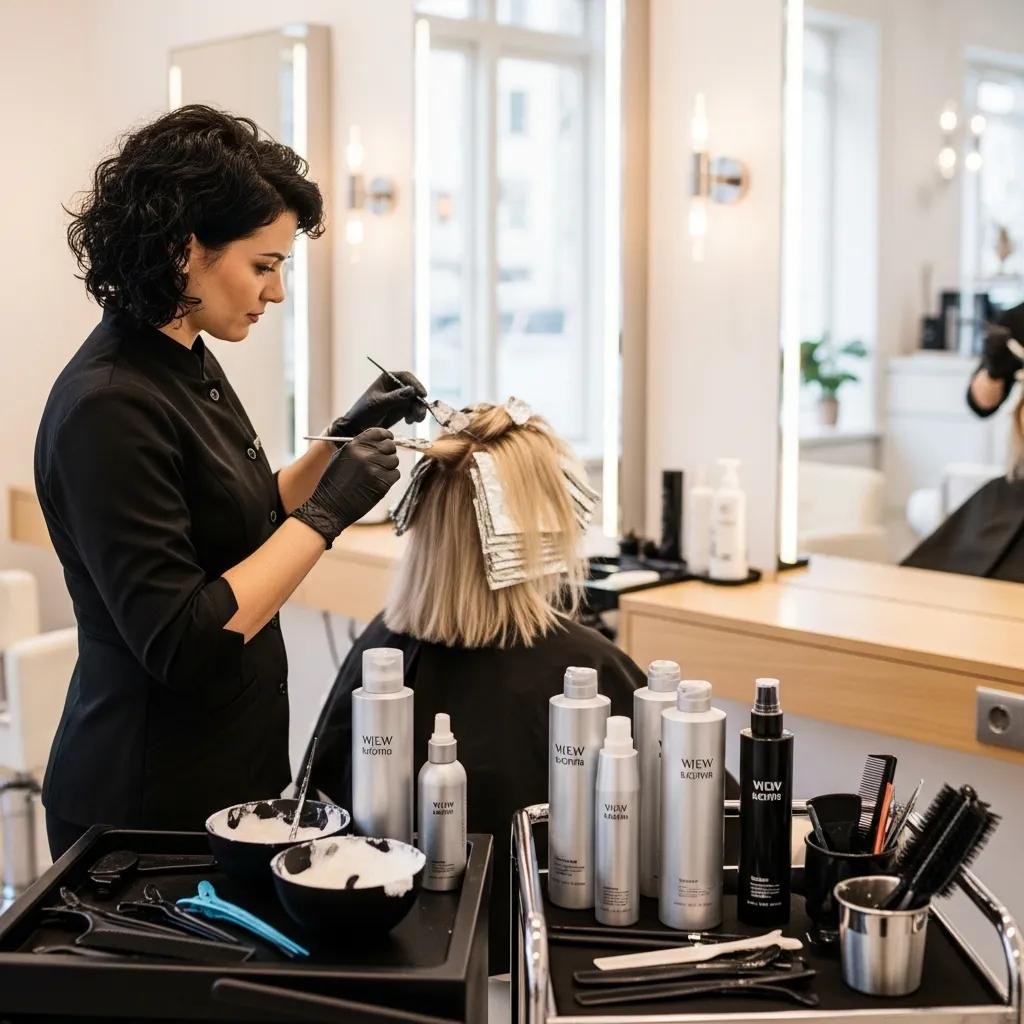
Going platinum is a staged, technical process: we lift natural pigment toward a near-white base, then neutralize remaining warm undertones with cool toners to create the icy finish you expect. Controlled bleaching removes melanin, and immediate toning deposits violet/ash pigments that counter yellow and orange tones. The benefit of this staged approach is a more predictable cool result while protecting hair structure with bond-building additives and targeted conditioning. Below is a concise workflow and typical sequence so you can see how we plan the process.
- Consultation & hair assessment: review history, porosity, and your shade goal; map out sessions.
- Controlled bleaching sessions: progressive lift with strand testing to protect integrity.
- Professional toning: deposit ash/ivory pigments to neutralize remaining warmth.
- Bond-building & conditioning: integrate reconstructive treatments during or after color.
- Maintenance plan: schedule touch-ups, toning, and targeted salon care to preserve tone.
These core steps set realistic expectations for timing and naturally lead into how we execute the initial bleaching and toning to balance lift with hair health.
How the Initial Bleach + Tone Step Works
Initial bleaching raises the hair’s level by breaking pigment bonds in the cortex, which exposes underlying warm tones that need neutralizing. We select developers, lighteners, and application techniques based on your starting level and porosity to control lift and avoid overlapping already-processed sections. Once we reach the target lift, a professional toner deposits ash or violet pigments on the porous surface to cancel yellow and orange tones and deliver that signature icy sheen. We use strand tests and bond-building additives throughout to monitor integrity and adjust timing—this is why toning immediately after lift is essential for consistent platinum results.
Key Steps for a Safe Dark-to-Platinum Journey
Moving from dark to platinum is safest when treated as a phased plan that spreads lift and repair across several visits. A typical approach is an initial heavy-lift session plus an intensive bond-building treatment, followed by a refining session for extra lift and final toning. Sessions are spaced to allow structural recovery and deep conditioning between chemical services. Recovery intervals—usually several weeks—give us time to reassess porosity and elasticity before further lightening, helping prevent fragility and breakage. Warning signs like extreme porosity, a gummy texture, or excessive dryness mean we pause lifting and prioritize reconstructive care. This staged process protects hair while building toward a durable, icy blonde.
Keeping Your Icy Blonde Radiant
Maintaining an icy platinum relies on a consistent routine that balances gentle cleansing, pigment upkeep, hydration, and periodic salon toning. A thoughtful regimen reduces oxidative brassiness and wear by using sulfate-free cleansers, purple products on a measured schedule, and leave-in protectants against heat and UV. Salon maintenance—professional toning, root blending, and bond-repair treatments—corrects pigment drift and structural fatigue more effectively than at-home fixes alone. Pairing good home care with scheduled salon visits gives the best longevity for your color.
Keeping a clear at-home vs. salon schedule helps you plan visits and avoids over-reliance on concentrated at-home pigments. Next, find practical daily and weekly actions that preserve your icy radiance without over-processing.
Daily & Weekly Habits for Platinum Brightness
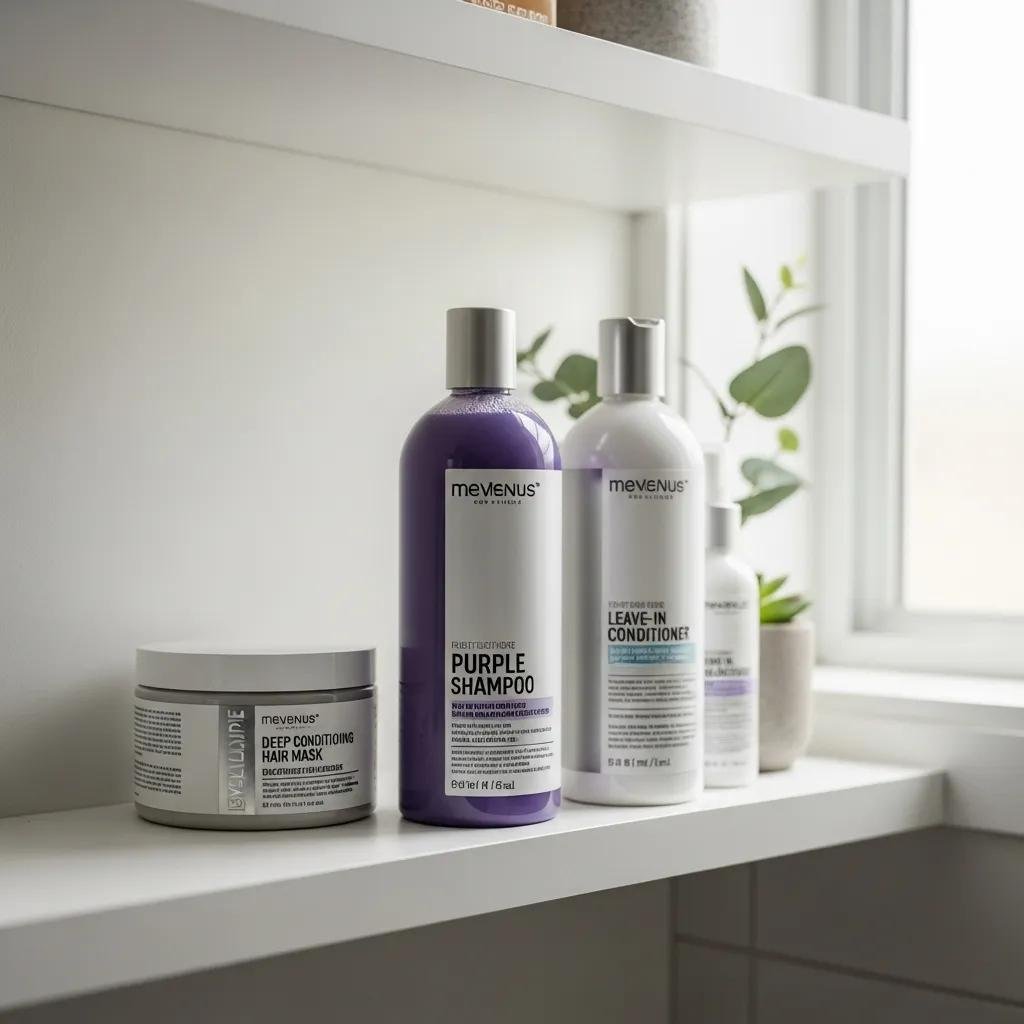
Keeping platinum bright is about simple, consistent habits that protect pigment and moisture.
Use a sulfate-free shampoo and add a purple shampoo sparingly—typically one to two times per week depending on porosity and pigment—to neutralize warm tones without stripping moisture.
Include a rich leave-in conditioner and a weekly deep mask to restore lipids and hydration, and always apply heat protectant before styling to limit oxidative stress from high temperatures.
Minimize sun and chlorinated water exposure with UV sprays or swim caps when possible—UV and minerals speed up brassiness and dryness.
These targeted steps reduce the need for corrective salon visits and lead into how at-home care compares with professional touch-ups.
At-Home Care vs. Salon Touch-Ups
Home care manages mild tone shifts, hydration, and daily protection, but it can’t match the precision or corrective power of salon-grade toning and reconstructions. Home products—purple shampoos, toning masks, leave-ins—are great for routine upkeep and small fixes. In the salon, we use customized demi or acid-based toners, tailored formula blends, and in-salon bond builders for predictable, long-lasting results. Overusing strong at-home toners can lead to over-depositing pigment or increased dryness, so schedule a salon recalibration when you see significant warmth, uneven tone, or root contrast beyond what purple shampoo can fix. A pro touch-up balances tone and repairs structure before issues escalate.
How to Prevent Brassy Tones
Brassiness comes from residual warm pigments after lift and from environmental factors—oxidation, sun exposure, and mineral-rich water—that change surface color. Preventing brass means managing pigment with regular toning or pigment-deposit products and controlling the environment with UV protection and swim precautions. The core strategy: neutralize warm undertones with violet/ash pigments on a calibrated schedule, keep hair integrity high so pigment adheres evenly, and use protective habits to slow oxidative yellowing.
- Use a purple shampoo or mask tailored to your hair’s porosity and tone needs.
- Apply UV and heat protectants before sun exposure or styling.
- Rinse hair promptly after swimming; use a clarifying or chelating product if mineral buildup is suspected.
- Book professional toning when at-home products can’t restore even coolness.
These preventive habits set you up for effective corrective options if brassiness appears. The next section covers product choices and how to apply them.
Products That Neutralize Brass Effectively
Options range from gentle purple shampoos to concentrated color-deposit masks and salon toners; the right choice depends on how warm the hair is and how porous it is. Purple shampoos carry violet pigments that counter yellow tones—best for mild to moderate brass. Color-deposit conditioners and masks provide a stronger, temporary shift for more visible correction. Professional toners deliver predictable, even deposition without the staining risk of heavy at-home pigments and are often paired with bond builders to protect strength. Choose sulfate-free, pigment-balanced formulas and adjust timing by strand testing rather than leaving products on for a fixed long duration—this reduces over-toning and dryness.
How Often to Use Purple Shampoo and Toners
Frequency depends on porosity, pigment level, and product strength. For lower-porosity hair, try purple shampoo once a week and monitor; higher-porosity hair may need it 1–2 times weekly but should follow with moisturizing treatments to restore balance. At-home toning masks generally work biweekly to monthly; salon toners are typically scheduled every 4–6 weeks depending on regrowth and pigment shift. Watch for signs of overuse—gray or lavender casts and increased dryness—and reduce frequency or consult your stylist for a professional refresh.
Treatments That Protect and Repair Blonde Hair
Protection and repair focus on reconstructive bond builders, deep-conditioning protocols, and occasional smoothing or reconstructive services to restore tensile strength and moisture after bleaching. Bond-building treatments reconnect internal bonds, while deep-conditioning masks refill lipids and water in the cortex and smooth the cuticle to reduce porosity and boost shine. Regularly scheduled maintenance treatments—coordinated with color sessions—limit cumulative damage and cut long-term breakage risk.
Knowing these options helps you set the right cadence for repair and ongoing maintenance, which leads into how bond-building and deep conditioning work at the molecular level.
How Bond-Building and Deep Conditioning Repair Hair
Bond-building treatments reconnect broken disulfide bonds and reinforce weakened spots created during lightening, restoring tensile strength and reducing fiber breakage. These treatments use reactive agents to neutralize damage sites and form new cross-links where bonds were severed, improving elasticity and lowering shedding. Deep-conditioning treatments replenish proteins, lipids, and moisture in the cortex and seal the cuticle to restore shine and manageability. Used together, bond builders and masks address both structural and hydration deficits. Frequency depends on starting condition—many clients benefit from bond-building during color services and a monthly deep-conditioning session to prolong color and prevent recurring damage.
Signs of Damaged Blonde Hair and How to Fix It
Damage signs include extreme porosity, reduced elasticity, increased breakage, dry brittle ends, and a dull, straw-like texture—each pointing to specific deficits that need targeted care. Immediate at-home steps: stop heat styling, use protein-moisture balanced masks, and avoid further chemical work until structural tests improve. If porosity and elasticity don’t improve with home care, escalate to salon-grade reconstructions. Professional options include in-salon bond-building treatments, multi-step deep reconstructions, and strategic trims to remove irreparable ends. Early detection lets us triage the issue and preserve as much length and tone as possible.
Why Choose Kylie Studio Salon and Ruth for Your Platinum Blonde
Kylie Studio Salon in Bethesda centers color health and personalization in every blonde service. We offer tailored consultations, precise lightening strategies, and integrated repair protocols to create luminous, long-lasting platinum. Ruth—our owner and lead stylist—specializes in highlights, balayage, color correction, and exacting toning, designing staged plans that balance your target shade with hair integrity. Our health-first philosophy pairs lift with bond-building and conditioning to deliver shiny, resilient blondes and reduce corrective visits. If you want a consultative, careful approach that prioritizes structure and predictable icy tone, Kylie Studio Salon and Ruth combine technical skill with personalized planning to get you there.
Ruth’s Expertise as a Blonde Colorist in Bethesda, MD
Ruth brings 11+ years of focused experience in transformative blonde services—highlights, balayage, and complex color correction—so she’s well-equipped to manage dark-to-platinum journeys. Her process centers on detailed hair history and porosity assessment, staged lift plans, and pairing color with bond-building treatments to preserve elasticity and shine. That experience means more predictable toner choices and maintenance schedules tailored to your hair, not a one-size-fits-all solution. Clients who want dramatic lightening with long-term hair health will value Ruth’s technical breadth and consultative planning.
How Personalized Service Improves Your Blonde Experience
Personalized service starts with an in-depth consultation to document your hair history, desired shade, and tolerance for multiple sessions. From there we map lifts, toners, and repair treatments that match both your goals and your hair’s condition. Tailored plans reduce risk by staging chemistry to recovery capacity and choosing bond builders, toners, and aftercare that suit your porosity and texture. Personalization also boosts predictability—root blending, custom formulations, and scheduled maintenance prevent tone drift and cut down corrective visits. Bring clear photos and recent product history to your consult so we can give a realistic timeline and estimate.
How Much Platinum Blonde Services Cost in Bethesda
Pricing varies because cost depends on starting color level, session count, hair length and density, and whether protective or reconstructive treatments are included. Rather than list fixed prices, we prefer to explain the factors and offer a personalized estimate after a consult. Typical cost drivers include the amount of lightener, number of staged sessions, and whether bond-building or intensive conditioning is required—each affects time and materials. The table below clarifies common service categories, the pricing factors involved, and why estimates vary.
This table underscores that an in-person or virtual consultation is the best way to get a precise cost estimate based on your hair’s starting point and goals.
What Affects the Price of Platinum Blonde Services?
Key price drivers include starting level and previous color history—darker or previously colored hair typically requires more sessions and corrective techniques to reach even lift. The session count directly impacts total cost: staged lifts spaced for recovery mean more hours and more product. Add-on services—bond-building treatments, custom toners, or a cut and style—also increase time and materials. Hair length and thickness change material usage and processing time; long, dense hair takes more lightener and chair time. Knowing these factors helps set realistic expectations and prepare for a consult to receive a transparent, personalized estimate.
How to Book a Consultation for a Personalized Estimate
To book a consultation, choose an appointment type that gives the stylist time to review your hair history, photos, and goals so we can propose a staged plan and estimate. Bring clear photos and a list of recent color services to speed the assessment. During the consult we’ll outline timelines, recommend products for toning and repair, and set an ongoing maintenance cadence that fits your lifestyle and goals. Kylie Studio Salon offers consultative appointments with Ruth to create tailored plans that prioritize hair health—preparing photos and home-care details helps us give a reliable plan and timeframe for your platinum journey.
Frequently Asked Questions
What’s the best way to prepare for a platinum blonde transformation?
Start with a consultation to review your hair history, desired shade, and any past treatments—bring photos to illustrate your goal. In the weeks before your appointment, focus on conditioning to improve elasticity and avoid heat styling or other chemical services right before your session so your hair is in the healthiest possible state.
How can I tell if my hair is healthy enough for bleaching?
Check elasticity, porosity, and texture. Healthy hair stretches and returns without snapping; hair that feels brittle, has many split ends, or is overly dry may not tolerate bleaching. A professional strand test gives the most reliable read on whether your hair can withstand lightening without severe damage.
What should I do if my platinum blonde hair starts to turn yellow?
If yellowing appears, act quickly: use a quality purple shampoo to neutralize yellow tones and follow with a toning mask or conditioner for stronger correction. If the yellow persists, book a professional toning session—our salon toners and in-chair adjustments restore coolness more reliably than at-home fixes.
Are there specific products you recommend for maintaining platinum blonde hair?
Yes. Use a sulfate-free shampoo to protect moisture, a purple shampoo for brass control, and regular deep-conditioning masks and leave-ins for hydration. Heat protectants are essential before styling, and periodic bond-building treatments help maintain strength between color services.
How can I protect my platinum blonde hair from environmental damage?
Use UV protection sprays to shield hair from sun exposure. For swimming, wear a swim cap when possible or rinse immediately after to remove chlorine and minerals. Limit heat styling and always apply a heat protectant before using tools to reduce oxidative damage.
What are the signs I need a professional touch-up?
Book a touch-up when you see noticeable brassiness, uneven tone, or significant root contrast. If your hair looks dull or at-home products no longer keep your shade bright, a professional refresh will rebalance tone and repair structure. Regular salon visits every 4–6 weeks help maintain a fresh, consistent platinum.
Conclusion
Achieving and maintaining platinum blonde is a rewarding process that centers on precision, hair health, and personalized care. With expert techniques and a tailored maintenance plan, you can enjoy vibrant, icy tones while protecting your hair’s integrity. Ready to explore your platinum potential? Book a consultation with Ruth at Kylie Studio Salon and let us design a plan to reach your dream blonde.