Why Keratin Hair Treatments Repair Damaged Hair: Benefits & Expertise
Keratin hair treatment is a professional smoothing and repair service that infuses keratin protein into compromised hair fibers to restore strength, reduce frizz, and improve shine. This article explains why keratin treatments are an effective damaged hair solution, how the process rebuilds hair structure, and which hair types benefit most from professional application. Many people with chemically treated, heat-damaged, or porous hair struggle with breakage and unmanageable texture; a properly applied keratin smoothing treatment offers measurable improvement in elasticity and surface integrity while reducing styling time. Below you’ll find a clear overview of benefits, a plain-language explanation of the repair mechanism, step-by-step salon procedures, safety and suitability guidance, maintenance and product recommendations, comparisons with alternative smoothing methods, and local options for booking a consultation in Bethesda. Throughout the guide we use current research trends and salon practice insights to help you decide whether keratin protein hair repair is the right path for your hair goals.
What Are the Key Benefits of Keratin Treatment for Damaged Hair?
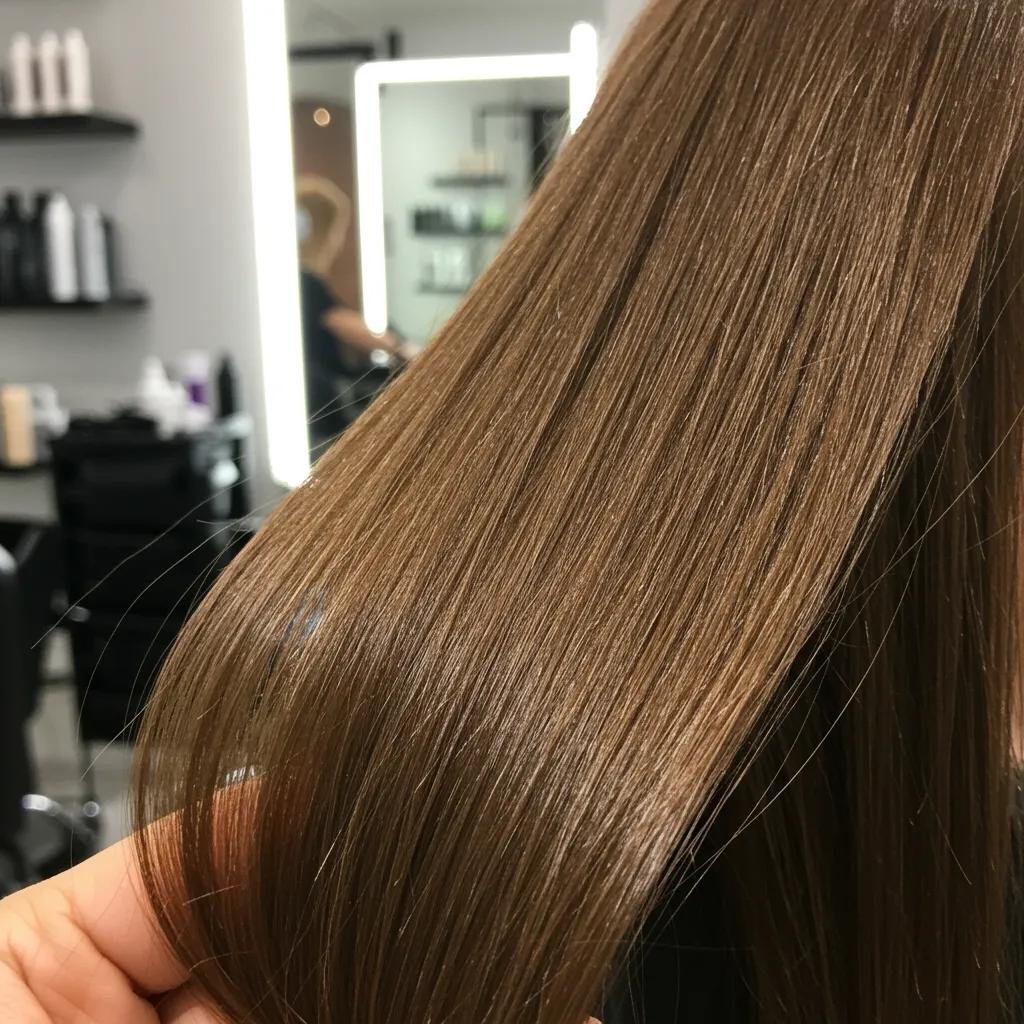
Keratin treatment delivers targeted protein replenishment that directly improves fiber strength, seals the cuticle, and reduces moisture-driven frizz for visibly smoother hair. The mechanism is simple: keratin molecules bond to porous areas of the cortex and lay down a smoother outer layer on the cuticle, creating a surface that resists humidity and reflects light. For damaged hair this translates into less breakage, improved manageability, faster styling, and a shinier finish that lasts for weeks to months depending on aftercare. Below are the top benefits to compare quickly and decide whether keratin treatment matches your repair objectives.
- Restores Strength: Replenishes lost keratin protein to reduce breakage and improve tensile strength.
- Frizz Reduction: Seals cuticles to prevent moisture intrusion and control humidity-driven frizz.
- Enhanced Shine: Creates a smoother surface that reflects light for noticeable gloss.
- Improved Manageability: Cuts drying and styling time by making hair easier to comb and style.
- Reduced Breakage: Improves elasticity and reduces split friction that causes breakage.
These benefits make keratin an effective repair-focused option for many clients, and the next section explains how the treatment actually rebuilds hair structure at a molecular and mechanical level.
How Does Keratin Treatment Restore Hair Health and Strength?
Keratin restores hair health by filling porous gaps in the cortex and reinforcing weakened structural proteins, effectively increasing tensile strength and elasticity. When hair loses native keratin from chemical or thermal damage, fibers become brittle and prone to breakage; applying a keratin-infused solution supplies structural building blocks that bond to the hair shaft and reduce internal stress. Clinically, this manifests as fewer snapped strands during brushing, improved stretch before breakage, and a smoother cuticle that resists further moisture-driven deterioration. Understanding this repair action helps set realistic expectations: keratin strengthens and protects existing hair but works best in combination with trimming and ongoing maintenance to address irreparable split ends.
Keratin Peptides for Hair Strengthening: Evaluation of Cuticular Protein
In this study, hair keratin type II cuticular protein, keratin peptide (KP), was studied as a possible strengthening agent for weakened relaxed hair. Previous studies have reported keratin-based peptides for hair reinforcement, and this study aimed to evaluate the strengthening properties of KP on relaxed hair.
Keratin‐based peptide: biological evaluation and strengthening properties on relaxed hair, CF Lima, 2012
In What Ways Does Keratin Treatment Reduce Frizz and Enhance Shine?
Keratin treatment reduces frizz primarily by smoothing and sealing the hair cuticle, which lowers moisture exchange between the environment and the fiber and prevents swelling that causes frizz. A smooth, flat cuticle reflects more light, so treated hair appears glossier and healthier immediately after sealing with heat. The treatment also introduces a humidity-resistant layer that helps maintain style integrity on humid days, improving day-to-day manageability. Clients often notice that hair both looks and feels smoother, and that the visual improvement is immediate after the sealing step, which leads naturally into how keratin affects styling and daily routines.
How Does Keratin Treatment Improve Hair Manageability and Styling?
Keratin treatment improves manageability by reducing tangling, easing comb-through, and lowering the time needed for heat styling, which in turn decreases cumulative thermal damage. When hair cuticles lie flatter and the fiber is reinforced, brushes and tools glide more smoothly, allowing simpler styling routines and longer-lasting results between washes. This practical benefit is especially valuable for people who use heat tools frequently or who must style in limited time each day. With reduced styling time and gentler handling, hair experiences fewer mechanical stresses, making the keratin service an investment in both appearance and long-term fiber health.
For readers seeking professional application in Bethesda, Kylie Studio Salon offers keratin smoothing services tailored to damage repair and improved manageability. Their team provides free consultations and a local gallery of results so prospective clients can assess outcomes before booking an appointment with the salon.
How Does Keratin Treatment Repair Damaged Hair?
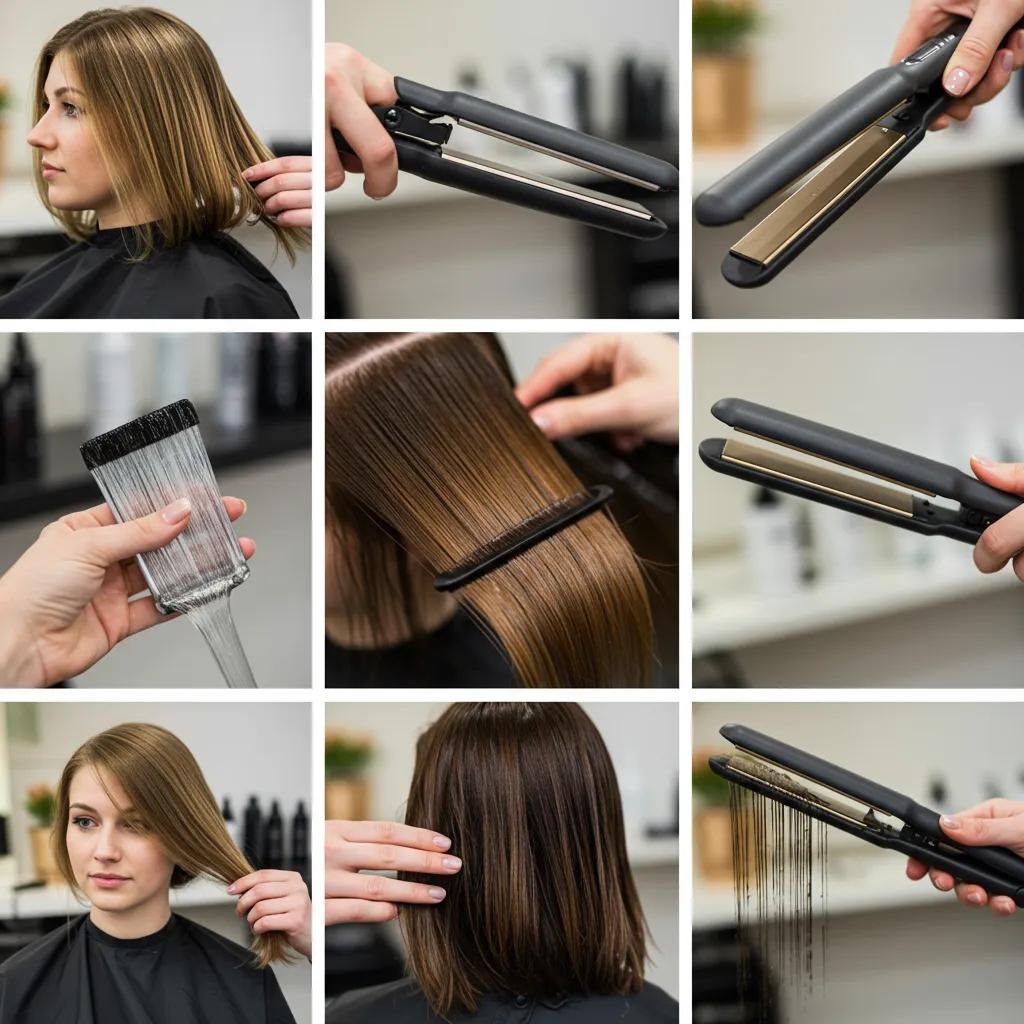
Keratin treatment repairs damaged hair by delivering a protein-based formula that penetrates porous regions of the shaft, bonds with the cortex, smooths the cuticle, and is heat-sealed to create durable surface improvement. This combination of chemical infusion and thermal sealing consolidates the hair’s structure and reduces micro-roughness that leads to breakage, enabling better elasticity and resilience. The treatment’s effectiveness depends on product formulation, application technique, and correct heat sealing; professional application ensures the formula penetrates appropriately and is sealed at the right temperature to form stable bonds. The following subsections break down keratin’s biological role, the treatment’s physical actions, and the specific salon steps used to rebuild hair structure.
What Is the Role of Keratin Protein in Hair Repair?
Keratin is the primary structural protein of hair, forming a fibrous matrix that determines tensile strength, elasticity, and resilience to mechanical stress. When chemical treatments or repeated heat styling degrade this matrix, hair becomes porous, weak, and prone to split ends and breakage—conditions that keratin replenishment seeks to address. By supplying exogenous keratin and related bonding agents, treatments help reconstitute the protein scaffolding within the cortex and reduce internal stress points. This biological restoration improves handling and reduces breakage; however, keratin cannot biologically “heal” split ends, which still require trimming to remove irreversibly damaged fiber tips.
Keratin Repair with Michael Acceptors: Structural Investigation
Structural investigation on damaged hair keratin treated with α, β-unsaturated Michael acceptors used as repairing agents. To gain more insights into the possible repairing mechanism, we investigated the effect of α,β-unsaturated Michael acceptors on the reconstruction of disulfide bridges of keratin, through α,β-unsaturated Michael acceptors. The results showed that the treatment with α,β-unsaturated Michael acceptors can repair the damaged keratin.
Structural investigation on damaged hair keratin treated with α, β-unsaturated Michael acceptors used as repairing agents, M Di Foggia, 2021
How Does the Keratin Treatment Process Rebuild Hair Structure?
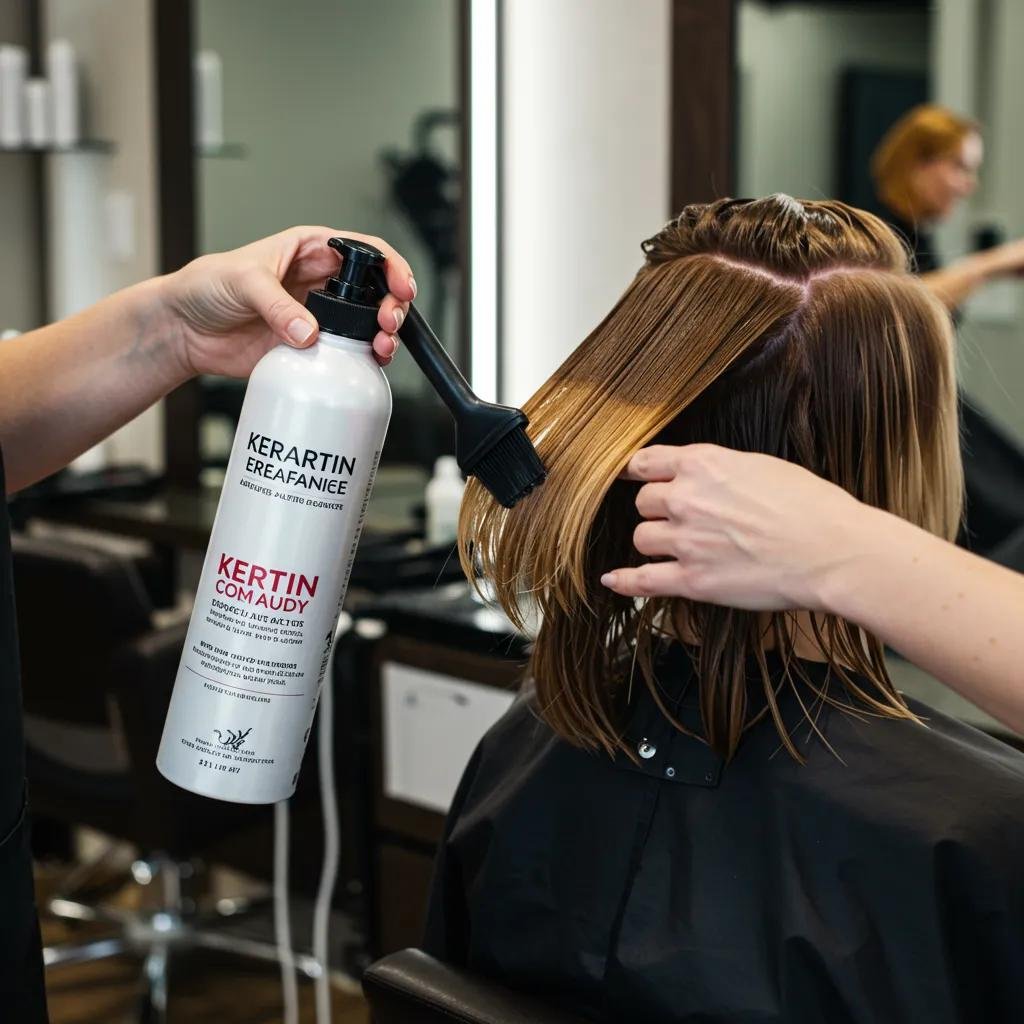
The process rebuilds hair structure through three coordinated actions: infusion, alignment, and heat-sealing. First, a keratin-enriched formula penetrates the cuticle into porous sites of the cortex and deposits protein and conditioning agents. Next, the formula aligns and smooths the cuticle layers to produce a flatter surface that resists moisture changes. Finally, a controlled heat-sealing step bonds the deposited materials to the shaft, creating longer-lasting surface integrity that increases elasticity and decreases friction-related breakage. These steps together create a measurable improvement in both the hair’s internal strength and its external appearance.
What Are the Steps Involved in a Professional Keratin Treatment?
- Consultation and Assessment: The stylist evaluates hair type, damage level, scalp condition, and client goals to select the appropriate formula and processing plan.
- Clarifying Wash: A professional clarifying shampoo removes buildup and prepares cuticles to accept the keratin infusion.
- Application of Keratin Formula: The product is applied strand-by-strand to ensure even distribution, with attention to porous or chemically altered areas.
- Processing Time: The formula is left to penetrate according to product instructions and stylist evaluation.
- Blow-Dry and Heat Sealing: Hair is blow-dried smooth and then sealed using a flat iron at the temperature suited to the formula and hair condition.
- Final Rinse or Finish: Depending on the product system, a light rinse and a finishing style follow, and the stylist provides aftercare guidance.
This procedure emphasizes assessment and controlled heat sealing, which are essential for a durable repair outcome and safe application.
Why Is Kylie Studio Salon the Best Choice for Keratin Treatment in Bethesda, MD?
Kylie Studio Salon positions itself as a local expert for keratin smoothing treatments by combining experienced stylists, individualized plans, and customer-focused consultations that prioritize safety and long-term hair health. The salon emphasizes a consult-first approach: every keratin service begins with a free consultation to assess hair damage, discuss desired results, and determine the right product strength and heat protocol. Local clients benefit from seeing before-and-after results and hearing from a stylist trusted in the community, creating confidence in the treatment plan. Below we outline the salon’s core credentials and what a client can expect when choosing their keratin services.
What Expertise Does Stylist Ruth Bring to Keratin Treatments?
Ruth is the owner and lead stylist at Kylie Studio Salon and brings specialized experience in modern smoothing and repair techniques relevant to keratin treatments. Her hands-on work focuses on assessing damage patterns, selecting appropriate low-formaldehyde or formaldehyde-free formulations when needed, and tailoring heat-sealing protocols to each client’s hair integrity. That depth of technical skill reduces the risk of over-processing and improves outcome consistency for clients seeking keratin protein hair repair. Clients who prefer an experienced stylist for damage repair will find Ruth’s approach clinically minded and results-oriented.
How Are Personalized Keratin Treatment Plans Tailored to Individual Hair Needs?
Personalized plans at the salon begin with a targeted hair and scalp assessment that informs product choice, processing time, and aftercare strategy. For colored or chemically treated hair, the stylist will select gentler formulas and adjust flat-iron temperatures to prevent excess protein buildup and preserve color integrity. Fine or highly porous hair may receive lower-concentration applications and more conservative sealing to maintain volume while improving manageability. Each plan includes a maintenance schedule and product recommendations to extend longevity, ensuring the service aligns with the client’s lifestyle and hair goals.
What Do Local Clients Say About Their Keratin Treatment Results?
Local client feedback highlights measurable outcomes such as reduced frizz, faster styling routines, and improved shine after keratin services performed at the salon. The salon maintains a portfolio of before-and-after images that demonstrate changes in surface smoothness and overall manageability, which helps set realistic expectations for prospective clients. Viewing results and discussing real examples during a free consultation helps individuals understand the balance between visible improvement and the need for ongoing trims and maintenance. Those interested in seeing results are encouraged to request a consultation to view the salon’s gallery and confirm suitability.
Is Keratin Treatment Suitable for Your Hair Type and Damage Level?
Yes — keratin treatment is suitable for many hair types and damage levels when selected and applied with proper precautions; however, suitability depends on hair porosity, thickness, chemical history, and scalp sensitivity. For frizzy, porous, or chemically treated hair seeking smoother texture and strength, keratin treatments are often highly effective. For very fine or extremely compromised hair, adjustments in formula concentration and processing time are necessary to avoid weight-down or over-proteinization. The guidance below helps map common hair types to appropriate approaches and safety precautions so you can decide whether keratin treatment is a match for your repair goals.
Which Hair Types Benefit Most from Keratin Treatment for Damage Repair?
Keratin treatments most benefit frizzy, porous, and chemically-treated hair that needs improved manageability and strengthened fiber structure. Curly and wavy hair types that want smoother styling with retained body often see strong results when keratin is applied to enhance shine and reduce frizz without fully straightening. Chemically treated hair can benefit from the protein reinforcement, though color-treated clients should choose formulas and heat settings that preserve color. Fine hair can still benefit but may require lighter applications to prevent flattening, so an individualized plan is essential to balance smoothness with natural volume.
Can Keratin Treatment Repair Split Ends and Chemically Damaged Hair?
Keratin treatment improves the appearance and strength of chemically damaged hair by reinforcing the shaft and smoothing the cuticle, but it cannot reverse split ends that are physically severed from the strand. Split ends require trimming to remove irreparable fiber tips; keratin can reduce further splitting by strengthening adjacent fiber and decreasing friction. For chemically damaged hair, keratin helps reduce breakage and improves elasticity, yet a combined approach—trimming, keratin application, and consistent aftercare—is the most effective strategy for sustainable repair.
What Are the Safety Considerations for Keratin Treatment on Sensitive Hair?
Safety for sensitive hair focuses on patch testing, product selection, and professional application to minimize scalp irritation and respiratory exposure to any volatile components. Clients with scalp sensitivity should request a patch test before full application and discuss low-formaldehyde or formaldehyde-free product options during the consultation. A qualified stylist will tailor processing times and temperatures to avoid over-processing and should monitor comfort during application. When safety steps are followed—consultation, patch test, and professional technique—risks are reduced and outcomes are more predictable.
How Long Does Keratin Treatment Last and What Aftercare Is Needed?
Keratin treatment longevity typically ranges from about 8 to 16 weeks depending on hair porosity, washing frequency, product selection, and lifestyle factors like sun exposure and heat styling. Maintaining results requires specific aftercare: using sulfate-free shampoos, limiting clarifying washes, protecting hair from saltwater and chlorinated pools, and using heat protectants when styling. Below are practical aftercare recommendations and a concise product table to guide at-home maintenance so the repair benefits last longer and hair health is preserved.
What Are the Best Aftercare Practices to Maintain Keratin Treatment Results?
- Use sulfate-free shampoos to preserve keratin bonds.
- Limit clarifying washes to avoid stripping treatment prematurely.
- Apply heat protectant before using hot tools.
- Avoid chlorinated or salty water without protection to prevent degradation.
These aftercare actions significantly extend the treatment’s visible benefits and protect newly reinforced hair fibers.
How Often Should You Schedule Keratin Treatments for Optimal Hair Health?
Maintenance intervals depend on hair growth rate, exposure to styling and environmental stressors, and personal goals, but many clients opt for reapplication every 3 to 6 months. A shorter interval may be chosen by those with heavy styling routines or environmental exposure, while those who wash less frequently or use protective hairstyles may extend intervals toward the upper end. Your stylist will advise a schedule that balances durability of results with responsible exposure to chemical processes, and a consultation can produce a safe maintenance plan tailored to your hair’s resilience and needs.
How Does Keratin Treatment Compare to Other Hair Smoothing and Repair Options?
Keratin treatment differs from other smoothing and repair methods in mechanism, duration, and suitability: keratin focuses on protein infusion and cuticle sealing, Brazilian Blowout systems often use polymer coatings for surface smoothness, Hair Botox emphasizes conditioning and plumping without chemical bond alteration, and chemical straightening changes internal hair bonds for permanent restructuring. Understanding these differences helps you choose the approach that best matches your goals—whether temporary smoothing with added strength, surface-level gloss, or permanent straightening. The table below offers a clear, side-by-side comparison.
What Are the Differences Between Keratin Treatment and Brazilian Blowout?
Keratin treatment emphasizes protein replenishment and structural repair, while Brazilian Blowout-style systems prioritize a polymer-based surface coating for smoothing and humidity control. Keratin can improve internal fiber strength and reduce breakage, making it a stronger option for damage repair, whereas polymer coatings offer immediate smoothness often favored by clients seeking surface-level control with minimal protein exposure. Longevity and styling outcomes differ, and a stylist will recommend the method best aligned with your hair’s porosity and repair needs.
How Does Keratin Treatment Differ from Hair Botox and Chemical Straightening?
Hair Botox is primarily a conditioning, plumping treatment that enhances softness and shine through heavy moisturizing agents and polymers without altering hair bonds, whereas chemical straightening permanently changes hair structure by breaking and reforming disulfide bonds. Keratin sits between these approaches: it provides measurable strengthening and smoothing without permanent bond alteration, offering repair-focused benefits while retaining more natural hair movement. Choosing between these methods depends on whether you prioritize repair and manageability (keratin), temporary conditioning (Hair Botox), or permanent restructuring (chemical straightening).
What Are the Pros and Cons of Keratin Treatment Versus Other Methods?
- Keratin — Pros: Strengthens hair, reduces breakage, improves shine and manageability.
- Keratin — Cons: Requires maintenance intervals and careful aftercare; cost and salon skill matter.
- Brazilian Blowout/Hair Botox — Pros: Immediate smoothness and softness; lower protein exposure in some systems.
- Chemical Straightening — Cons: Higher risk due to bond alteration and potential long-term damage if misapplied.
Weigh these trade-offs with your stylist to select an approach that balances desired appearance with long-term hair health.
Where and How Can You Book a Keratin Treatment Consultation at Kylie Studio Salon?
Scheduling a consultation for keratin treatment at Kylie Studio Salon in Bethesda is structured to make assessment and planning straightforward: clients can request a free consultation to review hair history, view before-and-after results, and receive a personalized treatment plan with pricing options. The salon operates as a local information hub and lead generator for appointments; during the consultation the stylist will discuss formula choices, expected timelines, and aftercare requirements. Below are simple steps to schedule and what to expect on the day of your consultation.
How to Schedule Your Keratin Treatment Appointment Online in Bethesda, MD?
To book, follow the salon’s standard scheduling options, providing basic hair history and preferred dates to secure a consultation slot. When you request a consult, include details such as recent chemical services and current styling routine so the stylist can prepare recommendations. For convenience, the salon supports online booking and accepts phone inquiries to arrange appointments at the Bethesda location. Including this information in your booking helps the stylist tailor the consultation and estimate treatment time and products needed.
What to Expect During Your Free Keratin Treatment Consultation?
A free consultation includes a hair and scalp assessment, discussion of repair goals, a review of product options and safety considerations, and a recommendation for a personalized treatment plan. The stylist will assess porosity, length, chemical history, and split-end severity, and then outline the likely outcome and maintenance schedule. Clients receive aftercare guidance and estimated pricing ranges during the consult so they can make an informed decision. This pre-service conversation also allows for patch testing if there is any scalp sensitivity concern.
What Are the Pricing Options and Packages for Keratin Treatment at Kylie Studio Salon?
Pricing is determined by hair length, density, degree of damage, and the chosen formula; the salon offers package options that include the consultation, treatment application, and a recommended aftercare plan. The free consultation helps identify the proper package and any add-on services needed for optimal repair. Kylie Studio Salon provides transparent estimates during the consult so clients understand the value proposition and maintenance expectations before booking a full service. For local clients, the salon’s Bethesda address and phone number are available for direct scheduling and follow-up questions.
Kylie Studio Salon — 4711 Montgomery Ln, Suite 2, Bethesda, MD 20814
Phone: 301-922-7864
Frequently Asked Questions
What is the ideal frequency for keratin treatments?
The ideal frequency for keratin treatments typically ranges from every 3 to 6 months, depending on individual hair growth rates, exposure to environmental stressors, and personal styling habits. Clients who frequently style their hair or are exposed to humidity may opt for more frequent treatments, while those who wash their hair less often might extend the interval. A consultation with a stylist can help determine the best schedule tailored to your hair’s specific needs and resilience.
Can keratin treatments be combined with other hair services?
Yes, keratin treatments can often be combined with other hair services, such as coloring or cutting. However, it is essential to discuss this with your stylist during the consultation. They can recommend the best order for services to minimize damage and ensure optimal results. For example, some stylists may suggest coloring before a keratin treatment to lock in color and enhance shine, while others may recommend the opposite based on hair condition and desired outcomes.
Are there any specific hair care products recommended after a keratin treatment?
After a keratin treatment, it is crucial to use sulfate-free shampoos and conditioners to preserve the keratin bonds and maintain the treatment’s effectiveness. Additionally, using heat protectants before styling with hot tools is recommended to shield the hair from thermal damage. Clients should also avoid clarifying shampoos for the first few weeks post-treatment, as these can strip the hair of the keratin coating. Following these guidelines helps extend the longevity of the treatment.
What should I do if I experience an allergic reaction to the treatment?
If you experience an allergic reaction to a keratin treatment, such as itching, redness, or swelling, it is essential to seek medical advice immediately. Inform your stylist about the reaction, as they can provide guidance on how to manage it and recommend alternative treatments. Additionally, performing a patch test before the full application can help identify potential sensitivities and prevent adverse reactions in the future.
How does keratin treatment affect hair texture over time?
Keratin treatment can significantly improve hair texture by making it smoother, shinier, and more manageable. Over time, as the treatment gradually washes out, the hair may return to its natural texture. However, many clients find that the treatment helps reduce frizz and improve overall hair health, making it easier to style even after the effects have diminished. Regular maintenance and proper aftercare can prolong the benefits and keep hair looking its best.
Is keratin treatment safe for all hair types?
Keratin treatment is generally safe for many hair types, including frizzy, curly, and chemically treated hair. However, suitability depends on individual hair conditions, such as porosity and damage level. Fine or extremely compromised hair may require special formulations or adjustments in application to avoid over-proteinization. Consulting with a professional stylist is crucial to determine the best approach for your specific hair type and ensure safe and effective results.
Conclusion
Choosing a keratin hair treatment can significantly enhance the strength, shine, and manageability of damaged hair, making it an ideal solution for those struggling with frizz and breakage. This treatment not only restores the hair’s natural beauty but also simplifies daily styling routines, allowing for a more effortless hair care experience. For those in Bethesda, scheduling a free consultation at Kylie Studio Salon can help you discover the best keratin options tailored to your unique hair needs. Take the first step towards healthier hair by booking your appointment today.