The Rich Story of African Hair Braiding: Origins, Meaning, and Modern Evolution
African hair braiding is more than a hairstyle — it’s a living craft that combines practical hair care, cultural meaning, social signaling, and creative expression. This piece follows braiding from ancient archaeological evidence to today’s global adaptations, showing how braids have served as protective styles, messages of identity, and platforms for aesthetic innovation. You’ll learn where braiding began, how different peoples and kingdoms shaped techniques, what patterns signaled within communities, and how styles changed across the African diaspora into contemporary protective and fashion-forward looks. We also highlight iconic forms — cornrows, box braids, Fulani braids, and Bantu knots — explaining their features, symbolism, and upkeep. Finally, we offer practical hair-health guidance tied to protective styling and note how professional salons can support healthy, respectful braid services. Throughout, terms like braiding history, cultural hair art, and protective hairstyle benefits are used to connect historical context with modern care.
What Are the Ancient Origins of African Hair Braiding?
Braiding in Africa grew from everyday grooming into deliberate cultural expression. Archaeological finds and visual records — from Nile Valley reliefs to West African artifacts — show plaited hair dating back thousands of years, with techniques traveling between regions as shared practices. Braids worked practically, protecting hair from the elements and wear, and symbolically, marking lineage, status, and community belonging. Knowing these origins helps explain why braiding has remained resilient, adaptable, and central to hair culture across the continent and throughout the diaspora.
Key early evidence shows how regions contributed to braiding practices:
- Historic pictorial and funerary art from the Nile Valley documents sophisticated plait structures recognized in ancient times.
- West African terracottas and textiles indicate advanced scalp parting and decorative practices in historic kingdoms.
- Ethnographic records — for example, the Himba — demonstrate continuity in materials and ritual tied to specific styling traditions.
How Did Early African Civilizations Influence Braiding Traditions?
Groups in the Nile Valley, Nubia, and West African kingdoms shaped braiding through social institutions, artistic norms, and locally available materials. Ancient Egyptian and Nubian art record intricate plaiting and embellishment, while West African court cultures used elaborate hairstyles to mark rank and affiliation. Tools and ornaments — from combs to beads and shells — affected braid structure and decoration, producing regional variations we recognize today. Transmission happened through apprenticeship, ceremonial practice, and daily grooming, so technique, social meaning, and artistry remained closely linked.
These broad practices gave rise to community-specific traditions that persist among groups like the Himba and Nubian peoples.
Who Are the Himba and Nubian Peoples in Braiding History?
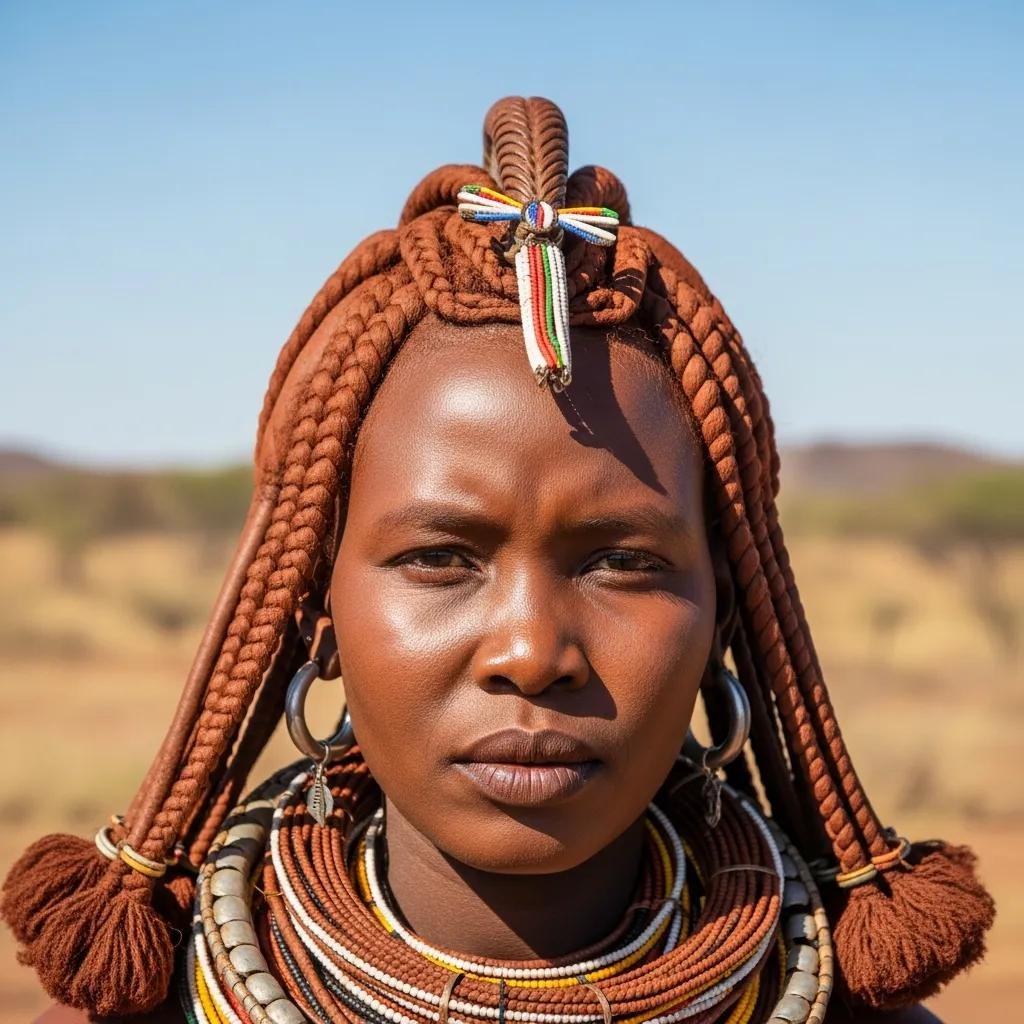
The Himba of northern Namibia and Nubian communities along the Nile offer clear examples of how braiding encodes cultural meaning. Himba hairstyling uses ochre and natural materials to create textured plaits that communicate age and social role, while emphasizing scalp care and identity. Nubian traditions, attested in archaeology and oral history, show styles adapted for arid climates that blend practicality with ornament — often incorporating coverings and jewelry. Alt-text suggestion for images: “Himba woman with ochre-coated braided hair” or “Nubian carved relief showing traditional braiding pattern.”
These local practices reveal the layered meanings of braids across African societies, which we explore next.
What Is the Cultural Significance and Symbolism of African Braids?
Braids often act like a visual language: parting, patterns, and adornments can signal social status, age, marital status, and group identity. In many communities, specific motifs and placements served as non-verbal codes tied to rites of passage, ritual life, and political belonging. Recognizing this symbolic dimension is important for appreciating the tradition and avoiding superficial appropriation.
Examples below show how hairstyle features mapped to social meaning.
- Status and Rank: Time-intensive, ornate braids often marked high social standing or courtly roles.
- Age and Life Stage: Certain forms and decorations indicated puberty, marriageability, or elder status.
- Tribal Identity: Unique parting systems and ornaments functioned as group identifiers.
- Communication: In some settings, intricate plaiting served as practical codes for kinship, geography, or resistance.
These examples show braids as encoded cultural messages—not merely decorative choices—and lead into how particular styles carry meaning.
Below is a concise comparison of common pattern meanings and visual cues.
Which Traditional African Braiding Styles Are Most Iconic?
Certain named styles have come to represent African braiding artistry, each with its own origin, visual grammar, and cultural context. Cornrows, box braids, Fulani braids, Bantu knots, Ghana braids, and Senegalese twists span close-to-scalp techniques, free-hanging extensions, and sculptural knots. As protective styles, they reduce everyday manipulation while offering many looks; each also links back to regional craft, materials, and meaning. Comparing features helps distinguish lineage from modern reinterpretation.
What Are the Origins and Features of Cornrows and Box Braids?
Cornrows have roots in West Africa and the Nile Valley, where close-to-scalp rows created long-lasting, low-maintenance styles suitable for varied climates and labor. Box braids evolved as a variation with square-part divisions and hanging plaits that allow extensions and length. Cornrows often carry scalp-based patterns that function like visual grammar; box braids focus on retention, versatility, and length protection. Maintenance differs: cornrows need scalp-centered cleansing, while box braids require regular moisturizing of each individual plait to prevent breakage.
An at-a-glance comparison highlights origins and defining features.
How Do Fulani Braids and Bantu Knots Reflect Cultural Heritage?
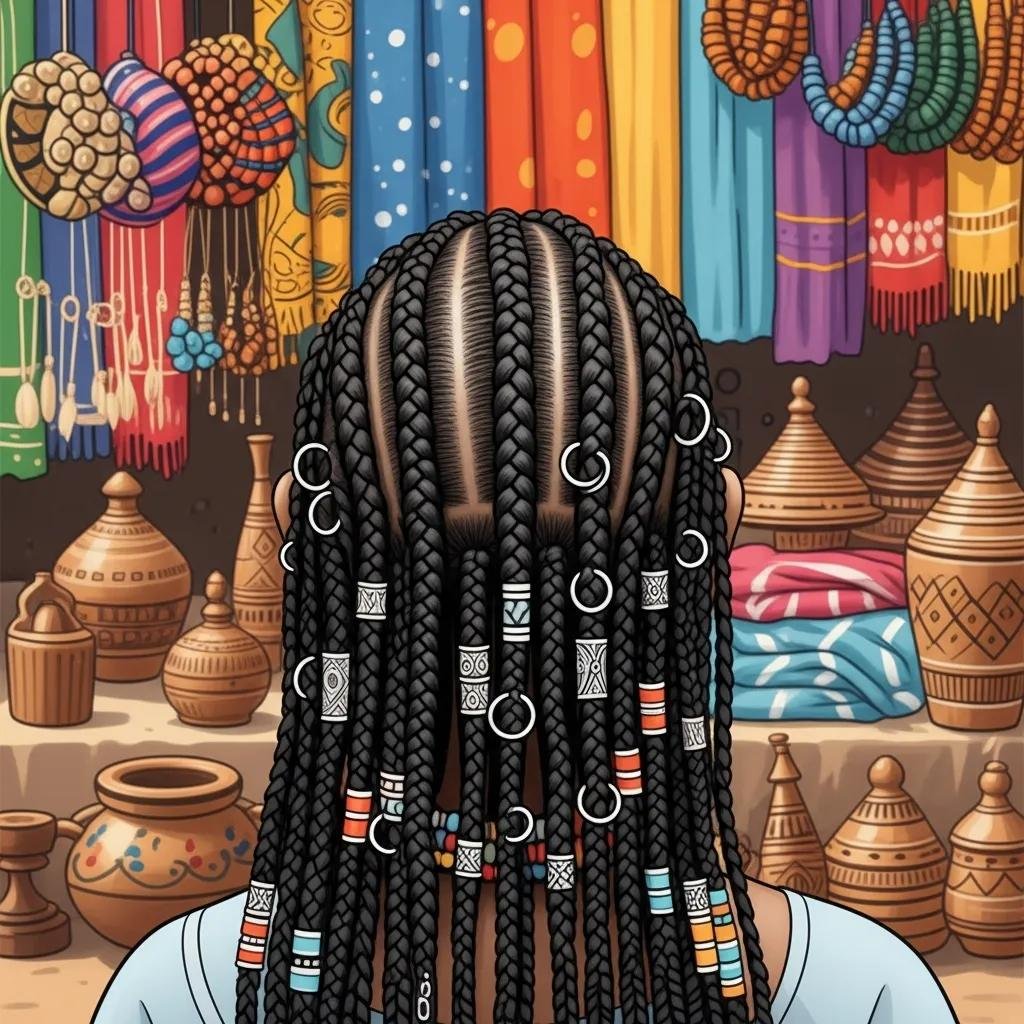
Fulani braids often feature a central or side part with decorative hanging plaits, accented with beads or metal rings; they come from Fulani communities of the Sahel and reflect mobility, ornamentation, and identity. Bantu knots, found across Bantu-speaking regions, are tight coiled knots that protect hair and create texture that can later be released into waves. Both styles show how local materials and customs shaped braiding techniques, reinforcing hair as wearable cultural heritage and a protective practice.
These traditional forms set the stage for how braiding evolved in the diaspora under different social conditions.
How Has African Hair Braiding Evolved Through the African Diaspora?
Braiding changed with the transatlantic slave trade, migration, and social resistance, preserving ancestral technique while adapting to new materials and constraints. In the diaspora, braids were practical — protecting hair during forced labor — and symbolic, carrying memory and identity across generations. Over time, braids returned as powerful emblems of pride and resistance, visible in movements like Black Power and the contemporary natural hair movement. The diaspora story shows continuity and creativity: traditional mechanics persisted while new meanings and styles emerged.
- Braids functioned practically in the diaspora, protecting hair and simplifying care under difficult conditions.
- In the 20th century, braids became visible markers of cultural pride and resistance during social and political movements.
- Today, diaspora communities keep innovating — combining global materials and new tools while honoring lineage.
What Role Did Braiding Play During the Transatlantic Slave Trade?
During the transatlantic slave trade, braiding retained practical and, in some accounts, covert functions: it protected hair under harsh conditions, helped preserve scalp health, and—according to some historical records—was used tactically to carry small seeds or supplies. Scholars advise caution with specific claims but agree braiding offered cultural continuity, helping people keep grooming knowledge and communal ties despite displacement. This resilience highlights braids as adaptive tools in extreme circumstances.
That history helps explain why later generations reclaimed braiding as a symbol of dignity and resistance.
How Did Braiding Become a Symbol of Resistance and Identity?
In the 20th and 21st centuries, braids reappeared as clear symbols of cultural pride and political identity. Activists and cultural figures embraced natural hair and traditional styles to challenge Eurocentric beauty ideals and assert self-determination. The natural hair movement and related trends boosted braids’ visibility and demand, turning them into statements of heritage, resistance, and creativity. That reclamation makes braiding both a tradition to honor and a living practice that continues to evolve.
These shifts led into today’s adaptations and trends.
What Are the Modern Adaptations and Trends in African Hair Braiding?
Contemporary braid trends mix protective styling wisdom with fashion-forward ideas, accelerated by celebrity looks and social media. Platforms that share tutorials and short-form videos have democratized technique — and raised conversations about cultural respect versus appropriation. Current protective-style trends emphasize hair health: low-tension installs, moisture-focused care, and products that support scalp and strand resilience. For both stylists and clients, respecting origins, technique, and proper maintenance separates thoughtful adoption from commodified imitation.
- Protective innovation: low-tension cornrow variations and lighter synthetic fibers to reduce traction.
- Platform-driven sharing: short videos and tutorials rapidly spread braid variations worldwide.
- Celebrity visibility: public figures amplify styles — increasing interest while also inviting cultural sensitivity conversations.
How Do Contemporary Styles Reflect Cultural Appreciation and Protection?
Contemporary adaptations can honor origins when creators acknowledge lineage, prioritize hair health, and avoid stripping symbolic elements from their context. Protective styling principles — less manipulation, careful parting, and consistent moisture — remain central, and professional practice often pairs braids with targeted treatments to protect hair integrity. Practical advice: consult a stylist who understands both cultural context and low-tension technique, ask about origins and maintenance, and choose options that protect your hair while respecting the style’s roots.
Salons increasingly pair styling with conditioning and maintenance services that keep protective looks healthy and sustainable.
What Influence Do Celebrities and Social Media Have on Braiding?
Celebrities and social media speed up how braid styles spread by offering visual inspiration millions can adapt. Tutorials, time-lapse installs, and influencer collaborations make techniques more accessible, but fast sharing can erase cultural nuance if origin and credit are missing. Formats that work well for braid content include step-by-step reels, carousel tutorials, and aftercare demonstrations. When creators credit stylists and cultural sources, platforms can educate; when they don’t, appropriation concerns often follow.
That dynamic highlights the need for education and professional context alongside popularized looks.
How Do Protective Styling Principles Connect African Braiding to Hair Health?
Protective styling blends traditional practice with evidence-based hair care by reducing daily manipulation, holding in moisture, and limiting environmental stress on the hair shaft and scalp. When installed and maintained correctly, braids lower friction and breakage, help retain length, and allow for focused scalp care. But risks — notably traction alopecia — arise from excessive tension, too-long wear, or improper products. Best practice balances protective benefits with biological care so braids support both cultural expression and healthy hair outcomes.
Primary hair-health benefits of protective styling include:
- Reduced Manipulation: Less daily styling cuts mechanical breakage and helps retain length.
- Moisture Retention: Braids hold in applied emollients and sealants, reducing dryness.
- Scalp Protection: Thoughtful parting and maintenance make cleansing easier and lower friction damage.
What Are the Benefits of Braids for Hair Growth and Scalp Care?
Braids support growth indirectly by creating a low-manipulation routine that reduces breakage and preserves existing length. Scalp care while braided focuses on regular cleansing to prevent buildup, targeted moisturizing to protect follicles, and routine tension checks to avoid traction damage. Practical recommendations include gentle or diluted shampoos, leave-in moisturizers at the roots, scheduled maintenance to refresh partings, satin-lined coverings at night, and avoiding overly heavy extensions. When in doubt, seek professional guidance for a long-term protective plan.
These practices connect ancestral braiding knowledge with modern scalp-health science.
How Does Kylie Studio Salon Support Hair Health Through Protective Treatments?
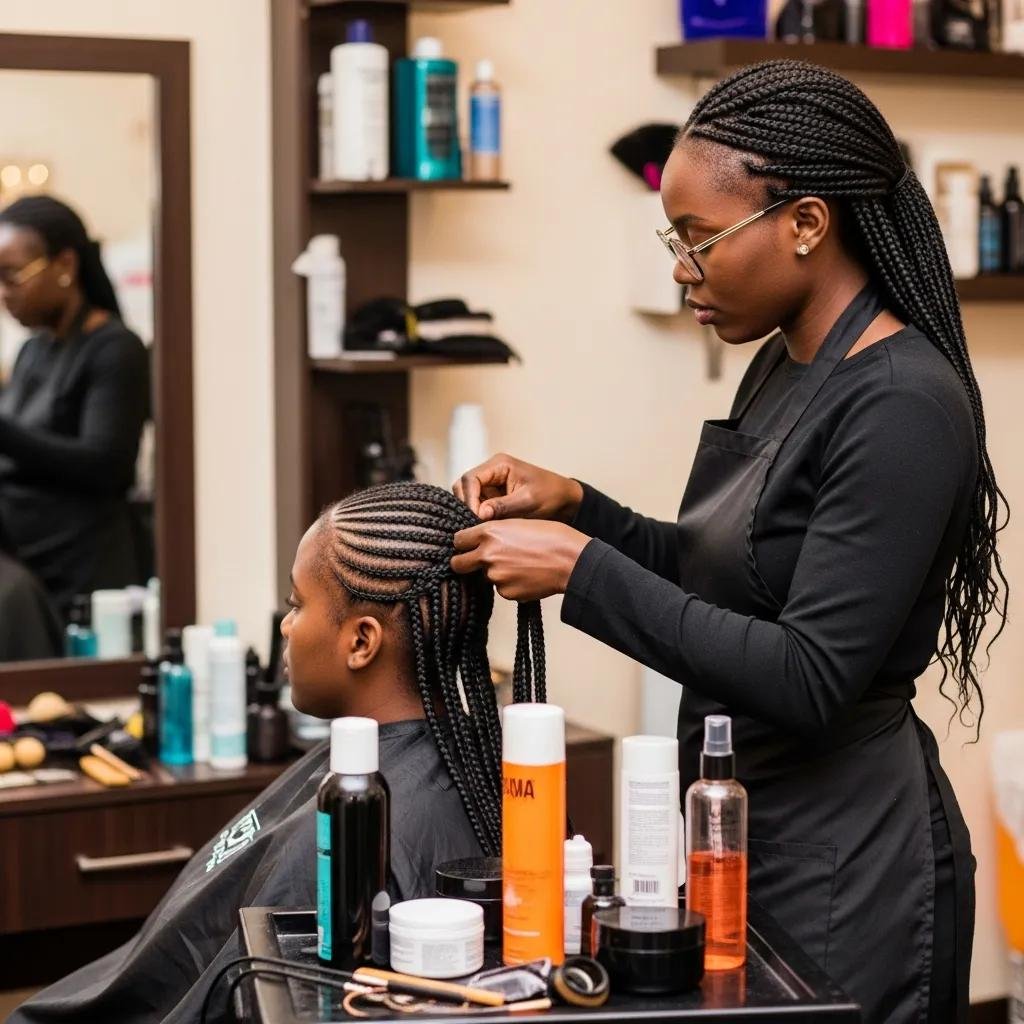
Kylie Studio Salon in Bethesda, MD, partners with clients who want protective styling alongside salon-grade hair health services. We offer complementary treatments that support protective looks — keratin services, blowouts, deep conditioning, and thorough consultations focused on maintenance and scalp health. Owner-stylist Ruth brings more than a decade of experience and a client-first approach, helping you choose styles that respect cultural origins while protecting hair integrity. If you’re combining protective styling with salon treatments, we recommend an initial consultation to plan for low-tension installation, moisture protocols, and a maintenance schedule.
This note points readers to professional resources that support safe, sustainable protective styling while keeping the article’s educational focus.
Frequently Asked Questions
What are the health benefits of protective hairstyles like braids?
Protective styles such as braids reduce daily manipulation, which lowers mechanical breakage and helps retain length. They also help seal in moisture applied at installation and shield hair from environmental friction. The benefits depend on correct installation and maintenance — monitoring tension and keeping up with cleansing and moisturizing are essential to prevent issues like traction alopecia.
How can I maintain my braids for optimal health?
Keep braids healthy by cleansing the scalp regularly to prevent buildup, moisturizing the roots and braid length with light leave-ins, and scheduling maintenance checks to address tension or new growth. Use gentle or diluted shampoos, protect hair at night with satin-lined caps or scarves, and avoid very heavy extensions that pull on follicles. Regular touch-ups will help keep partings tidy and reduce strain.
What should I consider when choosing a braiding stylist?
Choose a stylist with proven experience in the specific braid type you want and who understands both cultural context and hair health. Ask about their low-tension techniques, approach to scalp care, recommended maintenance, and whether they credit the cultural origins of styles. A good stylist will offer a consultation, explain aftercare, and tailor the installation to your hair’s needs.
How do modern trends in braiding differ from traditional practices?
Modern trends often mix traditional mechanics with new aesthetics and materials. While traditional braiding emphasizes cultural meaning and time-honored technique, contemporary styles can prioritize fashion, versatility, and quick adoption. That innovation is exciting but raises questions about cultural respect — learning origins and technique helps maintain appreciation rather than appropriation.
What role does social media play in the popularity of braiding styles?
Social media amplifies braid trends by sharing tutorials, transformations, and celebrity looks to wide audiences. It makes techniques more accessible but can strip context when creators don’t credit sources or explain cultural significance. Responsible creators include stylist credit, background, and maintenance guidance to foster education alongside inspiration.
How can I differentiate between cultural appreciation and appropriation in braiding?
Cultural appreciation means learning the origins and meanings of styles, crediting the communities who developed them, and practicing with respect — often by consulting practitioners from those cultures. Appropriation happens when elements are copied purely for aesthetics without acknowledgment or understanding. Engage, ask questions, and involve knowledgeable stylists to ensure your approach is respectful and informed.
Conclusion
African hair braiding is a layered tradition that combines artistry, identity, and history while offering practical protective benefits. Knowing its origins and meanings deepens appreciation and helps you approach styles with respect. By choosing looks that honor cultural heritage and focusing on proper hair care, you can enjoy the beauty and benefits of braids while celebrating their legacy. Learn more about our braid services and how we can help you achieve healthy, beautiful protective styles at Kylie Studio Salon.