
Managing Postpartum Hair Loss: Practical Tips & Treatments for New Moms
Postpartum hair loss — often called telogen effluvium — is a temporary, common change many new parents notice after childbirth. This guide breaks down what causes shedding, when you’ll likely see the most loss, and the realistic salon and at‑home steps that help hair look and feel stronger as it regrows. You’ll get simple explanations of how hormones affect the hair cycle, salon cosmetic options to improve volume and reduce breakage, and practical routines you can use between appointments. We also explain when cosmetic fixes are appropriate versus when to seek medical testing, share typical client experiences, and show how to book a consultation at Kylie Studio Salon in Bethesda, MD. Throughout, we reference terms like new mom hair care, postpartum hair loss, hair regrowth after pregnancy, and scalp health postpartum to make this a practical resource for busy parents seeking honest results.
What Causes Postpartum Hair Loss and How Long Does It Last?
After pregnancy, hormone levels — especially estrogen — drop and cause more hair follicles to shift from the growth phase (anagen) into the resting/shedding phase (telogen). That synchronized shift makes shedding more noticeable, but it doesn’t destroy follicles: most hair returns once the cycle resets. Understanding that timeline helps you choose the right timing for treatments that reduce breakage and improve appearance. Below is a simple timeline to set realistic expectations.
Postpartum shedding timeline:
- New shedding onset: Usually starts 6–12 weeks after delivery as hormones normalize.
- Peak shedding: Most noticeable around 3–4 months postpartum.
- Recovery: Many people see visible regrowth by 6 months, with fuller recovery between 9–12 months for most.
Use this timeline to plan cosmetic care and to watch for any unusual patterns that might need medical attention; the next section explains telogen effluvium in plain terms.
What is Telogen Effluvium and Its Role in Postpartum Hair Thinning?
Telogen effluvium is a reversible shift in the hair cycle where an unusually large number of follicles enter the telogen (resting) phase and shed. After pregnancy, the sudden drop in estrogen — plus the physical and emotional stress of childbirth, sleep disruption, or nutritional gaps — commonly triggers this shift. Because follicles stay intact, telogen effluvium usually resolves as follicles return to anagen (growth). Knowing it’s typically temporary can ease worry and guide you toward gentle care and styling choices that protect fragile strands while they recover.
When Does Hair Shedding Peak and What is the Typical Recovery Timeline?
Shed often peaks around three to four months postpartum when the temporary telogen spike becomes most visible. Seeing more hair in the brush can feel alarming, but clinicians generally consider up to about 100 hairs per day within normal limits during recovery; sudden, accelerating loss or clearly patchy areas is less typical. Most people notice improvement by six months, with many seeing substantial regrowth by nine to twelve months. Individual timelines vary with nutrition, stress, and underlying conditions — if shedding continues past a year or is accompanied by scalp symptoms, a clinical evaluation is a good next step.
How Can Professional Salon Treatments Help Manage Postpartum Hair Loss?
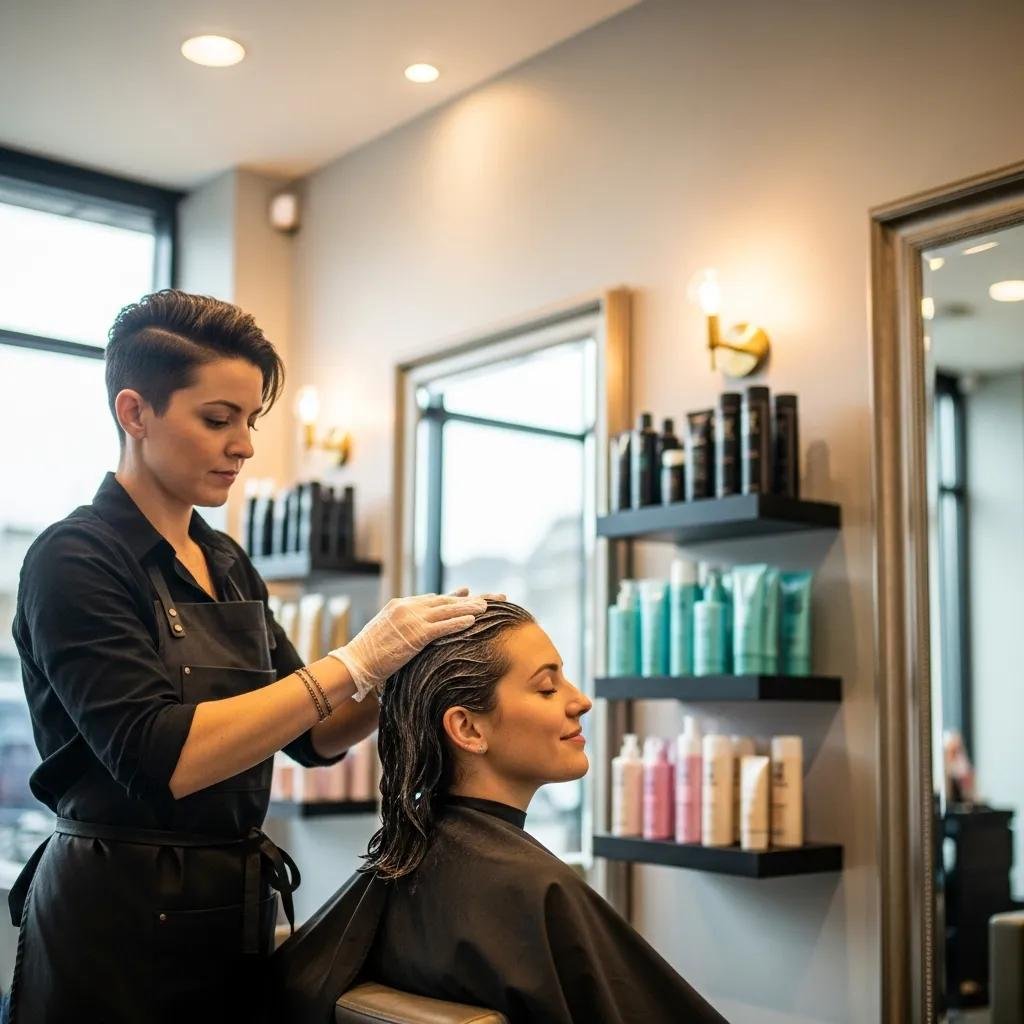
In the salon, our focus is cosmetic support: strengthening fragile shafts, restoring moisture, smoothing cuticles, and creating the illusion of density while true regrowth happens. Professional services can reduce breakage, improve manageability, and reshape hair so it reads fuller — they’re meant to complement medical care when needed. Below are common salon approaches a stylist might combine into a personalized plan based on your hair texture and thinning pattern.
- Deep conditioning treatments to restore moisture and lower breakage.
- Keratin or protein treatments to temporarily strengthen and smooth strands.
- Volumizing cuts and styling to add lift and the appearance of density.
These cosmetic strategies protect hair during the regrowth phase; the table below compares treatment types and recommended frequency to help you choose the best mix.
This comparison helps you prioritize services based on where your hair is in the recovery process; next we explain which conditioning and keratin-style treatments work best for fragile postpartum strands.
Which Deep Conditioning and Keratin Treatments Strengthen Fragile Hair?
Deep conditioning adds targeted moisture and often includes proteins and lipids that temporarily reinforce the hair shaft, reducing breakage during wet-combing and styling. Professional protein masks and reconstructive treatments increase tensile strength and can smooth porosity-related frizz, while keratin smoothing seals the cuticle to reduce tangling and friction-related damage. You’ll often notice softer, more manageable hair after one session; a short course (two to three treatments a few weeks apart) can give more lasting benefits, with monthly upkeep protecting new growth. Combine these with protective styling and gentler daily routines to support healthier strands through the regrowth phase.
How Do Volumizing Haircuts and Scalp Health Services Improve Hair Appearance?
Volumizing cuts use layering, texturing, and strategic length choices to lift hair at the roots and remove weight that flattens fine strands. Scalp services — gentle exfoliation, hydrating serums, and massage — clear flakes and support circulation, creating a healthier environment for follicles and improving how hair looks while it regenerates. Home styling tips like root‑lifting sprays, low‑heat blow‑drying with a round brush, and avoiding tight, high‑tension styles prolong salon results and minimize mechanical breakage. Together, cut, scalp care, and styling give an immediate visual boost as underlying regrowth continues.
Kylie Studio Salon in Bethesda, MD offers deep conditioning, keratin smoothing, volumizing cuts, and scalp treatments tailored for postpartum thinning. Stylist Ruth provides personalized consultations to build a balanced plan that supports both how your hair looks and how healthy it is.
What At-Home Hair Care Practices Support Hair Regrowth After Pregnancy?

A simple, gentle at‑home routine reduces breakage, protects new growth, and complements salon work. Focus on low‑tension styles, mild cleansing, the right ingredient choices (volumizing vs. strengthening), and tools that limit friction and heat. The short product table below helps you decide when to choose volume or strength and which ingredients matter most for postpartum thinning.
Choosing products by function helps you balance volume and strength while protecting new growth. Here are a few quick, practical tips for shampooing, conditioning, and styling that work well for busy new parents.
- Pick a gentle, sulfate-free volumizing or strengthening shampoo based on whether limpness or breakage is your main concern.
- Use a lightweight leave‑in on the ends only — avoid heavy formulas at the roots.
- Prefer low‑heat styling, micro‑fiber towels, and wide‑tooth combs to cut down on friction and tension.
These small habits make daily care easier and safer for fragile hair; the next section lists specific ingredient cues and simple styling hacks that fit a busy postpartum routine.
Which Shampoos, Conditioners, and Styling Tips Are Best for New Mom Hair Thinning?
Match products to your main issue: limp hair benefits from volumizing formulas; breakage responds to protein‑rich, strengthening lines. Look for mild surfactants for gentle cleansing, hydrolyzed proteins for reinforcement, and humectants like glycerin or panthenol for hydration. Protective styling includes low‑heat drying, loose buns or braids with soft ties, and occasional, sparing use of root‑lift sprays. Dry shampoo can stretch time between washes without rough handling. Keep routines short and consistent to limit manipulation while supporting the hair’s return to its pre‑pregnancy cycle.
How Does Nutrition and Supplementation Influence Postpartum Hair Health?
Nutrition matters because building new hair needs protein, iron, vitamin D, and certain B vitamins for keratin production and follicle function. Prioritize protein‑rich meals and iron‑containing foods if tests show low iron, and aim for a varied diet to supply nutrients like zinc and biotin. If you’re considering supplements, talk to your clinician first — especially to check iron and vitamin D levels and get safe dosing. Better sleep and lower stress where possible also support recovery and amplify the benefits of topical and salon treatments.
When Should New Mothers Seek Expert Advice for Hair Loss?
Most postpartum shedding is telogen effluvium and improves with time and supportive care, but some signs mean it’s time for a professional evaluation to rule out other causes or plan more targeted treatment.
Red flags include rapid worsening, patchy bald areas, scalp inflammation, or systemic symptoms like persistent fatigue that suggest nutritional or thyroid issues. Use the decision table below to decide whether a stylist consultation or medical referral is the right next step.
This table makes it easier to tell when salon solutions are appropriate and when medical testing is warranted. Below we explain how a stylist like Ruth can help alongside any clinical care you may need.
How Can a Hair Stylist Like Ruth Assist with Thinning Hair Solutions?
Ruth begins with a focused consultation: she checks density, breakage patterns, scalp condition, and reviews your hair history to spot mechanical or product‑related causes. From there she recommends a cosmetic plan — a volumizing cut, targeted in‑salon treatments, and at‑home product picks — aimed at minimizing breakage and improving perceived fullness while hair regrows. She’ll also teach styling techniques and set a follow‑up schedule so the plan can evolve with your progress.
This stylist‑led approach improves appearance and manageability and pairs well with medical care when that’s needed.
What Signs Indicate the Need to Consult a Dermatologist or Specialist?
See a dermatologist or specialist if hair loss is rapid and severe, appears in distinct patches, or the scalp shows notable redness, scaling, pain, or crusting — signs that point to inflammatory or autoimmune causes rather than straightforward telogen effluvium. Systemic symptoms like ongoing fatigue, unusual bruising, or weight changes should prompt a primary care or endocrine workup to check thyroid function, iron levels, and other metabolic contributors. Often, salon and medical care work hand in hand: stylists manage the cosmetic side while clinicians investigate and treat any underlying medical issues. When in doubt, early testing clarifies the cause and helps everyone create a coordinated plan.
What Are Real Client Experiences with Postpartum Hair Loss Treatments?
Clients often feel a big emotional lift when a combined approach — gentle salon treatments, focused home care, and nutrition support — reduces breakage and improves how hair looks while it regrows. Instead of quoting specific testimonials, we summarize common client journeys that show typical, realistic results: breakage drops after a short series of conditioning treatments, a volumizing cut delivers immediate lift, and density returns progressively over several months with steady care. These examples set practical expectations for both cosmetic improvement and emotional relief.
How Have Kylie Studio Salon’s Services Helped New Moms Regain Confidence?
In the salon, a tailored volumizing cut, periodic deep conditioning, and product coaching usually create an immediate lift in volume and manageability that clients say restores confidence. Focused styling and scalp care protect fragile new growth while our team monitors progress and updates recommendations. Although no cosmetic service changes the hormonal timeline, these interventions reduce visible thinning and breakage, making day‑to‑day styling easier and lowering anxiety about shedding for many clients.
What Testimonials Highlight Successful Hair Regrowth Journeys?
Rather than repeat direct quotes, we’ll share common themes our clients report: relief at less breakage, satisfaction with fuller‑looking styles after a tailored cut, and appreciation for simple at‑home routines that fit a busy life. Many say they feel more like themselves as styling becomes easier and new growth shows. If you want outcomes tailored to your case, an initial consultation can clarify realistic expectations based on your hair history and current condition.
How to Book Your Postpartum Hair Care Appointment at Kylie Studio Salon in Bethesda, MD?
Booking your postpartum hair care visit should be simple: pick whether you want a consultation, a volumizing cut, or a treatment package, and choose a time that works with childcare and recovery. Kylie Studio Salon in Bethesda offers haircuts, color, highlights, blowouts, deep conditioning, keratin treatments, and consultative visits — and stylist Ruth will help you balance cosmetic goals with hair health. Below are easy steps to book and prepare so your first appointment is productive and stress‑free.
How to book and prepare—three simple steps:
- Pick the appointment type (consultation, cut, or treatment) and choose times that fit around recovery and childcare.
- Share a brief hair history and your main concerns when booking so staff can reserve the right amount of time.
- Bring photos of your pre‑pregnancy style and a list of current products to the consultation for accurate recommendations.
Following these steps helps the stylist prepare an individualized plan; the section below explains our online booking process and what to expect at your first visit.
What Is the Convenient Online Booking Process?
When scheduling online, pick the correct service category — consultation, haircut, or treatment — and select a date and time that works for you; consultations usually run 30–45 minutes, while combined services take longer. If you’re booking for postpartum concerns, note that in your appointment so we can allocate extra consult time. Cancellation and rescheduling policies are provided at booking — check your confirmation for details. Preparing a short hair history and a couple of before‑pregnancy photos helps your stylist make quick, effective recommendations during the visit.
What Should You Expect During Your First Consultation?
At your first consultation, the stylist will review your hair history, examine scalp and strand condition, and talk about lifestyle, nutrition, and any medical factors that could affect hair health. You’ll get a practical, cosmetically focused plan that may include a volumizing cut, a conditioning or keratin treatment, recommended at‑home products, and a follow‑up schedule to track regrowth. The goal is to give styling strategies that reduce breakage and a realistic timeline for visible improvement so expectations match biological hair cycles.
Frequently Asked Questions
1. Can postpartum hair loss affect all new mothers equally?
It varies. Genetics, hormone changes, stress levels, sleep, and overall health influence how much hair is lost and how quickly it grows back. Some people experience only mild shedding; others notice more visible thinning. Personalized advice from a stylist or healthcare provider helps match care to your situation.
2. Are there specific vitamins or supplements recommended for postpartum hair health?
Certain nutrients support hair recovery — biotin, vitamin D, iron, and omega‑3s are commonly mentioned. A balanced diet is the first step, but if you’re considering supplements, check with your healthcare provider first so testing and dosing are safe and appropriate.
3. How can stress management techniques help with postpartum hair loss?
High stress can worsen hair shedding by affecting hormones and the hair cycle. Practices like mindfulness, light exercise, restorative stretching, or talking with a support person can lower stress and indirectly support healthier hair regrowth.
4. What role does sleep play in postpartum hair recovery?
Sleep supports overall repair and regeneration, including hair follicles. While sleep is often fragmented after a baby arrives, prioritizing rest when possible — naps, shared nighttime duties — helps reduce stress and supports recovery.
5. Are there any hairstyles to avoid during postpartum hair loss?
Avoid tight styles that pull on the hair shaft, such as tight ponytails, braids, or high buns. Choose looser styles and soft ties, limit heat and harsh chemicals, and opt for gentle tools to protect fragile strands.
6. How can I tell if my hair loss is normal or requires medical attention?
Typical postpartum shedding peaks around three to four months and then improves. If you see rapid or patchy loss, scalp inflammation, or systemic symptoms like persistent fatigue or weight changes, consult a healthcare provider to rule out thyroid issues, iron deficiency, or other causes.
7. What are some effective at-home treatments for postpartum hair loss?
Use gentle, sulfate‑free shampoos and conditioners that boost volume or strengthen depending on your needs. Lightweight leave‑ins and heat protectants help reduce damage. Scalp massage can encourage circulation, and a nutrient‑rich diet supports new growth. Keep routines simple and low‑manipulation.
Conclusion
Managing postpartum hair loss is about patience and practical steps: understanding the cause, using gentle at‑home care, and choosing salon treatments that protect and cosmetically improve hair while it regrows. Combine nutrition, stress management, and professional advice for the best results. Ready to start? Book a consultation at Kylie Studio Salon and let us help you build a realistic, confidence‑boosting plan for healthier hair.