
Salon Management Essentials: Practical Strategies to Grow Your Hair Business
Great salon management brings together operations, people, finances, marketing and tech so your team can deliver consistent, memorable services. When those pieces work together, you’ll see higher average tickets, stronger client loyalty and smoother days that let owners focus on growth. This guide lays out clear, actionable steps across hiring and staff development, pricing and KPIs, local marketing, software that cuts no-shows, and experience-led retention tactics. You’ll find hiring and training checklists, pricing frameworks, marketing approaches for local discovery, software recommendations, and retention methods that map directly to practice. We finish with a local example — Kylie Studio Salon in Bethesda — so you can see how systems translate into bookings and repeat clients. Throughout, the emphasis is on practical salon operations, staff management, profitability and client retention with checklists you can adopt right away.
How can smart staff management drive your salon’s success?
Strong staff management covers hiring, onboarding, scheduling and ongoing development to keep service quality steady and clients happy. Hiring for both skill and fit cuts down rework and creates a predictable experience. Structured onboarding helps new stylists ramp faster and makes mistakes less costly. Smart schedules that match stylist availability to demand prevent lost revenue and burnout, and regular feedback helps the team improve over time. Below are high-impact steps managers can put in place quickly to build staffing fundamentals and improve retention.
Use this short checklist to strengthen staff management this week:
- Write role-focused job descriptions listing technical skills and customer-service expectations.
- Follow a 30/60/90-day onboarding plan with shadowing and milestone check-ins.
- Build schedules around demand peaks and each stylist’s specialties.
- Hold monthly feedback sessions and offer small incentives tied to client satisfaction.
These actions create a reliable baseline and make it easier to layer in deeper onboarding and motivation practices later.
What are the best practices for hiring and training salon staff?
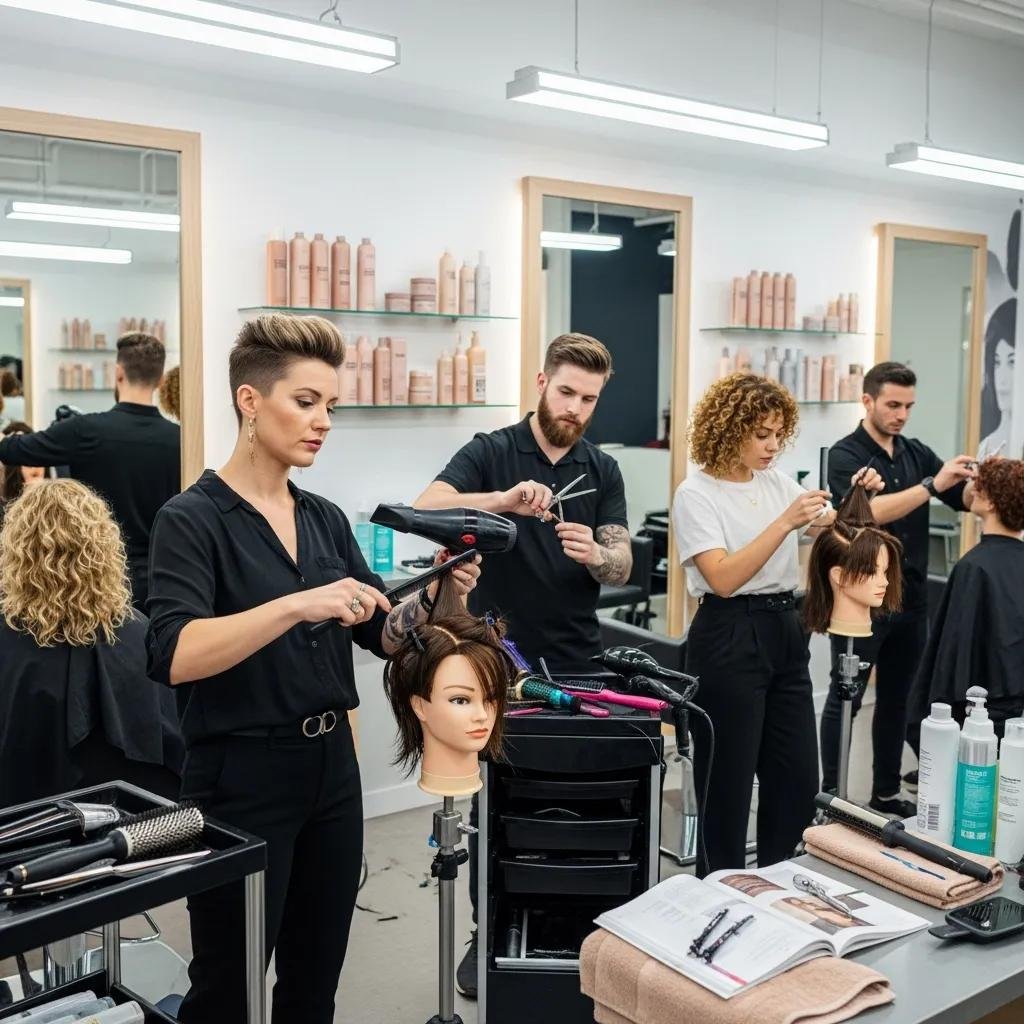
Hiring and training should combine a clear selection process with hands-on practice so stylists and front-desk team deliver on your brand promise. Start with practical role descriptions, interview questions that probe technique and client rapport, and a skills checklist for trial shifts. Pair new hires with mentors during a 30/60/90-day plan, track technical milestones and include customer-service role-plays to standardize consultations. Monthly technique labs or vendor-led refreshers keep skills current and support growth. A documented training path reduces variability in service delivery and helps keep clients coming back.
How does staff motivation affect client satisfaction?
Motivated staff deliver more consistent service, are likelier to upsell thoughtfully, and help clients return and recommend the salon. Engaged stylists take pride in consultative service and long-term relationships, which lifts average ticket and retention. Low-cost motivators — public recognition, small retail commissions, flexible scheduling — cut turnover and protect training investments. Clear career paths and rewards tied to real KPIs (rebook rates, average ticket) align team behavior with salon goals. When motivation is consistent, clients notice friendlier service, clearer consultations and higher perceived value.
What financial strategies boost salon profitability?
Financial strategy ties pricing, cost control, service mix and KPIs together so you can grow margin without eroding client value. Value-based pricing captures what clients will pay for your time and skill, while tracking product COGS and labor per service keeps margins visible. Upsells and bundles lift average ticket, and tighter inventory control preserves retail margin. Below are practical tactics to prioritize and a comparison to help you evaluate pricing and cost levers.
Key financial tactics to put into practice now:
- Group services into tiers (standard, premium, signature) and price by perceived value and time.
- Track average ticket and revenue per stylist weekly to spot trends and capacity gaps.
- Offer bundles and add-ons during consults to increase spend naturally.
- Negotiate supplier terms and tighten inventory tracking to cut retail shrinkage.
These fundamentals support the pricing and KPI frameworks shown in the table below.
Intro to pricing and cost comparison:
This comparison helps you see which services justify premium pricing and where tighter cost control yields quick margin gains.
Once you’ve set prices and margins, build a compact KPI dashboard to watch business health.
Reviewing these metrics regularly keeps pricing and cost actions aligned with profit goals and demand patterns.
How to develop a pricing strategy that maximizes revenue?
A strong pricing strategy blends cost-plus math with market positioning and perceived value so you can raise revenue without losing core clients. Start by calculating labor cost (time × hourly rate) plus consumables and your target margin for a baseline. Add market benchmarking and a value check — how unique is your skill or experience — to set value-based prices. Offer tiered packages for different client segments and use short-term promos for new-client acquisition while keeping permanent bundles to lift margins. Test small price changes with clear communication and watch rebook and cancellation trends to ensure demand holds steady.
Which financial metrics should salon owners monitor regularly?
Track a focused set of KPIs that map directly to profitability and operational health so you can act quickly. Core metrics are average ticket, revenue per stylist, retention rate, new-client acquisition cost, and product sell-through — each points to a different “leak” in the business. Use simple formulas (for example, average ticket = total revenue ÷ service transactions) and set weekly or monthly review cadences. Benchmark against prior periods to spot seasonality and guide staffing or promo choices. Regular measurement turns financial strategy into daily operational priorities like scheduling and buying.
How to master salon marketing to attract and keep clients?
Salon marketing mixes local search presence, social proof, a visual portfolio and retention channels to drive discovery and bookings. Optimize your local business listing and collect real reviews to boost search visibility, and keep a curated before/after gallery and short videos to build credibility on social platforms. Email and SMS automations help rebook clients and push targeted offers, while referral programs amplify word-of-mouth. The tactics below are the highest-impact moves for small beauty businesses focused on efficient acquisition and retention.
High-impact marketing priorities:
- Optimize local listings and encourage client reviews to improve discoverability.
- Keep a visual portfolio with before/after shots and short tutorial clips for socials.
- Use targeted email/SMS for rebooking reminders and segmented promos.
- Run a simple referral reward that benefits both referrer and new client.
These tactics build a funnel from discovery to repeat visits; next we’ll show how to turn portfolio views into bookings.
When showcasing work online, prioritize clear service descriptions and a simple booking path to turn interest into appointments.
What digital marketing tactics work best for hair salons?
Visual storytelling plus local SEO delivers the best return because hair work is inherently visual and local. High-quality before/after photos and short videos show results faster than words. Optimize captions and site copy for local keywords (for example: Bethesda hair salon) to improve search relevance. Post consistently (two to three times a week) and repurpose clips in stories and reels to extend reach. Paid local ads can speed acquisition for specific offers, but organic social proof and a strong portfolio are the main conversion drivers.
Integration note: link portfolio CTAs directly to online scheduling. Clear service pages and a prominent Book Now button reduce friction between discovery and appointment.
How can local marketing and referral programs grow your clientele?
Local outreach and referral programs turn neighborhood awareness into measurable bookings by leveraging personal connections and partnerships. Keep referral rules simple — a service discount for the referrer and a welcome add-on for the new client — so redemption is easy. Partner with nearby boutiques or studios for cross-promotions and events to reach targeted locals. Track referral sources via intake forms or booking notes to measure ROI and tweak offers. Consistent, tracked local outreach turns casual foot traffic into a steady pipeline of new clients.
How can technology streamline salon operations?
The right salon tech automates repetitive tasks, reduces no-shows and surfaces data that guides staffing and marketing decisions — improving both efficiency and the client experience. Scheduling and automated reminders cut admin time and lower no-shows. Client records with service history enable personalized recommendations. POS and inventory integrations protect retail margins, and dashboards show your most profitable services and times. The main benefits of salon software are faster operations, better retention and data-driven choices.
Core technology benefits include:
- Saving time with automated scheduling and confirmations.
- Reducing no-shows via reminders and deposit options.
- Gaining better insight from reports that guide staffing and promotions.
Below is a helpful comparison of common salon software features and the business advantages they provide.
Intro to salon software features and benefits:
What are the benefits of using salon management software?
Salon software centralizes bookings, client records and reporting to cut admin overhead and improve personalization. Automated reminders and online booking reduce phone time and let clients self-serve, boosting bookings outside business hours. Centralized histories let stylists record formulas and preferences so service is consistent and upsells are targeted. Reports reveal demand patterns, average ticket and product winners so you can allocate staff and promos where they’ll have the most impact. Choose software with the right integrations so it becomes a leverage point — not another spreadsheet.
How does an online booking system improve client experience?
A fast, clear, mobile-friendly booking system converts interest into appointments by removing friction. Short booking flows, clear service descriptions and visible pricing lower confusion and abandoned bookings. When booking ties into confirmations and reminders, no-shows drop and on-time arrivals improve, which protects schedules and client wait times. Requiring deposits or prepayment for premium services cuts last-minute cancellations and preserves margins. Overall, a smooth booking UX builds client confidence and simplifies the team’s day.
What are key strategies for delivering exceptional customer experience?

Exceptional experience comes from personalized consultations, consistent service standards, thoughtful follow-up and conveniences that remove friction for clients. Personalization starts with capturing preferences and notes during consultations and using that info to tailor recommendations on future visits. Documented service flows and regular training lock in predictable results, and loyalty programs give clients a clear reason to return. Comfort and convenience — easy booking, timely reminders and honest wait-time communication — finish the experience and encourage referrals. The table below compares loyalty models so you can pick the one that best fits your retention goals.
Intro to loyalty program comparison:
Pick a clear program, track retention lift and you’ll be able to prove whether the rewards pay for themselves.
How to personalize services to build client loyalty?
Start personalization with a structured consultation that records basics — desired length, styling habits, product sensitivities and past services — then save those notes in the client file. Use service notes to recommend homecare and one targeted product or add-on that improves the client’s outcome rather than pushing multiple items. Follow up with rebooking messages timed to their usual return window. Small personal touches — remembering a favorite stylist, sending tailored tips — add up over visits and raise lifetime value.
What role do loyalty programs play in client retention?
Loyalty programs make the value exchange obvious and measurable, rewarding repeat visits and spend. Choose a model that fits your clientele: visit-based works well for frequent-service clients, tiered programs pull higher spend from premium clients. Keep rewards achievable and communication clear, and automate tracking through your booking or POS system to remove redemption friction. Measure retention lift and incremental revenue, then adjust thresholds and offers. A well-run loyalty program turns occasional clients into regulars.
How does Kylie Studio Salon show these practices in action?
Kylie Studio Salon in Bethesda is a clear example of how staffing, marketing and technology combine to create a strong local presence and a dependable client experience. The salon focuses on a balanced set of services — women’s haircuts and blow-dries, full and partial highlights, keratin treatments, perms for women and men, and children’s and men’s haircuts — that support both repeat appointments and premium treatments. Owner and stylist Ruth centers the business on personalized care and technical skill, and the salon leans on clear service descriptions and online booking to reduce client friction. This example shows how the approaches above translate into bookings and returning clients.
Kylie Studio’s local reputation rests on two straightforward practices you can copy: keeping consult notes tied to services and offering an easy online booking flow that guides clients from portfolio to appointment. Those operational choices — consistent standards plus a clear booking path — align with the profit and retention tactics in this guide. Prospective clients in the Bethesda area can review services and book appointments through the salon’s booking channel, enjoying the studio’s focus on enhancing natural beauty and client confidence.
What staff training and client communication practices are in place?
Kylie Studio emphasizes staff expertise and a personalized consultation model to ensure consistent results. Training covers current trends and regular technical refreshers so stylists deliver modern techniques while following salon standards. Client communication is kept simple through online booking and transparent service descriptions so expectations are set ahead of time. These practices reduce confusion, improve rebook rates and support the salon’s reputation as a trusted local studio.
How does Kylie Studio Salon use marketing and technology?
The salon leans on local visibility and visual proof — a portfolio and client reviews — to showcase strengths in highlights, keratin treatments and precision cuts. Online booking makes it convenient for clients and reduces admin work for staff, improving schedule reliability and cutting no-shows. By pairing visual marketing with thoughtful technology, the salon converts interest into appointments and uses follow-ups to encourage repeat visits — a model owners can adapt to boost local visibility and retention.
Frequently Asked Questions
What are the key elements of a successful salon marketing strategy?
An effective salon marketing plan combines solid local search presence, authentic reviews and a strong visual portfolio. Create engaging content — before-and-after photos and short tutorials — to showcase outcomes. Use targeted email and SMS for rebooks and promotions, and put a simple referral program in place to reward both existing and new clients. A mix of digital visibility and community engagement usually delivers the best results for attracting and keeping clients.
How can salons effectively manage client feedback?
Set up easy channels for feedback, such as post-appointment surveys, email follow-ups or direct messages on social platforms. Encourage clients to share their experience and respond quickly to both praise and concerns. Regularly review feedback to spot trends and make improvements. Acting on client input shows you value their opinion and builds stronger relationships over time.
What role does technology play in enhancing client experience?
Technology streamlines day-to-day work and helps personalize service. Online booking makes scheduling simple; automated reminders reduce no-shows. Client management tools store preferences and formulas so stylists can deliver consistent results. Communication via SMS or email keeps clients informed about appointments and offers. When chosen and set up well, tech makes the experience smoother for clients and simpler for your team.
How can salons measure the effectiveness of their marketing efforts?
Track KPIs like client acquisition cost, campaign ROI and client retention rate. Use analytics to monitor website visits, social engagement and booking conversions. Ask new clients how they found you to identify strong channels. Regularly reviewing these metrics helps you double down on what works and adjust where needed.
What are some common challenges in salon management and how can they be addressed?
Frequent challenges include staff turnover, inconsistent service quality and misaligned client expectations. Address these with clear training programs, documented service standards and regular team feedback. Strong client communication and personalized service help manage expectations. Proactively tackling these areas builds a more stable, positive environment for staff and clients.
How can salons create a strong brand identity?
Define what makes your salon different and communicate it consistently. Develop a cohesive visual look — logo, colors and marketing materials — that reflect your personality. Share stories and client testimonials on social channels to create an emotional connection. Make sure your values show up in every client interaction so your brand feels authentic and memorable.
Conclusion
Putting practical salon management practices in place — from staff systems to pricing, marketing and the right tech — will help you keep clients, increase profit and simplify daily operations. Focus on clear processes, regular measurement and small experiments that improve the client experience. Explore the resources here and pick one or two changes to try this month — small wins add up fast. Start today and watch your salon grow.