
Best Haircuts to Add Volume to Fine Hair: Expert Styles for Fuller, Thicker-Looking Hair
Fine hair describes the diameter of individual strands—not how many hairs you have—and smaller strand width often makes styles look flat and less dense. In this guide, we share salon-tested haircuts, styling steps, color approaches, and product recommendations that create the appearance of fuller, thicker-looking hair and that your stylist can deliver in the chair. If your roots go limp by midday, your hair oils quickly, or styles lose shape, the right cut and a targeted routine are the fastest routes to visible body. Below you’ll find clear definitions, simple diagnostics, the best short-to-medium cuts for lift, step-by-step blow-dry and product tips, and a practical look at how color and treatments affect volume. Our goal is to give you actionable choices—cut, upkeep, and styling—so you can walk into a consult ready to get the results you want. We also keep common search terms like volumizing cuts, layered bob fine hair, and blow-drying for volume in mind to help stylists and clients find the right options.
What Are the Characteristics of Fine Hair and Why Does It Lack Volume?
Fine hair is defined by a smaller strand diameter, which means each hair scatters less light and holds less body—so the overall look reads flatter. Mechanically, finer strands are less stiff and bend more easily at the root, which reduces natural lift even when scalp density is normal. Hormones, genetics, and scalp oil production influence how quickly volume fades, and heavy products or excessive length add weight that pulls hair toward the scalp. Knowing these characteristics helps you and your stylist choose cuts and styling that remove weight, create optical density, and prioritize root lift for longer-lasting body.
Below are quick diagnostic cues and the most common causes so you can decide whether a haircut, a product swap, or a scalp treatment is the right next step.
It’s important to distinguish fine hair from thin or thinning hair—each requires a different approach to cutting and styling.
How Does Fine Hair Differ from Thin or Thinning Hair?
Fine hair refers to the thickness of individual strands. Thin hair means lower overall density, and thinning hair signals active loss that reduces scalp coverage. You can self-check by feeling strand width between your fingers (fine hair), inspecting part width and scalp visibility (thin hair), and watching for increased shedding or a widening part (thinning). If your strands are fine but density is normal, strategic layering and volumizing cuts can create the illusion of fullness. If you’re experiencing active thinning, combine styling solutions with a medical or specialist consultation. If you notice sudden changes or persistent shedding, see a professional before major color or chemical services.
These distinctions set the stage for identifying the mechanical and product-related reasons fine hair lies flat.
What Causes Fine Hair to Appear Flat and Lack Body?
Fine hair looks flat in part because slimmer strands are less stiff, and added weight from long lengths or heavy products compounds the problem. Excess oil or product buildup flattens roots and reduces the grip needed for volumizing techniques, while a flat growth pattern—hair that grows close to the scalp—limits natural lift even after a cut. Humidity and cuticle damage that increases porosity can also stop styles from holding shape. Simple fixes include shorter, weight-reducing cuts, clarifying routines to remove buildup, and styling that focuses on root lift and texture rather than heavy conditioning at the lengths.
Because causes vary, the next section details which haircuts remove weight and create instant visual volume for fine hair.
Which Haircuts Best Add Volume to Fine Hair?
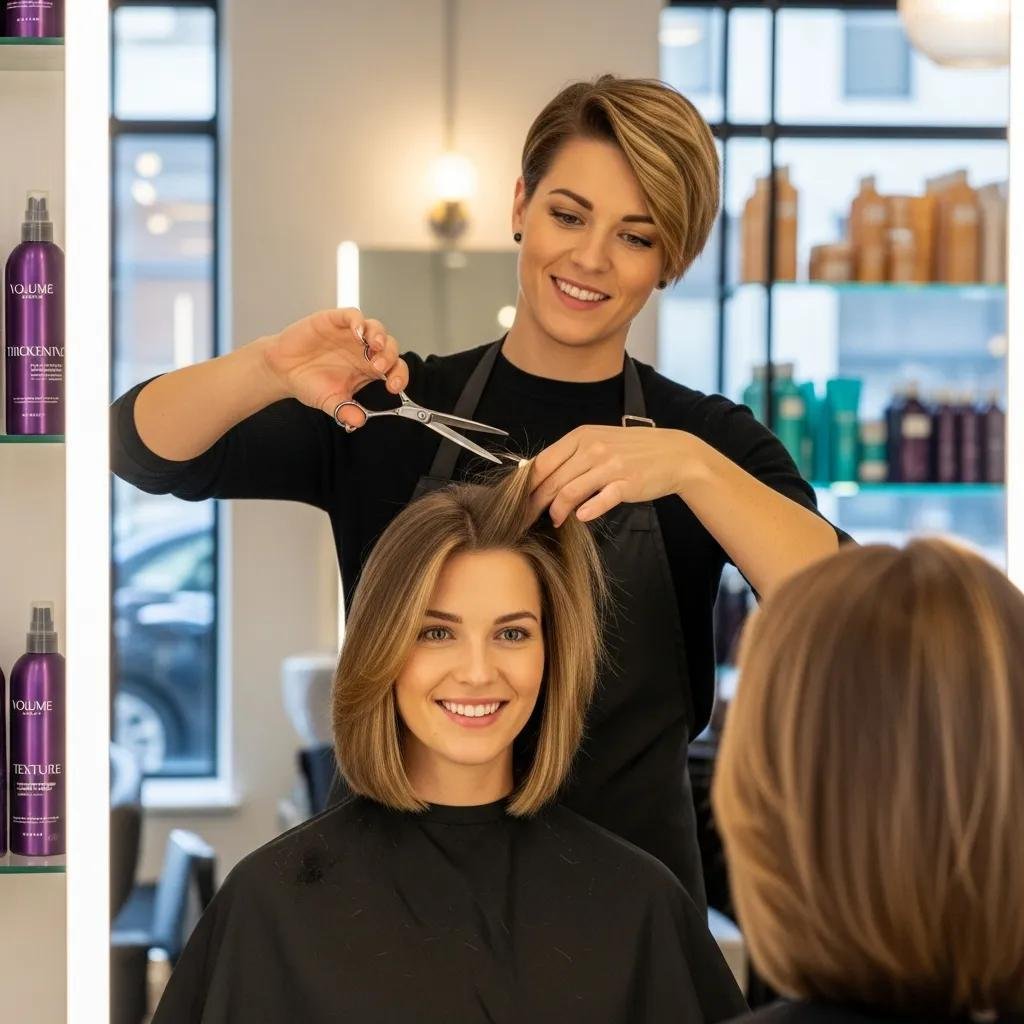
A volumizing haircut preserves weight where you want optical thickness and removes it where hair sags. Top choices for fine hair include layered bob variations, pixie cuts, shags, blunt cuts, and face-framing layers—each uses layering, texturizing, or a blunt edge to change root lift and mass distribution. A precise cut balances how it looks with how much upkeep you’ll do: some shapes need frequent trims to keep lift, while others depend more on styling. Use the short comparison below to match a style to your density, lifestyle, and maintenance preferences.
This comparison helps you see which cuts create instant visual impact and which suit different daily routines.
How Do Layered Cuts Enhance Volume for Fine Hair?
Layering removes weight from the lengths and builds internal lift near the crown so hair sits away from the scalp and looks fuller. Internal layering—shorter sections cut beneath longer outer lengths—adds body without losing perimeter mass, and careful texturizing at the ends reduces stringiness without thinning the overall silhouette. Good layer placement accounts for face shape and cowlicks so the cut works with natural growth; when layers are misapplied, fine hair can look wispy or frizzy. After a layered cut, focus on root-lift styling and lightweight products to keep movement defined all day.
What Are the Benefits of Short Haircuts for Fine Hair Volume?
Short cuts like pixies and cropped bobs create immediate optical density by removing long, heavy lengths that collapse at the root. They concentrate mass closer to the scalp, making root-lifting styling easier and more effective—many clients notice fuller hair right after the cut. The trade-off is more frequent trims and some styling to add texture—short looks often use paste, light wax, or mousse for separation and lift. Consider your face shape and daily routine: short volumizing styles save daily heat time but need regular salon visits to keep their shape.
With short and layered options in mind, the next section looks at medium-length choices that balance fullness and length.
What Medium Length Haircuts Create Fullness for Fine Hair?
Medium-length styles—lobs, blunt cuts, and face-framing layers—give you a middle ground: you keep length while shaping perceived density through weight placement. Blunt ends give a clean edge that reads as thicker mass, and lobs keep enough length to be styled into waves or bends that add body. Face-framing layers lift hair around the front and direct volume where it visually broadens the silhouette. The mini-table below shows how these medium lengths trade off versatility, upkeep, and volume.
These medium-length choices use edge and placement to make hair look denser while keeping styling flexible.
How Do Lobs and Blunt Cuts Add Thickness to Fine Hair?
Lobs and blunt cuts give the illusion of thicker hair by keeping a strong perimeter that reflects light consistently and reads as a continuous mass. A blunt edge hides the feathered gaps that can show scalp between strands, so the silhouette looks fuller. A slightly textured lob preserves movement while keeping enough weight to avoid a wispy finish. Styling focuses on preserving the edge with regular trims and using heat styling to add body at mid-lengths rather than at the roots—this sustains the fullness. For hair that struggles with limpness, a lob that sits at the shoulder or collarbone often balances length with perceived thickness.
What Face-Framing Layers Boost Volume in Medium Styles?
Face-framing layers are shorter, angled pieces around the hairline that redirect weight and add spring at the front—this creates instant lift and a fuller-looking hairline. Layer placement depends on face shape: longer faces benefit from softer, chin-length frames; round faces often suit longer, graduated pieces that add length. These layers add contrast and movement, increasing depth and fullness without removing overall circumference mass. Maintain them with light styling—blow-drying forward or using a large-barrel iron to bend pieces outward—and trim regularly to keep the lift consistent.
How Can Styling Techniques and Products Maximize Volume in Fine Hair?
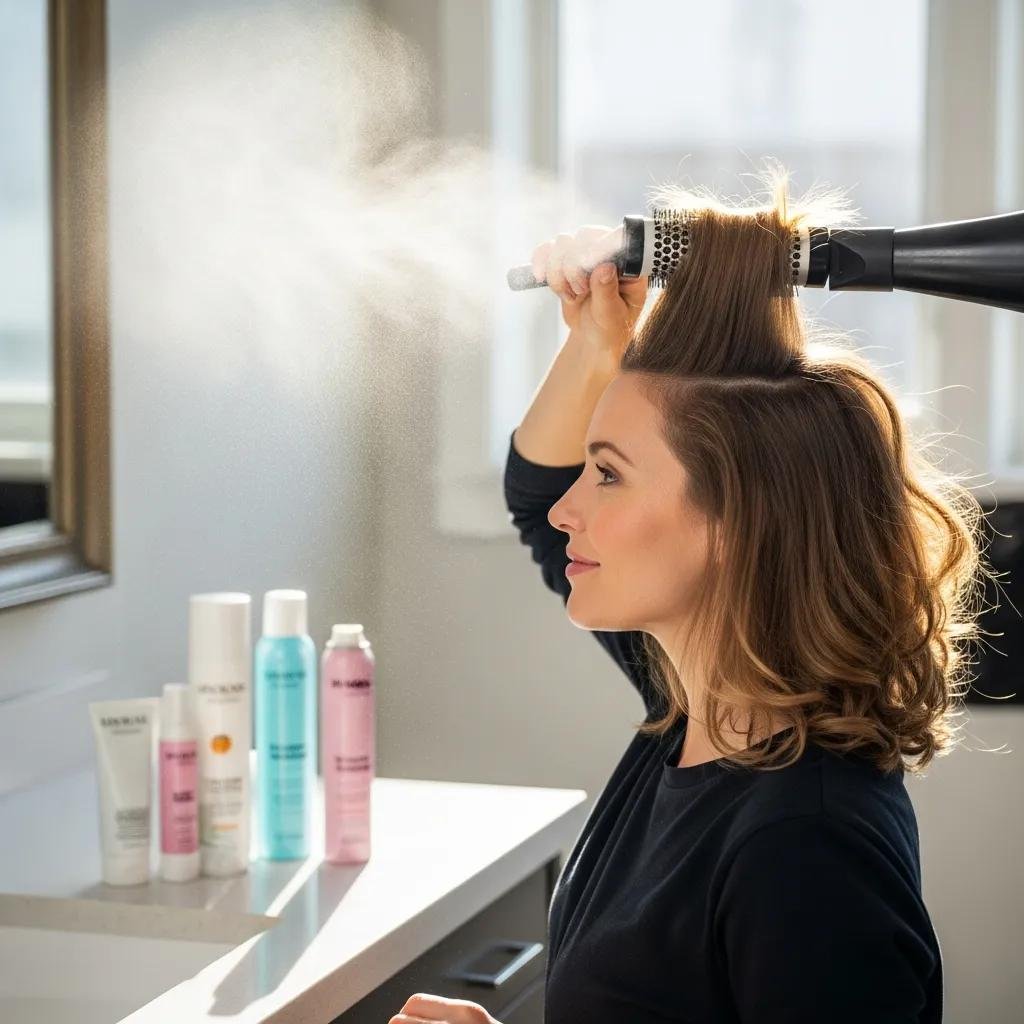
Technique matters because even a perfect cut needs the right prep, tools, and products to hold shape. Root-focused routines—lightweight mousse or root lifter on damp roots, targeted blow-drying with a round brush, and finishing with a flexible-hold spray—turn haircut geometry into lasting lift. Professional blowouts and in-salon styling lessons teach precise sectioning and brush angles so you can recreate the look at home, and retailing lightweight, high-performance products helps maintain volume between visits. The table below compares common products and tools so you can pick the right mix for your hair’s weight and finish preference.
This guide helps you match tools and formulations to the demands of fine hair and to the haircut you choose.
Which Volumizing Products Are Best for Fine Hair?
Start with lightweight mousses and root lifters—they add structure near the scalp without weighing lengths down. Dry shampoo is great between washes to rebuild texture. Choose products labeled for fine hair with a lightweight finish and flexible hold; avoid heavy oils and rich serums at the roots because they reduce lift. Our stylists can recommend formulas with balanced polymers that hold without stiffness. Apply sparingly and target the roots—strategic application lasts longer than saturating the entire head. Finish with a fine-hold spray to preserve shape and refresh with dry shampoo on day two.
What Blow-Drying and Styling Methods Create Lasting Lift?
Use a repeatable blow-dry routine: prep damp hair with a root-lifting product and heat protectant, section hair into manageable slices, and use a round brush to pull hair up and away from the scalp while directing hot air down the shaft. Dry from the nape upward so the crown gets focused rotation; finish with a cool blast at the roots to set shape and use clips to hold volume while sections cool. Finish lightly with a flexible-hold spray and skip heavy serums that collapse the root. Practice the same sectioning and brush angles to make salon techniques reliable at home.
How Does Hair Color and Treatment Influence Volume in Fine Hair?
Color and professional treatments can either boost perceived fullness with dimension or reduce volume by adding weight or smoothing the cuticle too much. Strategic highlights and lowlights create depth and contrast—visual cues that make hair look denser—while heavy glosses or keratin smoothing can seal the cuticle and reduce natural lift. Knowing whether a service adds dimension or weight helps you choose treatments that support, not counteract, a volumizing cut. The table below outlines common color and treatment choices and their typical volume effects.
This overview clarifies how to use color and treatments strategically so they support volumizing goals.
Can Highlights and Lowlights Add Dimension and Fullness?
Yes. Highlights and lowlights add multi-tonal contrast that breaks up uniform color and creates the illusion of depth and density. Fine hair benefits from subtle, face-framing babylights or finely placed lowlights near the perimeter to build dimension without over-processing large sections. Prioritize color placement at the perimeter and on strands that move—those areas show most when hair is styled. Avoid excessive processing of mid-lengths to reduce damage and weight. Keep color looking fresh with color-safe routines and periodic refresh services.
What Treatments Support Healthy, Voluminous Fine Hair?
Treatments that support volume focus on scalp health, structural integrity, and light-strengthening rather than heavy smoothing. Scalp exfoliation and stimulation improve the follicle environment and can reduce oil-related collapse, while protein or bond-building treatments restore internal structure to porous strands and limit breakage that thins your silhouette. Regular light trims and occasional glossing maintain perimeter weight and shine without adding bulk, and custom in-salon treatments let stylists tailor bond repair to your hair’s porosity. Pair occasional salon treatments with gentle at-home care to preserve the cut’s shape and maximize long-term fullness.
Why Choose Kylie Studio Salon in Bethesda for Volumizing Haircuts?
At Kylie Studio Salon, we pair consultation-led expertise with practical styling plans for clients who want more visible body. Our Bethesda location makes it easy for local clients to get hands-on guidance, and our reviews reflect consistent results. For fine or thinning hair, an in-person consult is invaluable—our stylists assess strand diameter, growth pattern, and scalp condition to plan layer placement, perimeter weight, and a home-care routine. If you want a cut that balances daily manageability with maximum visual density, book a consultation so we can tailor techniques like internal layering, blunt weighing, or face-framing placement specifically to your hair.
What Expertise Does Stylist Ruth Bring to Fine Hair Solutions?
Ruth specializes in volumizing haircuts for fine and thinning hair and focuses on consultation-first solutions that prioritize volume and movement. She evaluates strand diameter, scalp oil patterns, and your lifestyle to recommend a realistic cut and maintenance plan, and she provides in-salon styling and product guidance to support the new shape. Clients pursuing a targeted change—shorter cuts, strategic layers, or dimension through color—benefit from Ruth’s experience and our consultative workflow. Contact the salon to schedule an assessment so your stylist can craft a plan tailored to your goals and daily routine.
How Do Client Testimonials Reflect Successful Volume Transformations?
Our aggregate ratings and before/after galleries show consistent positive outcomes for volumizing haircuts without relying on verbatim testimonials. A strong average rating indicates our methods create visible lift and client satisfaction. Review transformation photos to set realistic expectations about texture, maintenance frequency, and styling time needed to achieve similar results. When choosing a salon, look for galleries that demonstrate consistent shape retention and how clients wear short or medium cuts after leaving the chair. Booking a consultation based on these visual references and our local reputation will help you align expectations and get a plan that maintains volume between visits.
Kylie Studio Salon welcomes inquiries and appointments at our Bethesda location. Request a consultation to discuss volumizing cuts, styling lessons, and product picks. Our address is 4711 Montgomery Ln, Suite 2, Bethesda, MD 20814, and appointments are available by calling 301-922-7864. When you call, tell us about your concerns—fine strands, limp roots, or a desire for more visible density—and ask for a consultation with Ruth, who specializes in volumizing haircuts and personalized styling plans. A short in-person assessment allows the stylist to recommend the best combination of cut, color placement, and lightweight products to achieve fuller-looking hair without unnecessary damage. Scheduling a consultation ensures you leave with a cut and a realistic at-home routine that preserves volume long after your salon visit.
Frequently Asked Questions
What are the best styling techniques for fine hair to achieve volume?
Focus on root-lifting: apply a lightweight volumizing mousse or root lifter to damp hair, then blow-dry with a round brush, pulling hair up and away from the scalp to build lift. Section the hair and dry from the nape upward so the crown gets the most attention. Finish with a flexible-hold spray to keep movement without stiffness. With practice, these steps make salon results repeatable at home.
How often should I get trims for fine hair to maintain volume?
Regular trims are essential. We generally recommend a trim every 6 to 8 weeks for layered or short cuts to remove split ends and keep the shape that creates fullness. Frequent visits also let your stylist check hair health and make small adjustments that preserve volume.
Can hair treatments affect the volume of fine hair?
Yes. Heavy glosses or keratin smoothing treatments can flatten fine hair by sealing the cuticle and adding weight. Conversely, scalp-focused services and lightweight bond-building treatments can improve structure and support volume. Talk with your stylist to choose treatments that enhance your volumizing goals without compromising the cut.
What role does hair color play in the appearance of volume?
Color can help or hurt volume. Highlights and lowlights add dimension and contrast, which makes hair look fuller. Overly heavy color services can add weight or damage, reducing lift. Opt for subtle, well-placed color that adds depth without compromising the hair’s integrity, and discuss placement with your stylist.
Are there specific products I should avoid for fine hair?
Avoid heavy creams, thick oils, and rich serums at the roots—these weigh hair down and reduce volume. Instead, choose lightweight mousses, root lifts, and dry shampoos that add texture and grip without heaviness. Look for formulas labeled for fine hair for best results.
How can I maintain volume between salon visits?
Keep a consistent routine: use lightweight volumizing products, apply dry shampoo to absorb oil and add texture, and practice blow-dry techniques that emphasize root lift. Avoid heavy conditioning at the scalp, and schedule follow-up consultations as your hair changes so your home routine stays effective.
Conclusion
The right volumizing haircut can transform fine hair—creating the look of fuller, more dynamic hair. By understanding fine hair’s characteristics and choosing the right cut, styling techniques, and products, you can achieve lasting lift and confidence. For tailored advice, book a consultation with a stylist who specializes in volumizing solutions. Visit our services page or call to find the perfect cut for your hair and lifestyle.