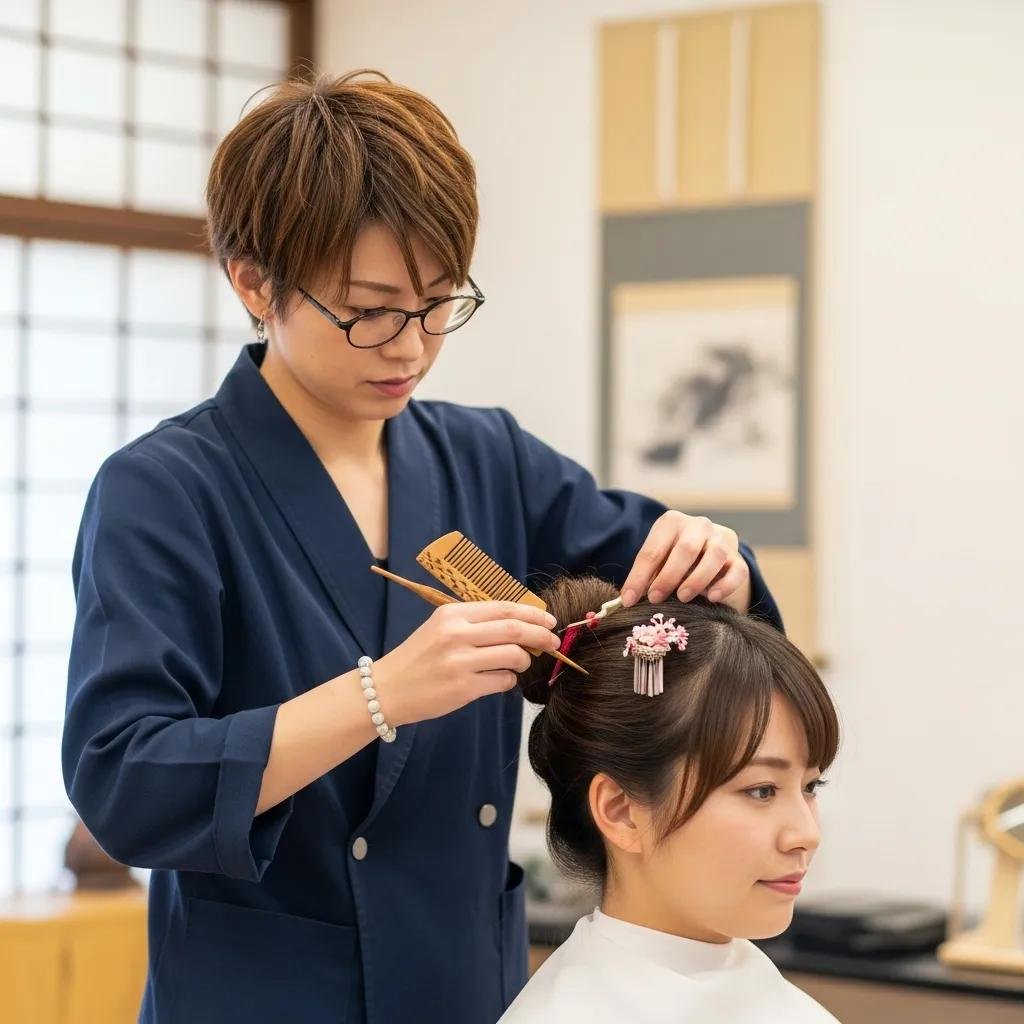
Nihongami: Ancient Japanese Hair Traditions and Their Modern Influence — A Kylie Studio Salon Guide
Nihongami—the traditional hairstyling systems of Japan—carries centuries of visual language, ritual, and craftsmanship that once marked identity, status, and performance. In this piece we explain what Nihongami is, trace its development from the Heian to the Edo periods, and show how Geisha and Maiko hair signaled apprenticeship, age, and role. You’ll learn about time-tested ingredients and rituals—like camellia (tsubaki) oil and fermented rice water—that support hair health, how tools such as Tsugegushi combs were used, and why these methods still shape today’s salon work. We also outline clear, respectful modern adaptations of classic updos and ornaments, and point to where clients in Bethesda, MD can experience Japanese-inspired treatments. Keywords such as Nihongami, geisha hairstyles, camellia oil hair, fermented rice water hair, Kanzashi, and Tsugegushi comb appear naturally here to help discovery while the piece keeps a practical focus on care and styling rooted in tradition.
What is Nihongami and why does it matter in Japanese culture?
Nihongami describes the traditional hairstyles developed and standardized over centuries in Japan. These styles used particular shapes, lengths, waxes, ornaments, and supports to create silhouettes that communicated age, marital status, profession, and regional identity at a glance. In the Heian period, long flowing hair embodied courtly ideals; later, increasingly elaborate updos became visual markers for townspeople, performers, and professionals. Reading Nihongami helps us see hair not just as decoration but as a social and artistic code—one that guided interactions and presentation across generations.
- Key historical roles of hair in Japanese society:
Courtly identity and idealized beauty in the Heian era.Social rank and occupational markers during the Edo period.Performance and apprenticeship signals among Maiko and Geisha.
Those roles naturally lead into a chronological look at how hairstyles changed between eras—and why those shifts mattered.
How did Nihongami styles change from the Heian to the Edo periods?
Heian styles prized length and understated form: women often wore long, straight hair (taregami) that framed the face and suggested aristocratic grace. As political centers shifted and urban life grew, hairstyles became more structured. By the Edo period, pinned updos, waxed shapes, and built supports appeared to hold silhouette through long social engagements. The rise of urban culture and professional entertainers fostered ornate looks like the Shimada mage, where shape and ornament conveyed age and marital status. These shifts show how materials (waxes, combs, supports) and social meaning evolved together to create the varied language of Nihongami.
That historical arc sets the stage for the roles professional hairstylists and performers played—our next topic.
What roles did Geisha and Maiko hairstyles serve in traditional society?
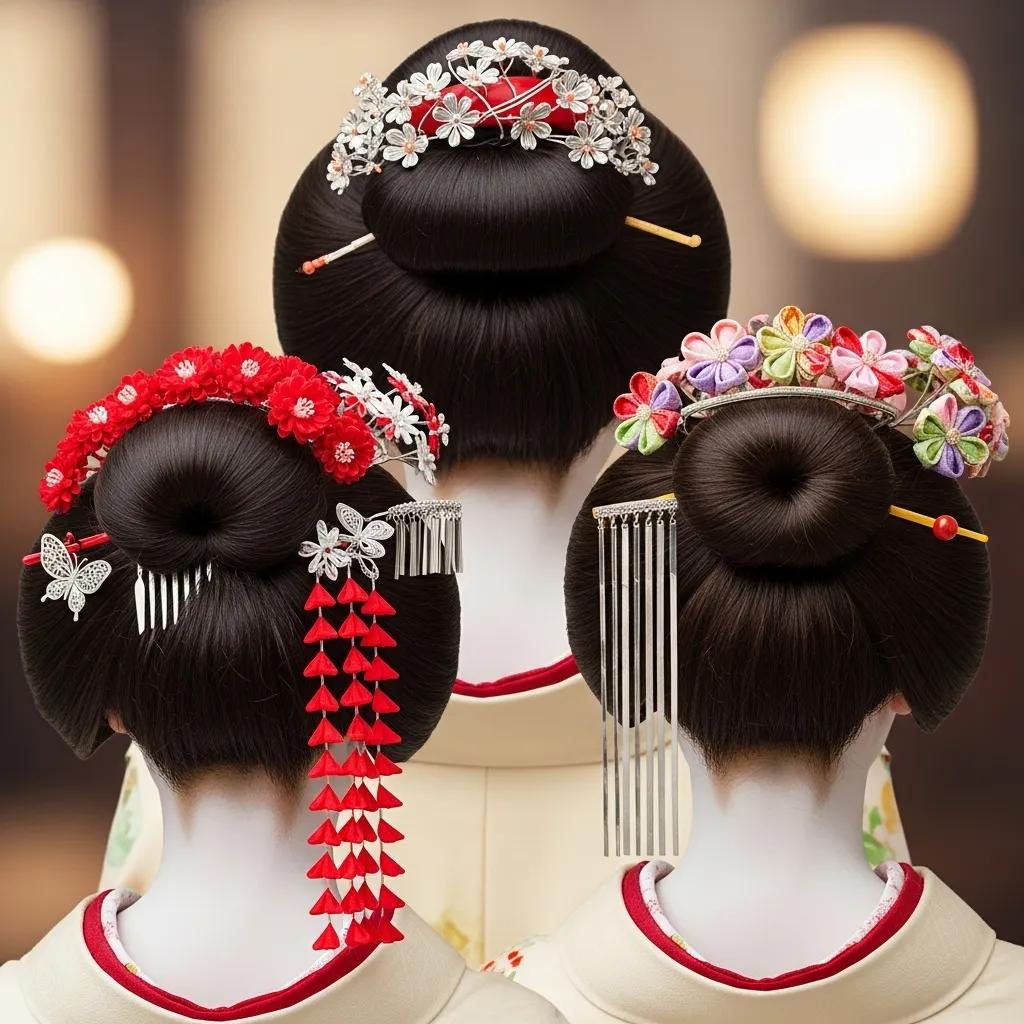
Geisha and Maiko hairstyles were deliberate signals: Maiko (apprentices) wore more ornate, seasonal styles while full Geisha favored subtler updos. Specific arrangements—Wareshinobu, Ofuku, Shimada mage—marked stages of training and social presentation, with Kanzashi and precise placement indicating age, rank, or ceremony. Crafting and maintaining these styles required significant skill and reflected a cultural respect for hairstyling as both craft and performance. Apprenticeship included learning how to build, support, and decorate hair for theater and social settings.
Knowing these practical roles makes it easier to understand why certain ingredients and grooming rituals were valued for hair health and longevity. We cover those next.
Which traditional Japanese hair-care rituals and ingredients support healthy hair?
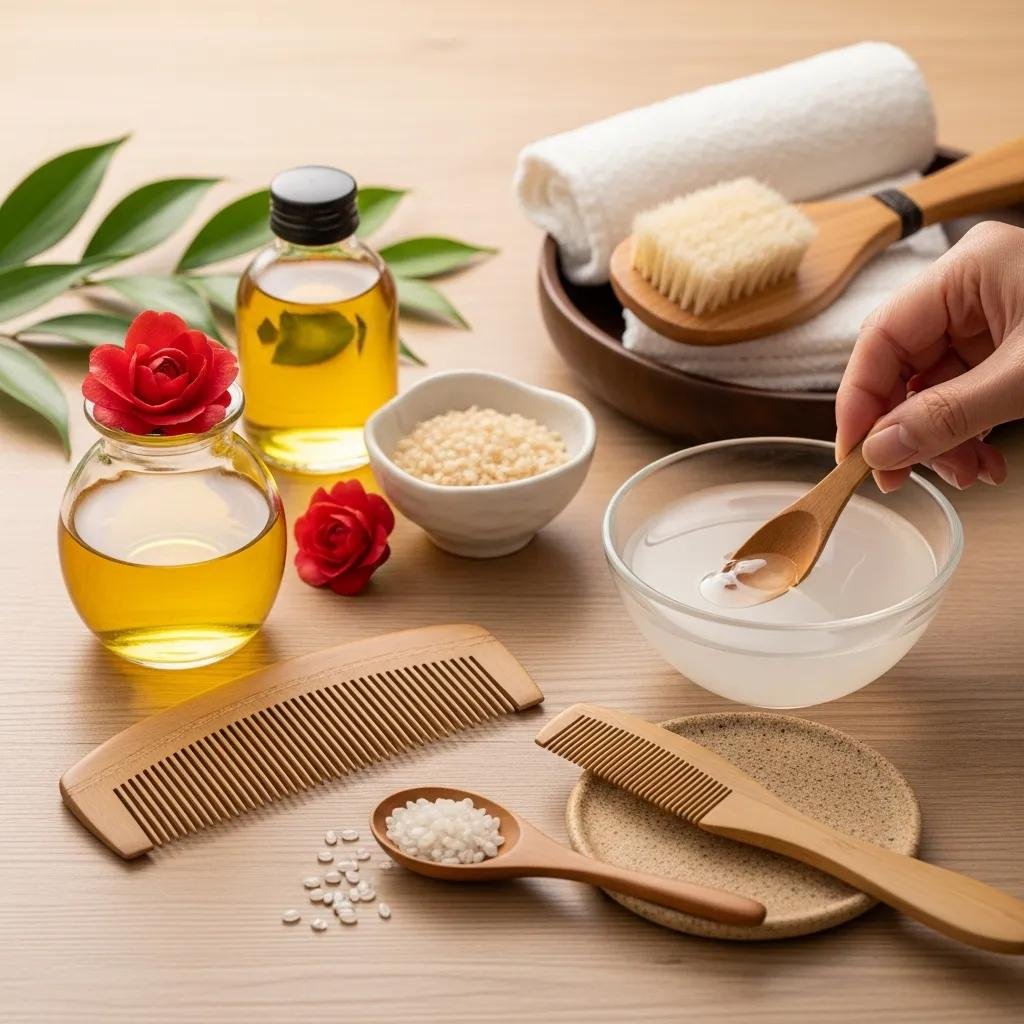
Traditional Japanese hair care combined botanical treatments, careful grooming, and seasonal practices to keep hair strong, shiny, and scalp-healthy. Ingredients like camellia (tsubaki) oil and fermented rice water were used to retain moisture, smooth cuticles, and deliver amino-acid support, while combing with Tsugegushi combs helped distribute oils and stimulate circulation. Together these steps formed a holistic routine: topical nourishment, gentle mechanical care, and mindful drying and styling to reduce breakage. Below we compare common traditional ingredients, how they were used, and how modern salons adapt them today.
That side-by-side shows how traditional ingredients translate into focused salon services—keeping benefits intact while fitting modern hair types and routines. Next we outline what those ingredients actually do.
What benefits do camellia oil and fermented rice water offer?
Camellia oil is lightweight and rich in oleic acid, so it absorbs well into the hair shaft to reduce surface friction, smooth the cuticle, and add a lasting sheen without heavy buildup. Used as a pre-wash treatment or a sparing finishing gloss, it protects strands during styling. Fermented rice water delivers short-chain amino acids and vitamins produced during fermentation; these can temporarily improve cuticle alignment and elasticity, helping hair resist breakage. Together, oil-based protection and amino-acid support create complementary benefits that modern stylists blend into conditioning protocols for better texture and manageability.
With ingredient benefits clear, we turn to the tools and rituals historically used to apply and maintain them.
How were Tsugegushi combs and other tools used in traditional hair care?
Tsugegushi combs—often made from boxwood—offered a smooth, low-static surface for detangling, distributing oils, and gently stimulating the scalp. Their tooth spacing and curvature suited long, thick hair and the needs of structured updos; their polished finish minimized snagging. Other essentials—wax (abura), hairpins, and the takamakura support pillow—helped shape and preserve silhouette. Modern equivalents include wide-tooth wooden combs, boar-bristle brushes, and discreet padding tools that recreate historical function while meeting contemporary hair textures and hygiene expectations.
These materials and tools form a bridge to how modern salons adapt historical technique—our next topic.
How do modern Japanese-inspired styling techniques evolve from ancient methods?
Contemporary stylists translate Nihongami principles—structure, balance, ornamentation, and protective finishes—into approaches that work for many hair textures and lifestyles. The aim is to preserve the structural logic (support, padding, hidden anchoring) using modern pins, elastic supports, heat for texture, and product science for hold. Two common translations are building internal padding for a Shimada-like silhouette without wax, and using conditioning rinses modeled on rice water to boost elasticity before styling. These adaptations honor the visual lineage of Nihongami while prioritizing hair health and wearability for non-traditional hair types.
- Structural translation: traditional padding and supports → modern foam/invisible padding and pin techniques.
- Nourishment translation: oil and fermented rinses → lightweight pre-treatments and infusion-based conditioners.
- Ornamentation translation: Kanzashi → contemporary decorative pins and ethically sourced accents.
Next we look at wearable versions of classic updos and how local salons bring Japanese ingredients and techniques into their services.
What do contemporary adaptations of Nihongami hairstyles look like?
Modern adaptations simplify classic updos into wearable looks for brides, editorials, and everyday wear—reducing structural bulk and relying on modern anchoring. Stylists use padding, discreet pins, and texturizing sprays to suggest the rounded Shimada silhouette or the soft Ofuku loops without heavy wax or elaborate supports. Adaptations often include softened face-framing pieces for layered or textured hair and modular ornament placement that nods to Kanzashi while staying culturally aware. These versions are designed to last through events, be easier to remove, and reduce damage—making historical aesthetics accessible for diverse hair types.
That naturally leads into how a local salon like Kylie Studio Salon adapts these rituals for clients seeking authentic benefits.
How does Kylie Studio Salon incorporate Japanese hair-care rituals into modern treatments?
At Kylie Studio Salon in Bethesda, MD, we draw on Japanese hair-care principles by offering treatments that echo traditional steps—pre-wash oiling, conditioning rinses inspired by fermented rice water, and careful combing with wooden or wide-tooth tools. Owner Ruth and our team adapt these rituals into salon protocols that prioritize shine, manageability, and scalp health, using contemporary products safe for a variety of textures. When you request a Japanese-inspired conditioning service, expect a focused consultation, a nourishing pre-treatment, and a finishing polish that emphasizes lightweight gloss and long-lasting strength. This approach fits clients who want cultural techniques with practical, healthy results.
What are the latest Geisha-inspired trends — and what do they mean?
Geisha-inspired trends today favor careful ornamentation, seasonal motifs, and sculptural shapes translated through a modern aesthetic. Rather than direct replication, contemporary looks use subtle nods—selective Kanzashi-like accents, seasonal color highlights, and structured updos that reference historical silhouettes without copying ceremonial hair. Stylists translate symbolism into visual cues: floral pins for seasonality, simplified loops for apprenticeship hints, and polished finishes that suggest ceremonial quality. There’s also a growing emphasis on respectful adaptation rather than appropriation, so stylists increasingly provide context and sensitivity when they draw inspiration from Geisha and Maiko traditions.
- Current trends include:
Delicate Kanzashi-inspired accents for bridal and editorial work.Sculpted updos referencing Shimada shapes using contemporary materials.Seasonal ornamentation and subtle color highlights that echo traditional signaling.
Next we take a closer look at Kanzashi and the meaning behind specific ornament types.
The table below outlines common kanzashi varieties, their historical symbolism, and how stylists reinterpret them today.
The table shows how ornament types hold layered meaning, and how contemporary styling changes materials and scale while keeping symbolic intent.
How do Kanzashi ornaments enhance both traditional and modern looks?
Kanzashi serve as decorative focal points and as structural anchors that support hair shapes; their seasonal motifs historically signaled time and status. Materials ranged from carved tortoiseshell and lacquered wood to folded silk flowers—each adding texture and cultural meaning. Today, stylists often use ethically sourced or synthetic alternatives to achieve the same visual impact while ensuring durability and comfort. Thoughtfully incorporated, Kanzashi-like elements elevate an updo, add narrative to bridal and editorial looks, and let clients participate in a seasonal or ceremonial conversation through their hair.
With symbolism in mind, it’s important to consider the ethical line between inspiration and appropriation when adapting Geisha and Maiko aesthetics.
What cultural meanings do popular Geisha and Maiko hairstyles carry?
Geisha and Maiko hairstyles conveyed apprenticeship stages, marital status, and ceremonial role: ornate Maiko styles signaled youth and junior status, while simpler Geisha updos marked professional maturity. These hair forms were tied to weddings, coming-of-age ceremonies, and performance contexts, where hairstyles worked alongside kimono and dance. If you draw inspiration from these traditions, prioritize respectful interpretation—acknowledge origins, avoid costume-like mimicry in inappropriate contexts, and consult cultural experts when using overt symbols. Sensitivity preserves meaning while letting the aesthetic inform modern design choices.
Where can you experience Japanese-inspired salon services in Bethesda, MD?
If you’re in Bethesda and curious about Japanese-inspired treatments, look for salons that emphasize ingredient-led rituals and careful structural styling. Kylie Studio Salon offers cut, color, and specialty services that incorporate Japanese hair-care principles—focused on shine, strength, and gentle handling. Owner Ruth leads a team trained to tailor conditioning, controlled styling, and culturally aware interpretations to your hair type. Expect a consultation-based process where we review hair history, texture, and your goals before recommending a tailored ritual or styling plan.
- What to expect when booking Japanese-inspired services:
A consultation covering hair health, goals, and reference photos.
A treatment plan that may include pre-wash oiling, conditioning rinses, and structural styling.
Clear guidance on at-home maintenance and recommended tools to preserve results.
Those steps lead naturally to specific service descriptions and how to book a consultation locally.
Which Japanese-inspired treatments does Kylie Studio Salon offer?
We offer treatments informed by Japanese hair-care practices, including targeted pre-treatment nourishing applications, rice-water-inspired conditioning rinses, and finishing techniques that prioritize long-lasting shine and reduced friction. Typical service steps include a protective pre-wash application, a restorative conditioning phase modeled on fermented rinses, and a finishing polish with lightweight oils or serums to seal the cuticle. These services are customized to your texture and lifestyle, and they’re ideal for clients seeking improved manageability, enhanced gloss, and scalp comfort.
How do clients book consultations for Japanese-inspired styling at Kylie Studio Salon?
To book a consultation, choose the consultation option online or visit the salon to speak with a stylist. Bring reference photos and a short overview of recent treatments to make the appointment most useful. During the consultation we’ll assess texture, past chemical work, and your at-home routine before proposing service steps and aftercare. Be ready to discuss desired silhouettes, sensitivities to ingredients, and event timing if relevant—clear communication and photos help us translate historical inspiration into a respectful, wearable result.
This booking guidance completes the practical path from historical understanding to contemporary application and local access to services.
Frequently Asked Questions
What are the key differences between traditional and modern Japanese hair-care techniques?
Traditional Japanese hair care emphasizes ritual, natural ingredients, and craftsmanship—think camellia oil, fermented rice water, and careful grooming routines. Modern techniques retain those core principles but adapt them with contemporary products, sanitation standards, and tools to suit a wider range of hair types and lifestyles. In short: traditional methods focus on cultural meaning and longevity; modern approaches translate those benefits into convenient, effective salon services.
How can I respectfully incorporate elements of Nihongami into my personal style?
Start by learning the cultural meanings behind specific styles and ornaments. Choose simplified, contemporary interpretations rather than direct replicas of ceremonial looks. Use modern, ethically sourced materials for accessories and work with a stylist who understands the history and its sensitivities. Small seasonal nods—like delicate floral accents—are a respectful way to reference tradition without appropriating ceremonial forms.
What should I consider when choosing a Japanese-inspired hair treatment?
Consider your hair type, texture, and goals. Ask about the ingredients used, how they’re applied, and whether the treatment is adapted for your needs. A good salon consultation will cover past chemical work, scalp condition, and maintenance expectations so you leave with a realistic plan and aftercare to preserve results.
Are certain hair types better suited to traditional Japanese hair-care ingredients?
Camellia oil and fermented rice water can benefit many hair types, but they’re especially helpful for dry, damaged, or coarse hair—camellia oil adds moisture and protection, while fermented rice water can support elasticity and reduce breakage. Fine or oily hair can still benefit, but practitioners usually recommend lighter applications to avoid weighing the hair down.
What are common misconceptions about Geisha hairstyles in modern fashion?
A common misconception is that Geisha hairstyles are simply decorative and easy to borrow without context. In reality, these styles carry deep cultural meaning and are tied to specific rituals. Casual or costume-like use can cross into insensitivity; thoughtful interpretation and clear context are essential to avoid cultural appropriation.
How do modern salons maintain authenticity in Japanese-inspired treatments?
Salons maintain authenticity by training stylists in traditional techniques, using high-quality or culturally appropriate ingredients, and offering consultations that explain the cultural context. Many salons also work with experts or source ethically made accessories to honor tradition while adapting protocols for contemporary hygiene and hair types.
Conclusion
Nihongami’s history offers more than beautiful silhouettes—it gives practical techniques and ingredient knowledge that still improve hair health today. By blending camellia oil, rice-water–inspired rinses, and mindful styling, you can enjoy shinier, stronger hair while honoring a rich cultural tradition. If you’re curious, visit Kylie Studio Salon for a consultation—we’ll design a tailored, respectful treatment that brings ancient wisdom into a modern routine. Experience the difference Japanese-inspired care can make for your hair.