Sulfates in Shampoo: What They Are and How They Affect Your Hair
Sulfates are a family of surfactants — detergent molecules designed to lift away oil, dirt and product buildup. They give shampoos the foamy, deep-clean feeling most people expect, but frequent use can strip protective oils, change hair porosity and speed color fade, especially on dry or chemically treated hair. This guide breaks down the common sulfates, how they work, and which hair types benefit from switching to sulfate-free care. You’ll also learn which other ingredients to watch for, how gentler alternatives help preserve moisture and color, and practical label-reading tips so you can choose kinder formulas. Along the way we map sulfate effects to hair types, list safer ingredient options, and explain how Kylie Studio Salon in Bethesda supports sulfate-free aftercare for keratin and color services. By the end, you’ll have clear next steps to protect your cuticle, calm your scalp, and decide if sulfate-free is right for your routine.
What Are Sulfates in Shampoo and Why Are They Used?
Sulfates are anionic surfactants commonly added to shampoos to lower surface tension, form micelles, and solubilize oils and debris so they rinse away. Chemically, they have a hydrophobic tail that grabs oil and a hydrophilic head that likes water, so they form micelles that trap sebum and rinse clean — which is why they foam so well. Brands use sulfates because they’re inexpensive, reliable, and deliver noticeable cleansing; the trade-off is that stronger surfactants increase the risk of dryness or irritation. Knowing this trade-off helps you pick products that match your hair type and styling needs, especially if your hair is colored, curly, or chemically smoothed.
Not all sulfates are equal. The table below compares common types so you can spot them on ingredient lists and choose more mindfully. A short summary follows with practical shopping tips.
This comparison shows why formulators choose one surfactant over another: more foam and oil removal usually means greater chance of dryness or scalp sensitivity. Weigh your cleansing needs against hair and scalp sensitivity when choosing a shampoo.
Which Common Sulfates Are Found in Shampoos?
On ingredient lists, sulfates appear under familiar names, each with slightly different strength and irritation profiles. Sodium Lauryl Sulfate (SLS) is the most aggressive and produces the richest foam; Sodium Laureth Sulfate (SLES) is ethoxylated to soften its action and is common in daily washes. Ammonium Lauryl Sulfate (ALS) delivers strong foam and is often used in clarifying products. Many formulas blend surfactants to hit a target balance between lather and gentleness — knowing the names helps you decide whether to avoid them or reserve them for occasional deep-cleans.
Recognizing these ingredients makes label scanning faster and prepares you to understand how sulfates act at a molecular level.
How Do Sulfates Function as Cleansing Agents?
Sulfates organize into micelles: tiny spheres whose oily tails surround dirt while their water-loving heads face outward, allowing oil to rinse away. That micelle action removes heavy oils and styling products effectively, and the low surface tension creates the foamy lather consumers associate with clean hair. But the same process can lift natural sebum and disrupt scalp and cuticle lipids, which may cause dryness, roughened cuticles and more frizz when used too often. Remember: foam can mean perceived cleanliness, not necessarily gentleness — and that’s why milder surfactants or sulfate-free clarifiers are often better for maintenance care.
With this mechanism in mind, the next section maps how sulfates affect different hair types and scalp conditions.
How Do Sulfates Affect Different Hair Types and Scalp Conditions?
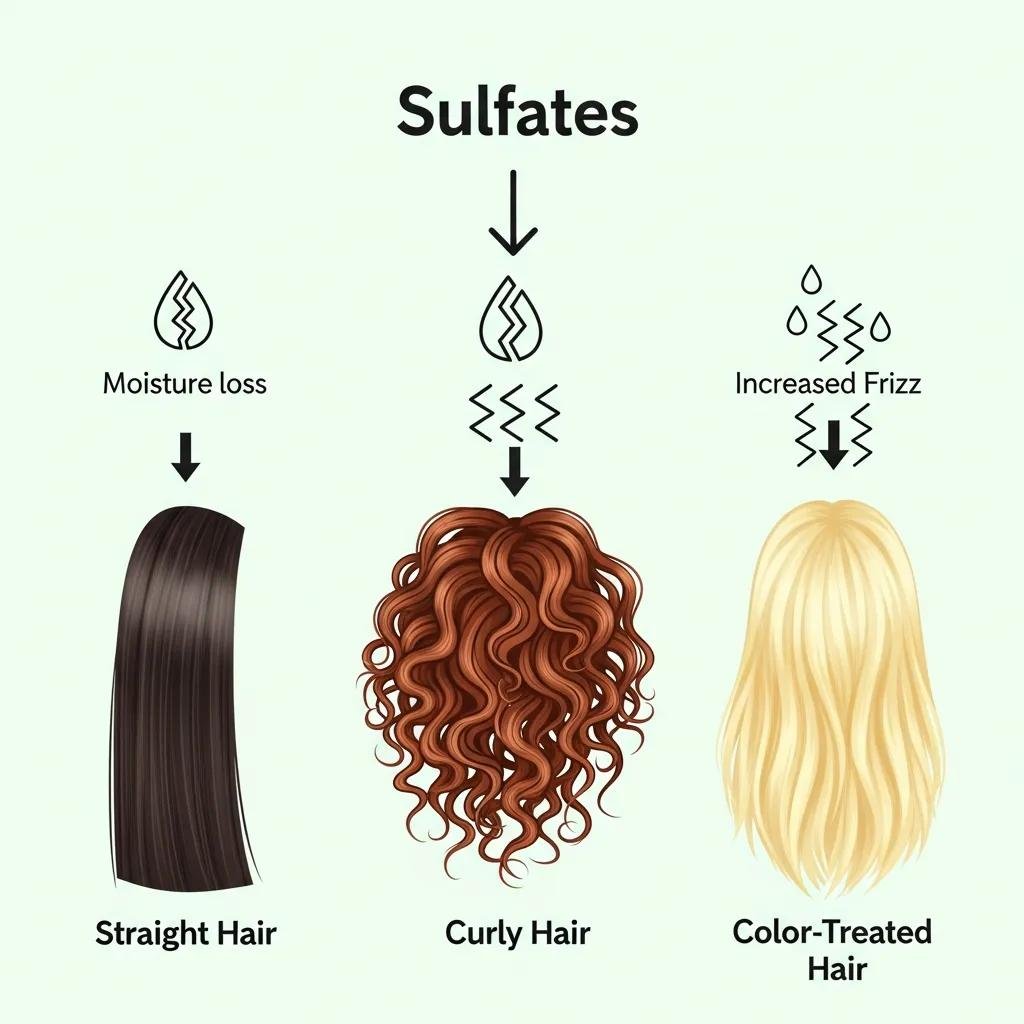
Sulfates affect hair differently depending on texture, porosity and scalp sensitivity. The most common result is moisture stripping, which can increase frizz and speed color fade. Use the quick mapping below to connect your hair or scalp condition with typical sulfate-related outcomes and immediate recommendations.
- Dry hair → More moisture loss, rough cuticle, increased frizz; try sulfate-free moisturizing cleansers.
- Curly hair → Reduced curl definition and elasticity from cuticle roughening; choose sulfate-free formulas for curl retention.
- Color-treated hair → Faster dye leaching and fading; pick color-safe sulfate-free products and rinse with cooler water.
- Sensitive scalp → Possible irritation, redness and barrier disruption; choose gentle, sulfate-free shampoos with soothing ingredients.
This mapping explains why stylists recommend tailored cleansing routines; the following subsections cover specific impacts and why keratin or sensitive scalps need special care.
What Impact Do Sulfates Have on Dry, Curly, and Color-Treated Hair?
Sulfates can strip too much sebum from dry hair, leaving strands brittle and prone to breakage. Curly hair can lose the moisture balance that creates clumping and bounce, which increases frizz and reduces definition. On color-treated hair, strong anionic surfactants can lift the cuticle and remove surface-bound dye, leading to quicker color fade and dulling. Practical steps include switching to sulfate-free moisturizing shampoos for dry or curly hair and choosing color-protecting sulfate-free formulas plus cooler rinses to slow dye loss. These changes help preserve structure and make styling more predictable.
Understanding these effects helps you plan product choices and salon timing to maintain professional results — especially after smoothing or keratin services.
Why Should Sensitive Scalps and Keratin-Treated Hair Avoid Sulfates?
Sensitive scalps are more likely to suffer barrier disruption from harsh anionic surfactants; sulfates can strip natural lipids, upset the scalp microbiome and trigger itching or redness. Keratin-treated hair depends on bonded proteins and smoothing agents that can be worn away by strong surfactants; sulfates may shorten the treatment’s longevity and reduce sleekness. As a rule, we recommend sulfate-free aftercare after keratin treatments to protect both your investment and scalp comfort. If you notice irritation or early loss of smoothing, consult your stylist to see if sulfates are a factor and to find a sulfate-free routine that restores balance.
That concern for longevity and scalp health leads into the benefits of sulfate-free care, described next.
What Are the Benefits of Using Sulfate-Free Shampoo?
Sulfate-free shampoos use gentler surfactants that clean without stripping protective oils, helping hair retain moisture, reduce frizz and slow color fade. They’re especially good for curly hair that needs definition, dry hair that needs hydration, and keratin- or chemically treated hair that benefits from bond preservation. Professional experience and recent studies show that lower-irritation surfactants improve scalp comfort for sensitive clients and help keep the cuticle smooth — which means easier detangling and more shine. Choosing sulfate-free products matched to your hair type helps preserve salon results and can reduce the need for corrective treatments.
Below are the primary benefits to help you decide whether a sulfate-free switch fits your goals.
- Improved Moisture Retention: Gentler surfactants leave more natural oils intact, cutting down on dryness.
- Better Color Preservation: Less aggressive cleansing slows dye leaching and keeps color vibrant longer.
- Reduced Scalp Irritation: Lower irritation risk supports a calmer, more balanced scalp.
- Enhanced Curl Definition and Less Frizz: Smoother cuticles help curls clump and retain elasticity.
These benefits make sulfate-free care a strong option for maintenance; the next section reviews different sulfate-free types and how to match them to your hair.
At Kylie Studio Salon we incorporate these advantages into salon-grade aftercare: we recommend sulfate-free maintenance routines that complement keratin and color services and invite clients to ask stylist Ruth for personalized product matches. Our salon is a local resource for clients transitioning to sulfate-free regimens that support long-term hair health and color longevity.
How Does Sulfate-Free Shampoo Preserve Hair Moisture and Color?
Sulfate-free formulas typically use amphoteric or nonionic surfactants that form gentler micelles, lifting dirt without aggressively stripping sebum or dye molecules bound to the shaft. That reduced stripping helps preserve the lipid-rich cuticle layer, keeping strands more flexible and smoother so they reflect light better and hold color longer. Simple usage tips: rinse with cooler water to help close the cuticle and reserve sulfate-free clarifiers for occasional heavy buildup. These habits protect both immediate appearance and long-term hair structure.
Using sulfate-free products for regular washing supports salon results and can reduce the need for repeat chemical services — which is why salons emphasize tailored aftercare.
In What Ways Does Sulfate-Free Care Improve Scalp Health and Reduce Frizz?
Gentler surfactants help preserve the scalp’s lipid barrier and maintain a balanced microbiome, which can reduce inflammation, itch and flaking for sensitive scalps. On the hair fiber, milder cleansing prevents repeated lifting of cuticle scales, so strands lie flatter, reflect light more evenly and show less visible frizz. If frizz continues despite sulfate-free care, a stylist can assess porosity and recommend in-salon treatments or targeted moisturizing protocols. For persistent scalp or frizz issues, a tailored program — including conditioning treatments, occasional mild clarifying and at-home maintenance — usually provides the best results.
Keeping the scalp balanced and the cuticle smooth pairs well with the practical aftercare routines our stylists recommend.
Which Shampoo Ingredients Should You Avoid Beyond Sulfates?
Apart from sulfates, several ingredient groups can affect hair health or raise safety concerns. Parabens, formaldehyde releasers and some phthalates draw scrutiny for preservative-related issues, while silicones and drying alcohols create trade-offs between instant cosmetic results and potential buildup or moisture loss. The table below outlines these groups, why they’re questioned, and safer ingredient choices to prioritize when you shop for gentler, effective hair care.
Knowing these trade-offs helps you read labels more critically and choose products aligned with your sensitivity profile and hair goals.
What Are Harmful Ingredients Like Parabens, Formaldehyde, and Phthalates?
Parabens are preservatives historically used to prevent microbial growth; consumer and regulatory pressure has pushed many brands toward alternative systems. Formaldehyde releasers slowly release formaldehyde and can be irritant or allergenic for some, so formaldehyde-free preservation is preferable for sensitive scalps. Phthalates, used in fragrances and plastics, are avoided by some due to potential endocrine concerns in certain studies; choosing phthalate-free products reduces exposure. Opting for transparent formulations with modern preservatives and simpler fragrance choices helps balance safety and product stability.
Careful label reading and choosing products that match your sensitivity profile reduces irritation risk and aligns with an ingredient-conscious approach.
How Do Silicones and Drying Alcohols Affect Hair Health?
Silicones like dimethicone give instant smoothness and shine by coating the shaft, but non-water-soluble silicones can build up and require clarifying — often with sulfates — to remove them. Short-chain drying alcohols evaporate quickly and can strip oils, leaving hair brittle; in contrast, fatty alcohols such as cetyl and stearyl are conditioning and non-drying. The trade-off is short-term cosmetic effect versus long-term manageability: silicones and certain alcohols can deliver immediate polish but may interfere with moisture balance and curl behavior over time. Choosing water-soluble silicones, silicone-free conditioners, and formulas with fatty alcohols supports better long-term texture and reduces the need for aggressive clarifying.
Understanding these dynamics helps you pick products that support manageability, color longevity and scalp health.
How Does Kylie Studio Salon in Bethesda Support Sulfate-Free Hair Care?
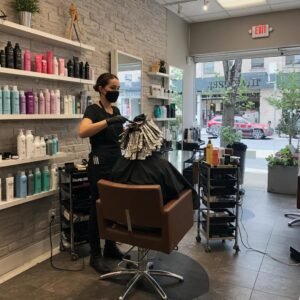
Kylie Studio Salon is a local resource for clients who want ingredient-conscious, eco-minded hair care in Bethesda. We prioritize product choices that favor sulfate-free shampoos and gentle conditioners — especially for keratin smoothing and color services where sulfate-free aftercare preserves results. Stylist Ruth helps clients find salon-grade products matched to hair texture, porosity and treatment history, and we support maintenance plans that extend professional results. In-salon consultations deliver tailored recommendations and application techniques to maximize color and smoothing longevity.
Here’s a short checklist showing how we integrate sulfate-free care into services and aftercare:
- Assess hair type and treatment history to recommend the right sulfate-free routine.
- Suggest salon-grade sulfate-free shampoos and conditioners matched to color and keratin needs.
- Provide at-home aftercare tips and schedule maintenance visits to preserve results.
This local, personalized approach helps salon services and at-home products work together to protect your treatment investment and support healthy hair between visits.
What Is Our Eco-Friendly Philosophy and Product Selection?
We choose products with an ingredient-conscious approach — emphasizing sulfate-free cleansers, gentle conditioners and formulations that avoid unnecessary harsh preservatives or heavy, non-water-soluble silicones. Our eco-friendly philosophy focuses on reducing irritation and buildup while recommending products that meet clients’ hair goals and everyday lifestyles. By prioritizing nourishing formulations, we help clients keep color vibrant and keratin treatments lasting longer, which reduces the need for corrective salon work. This practical, results-oriented mindset supports both how your hair looks now and its long-term health.
These selection principles guide the aftercare recommendations we share with clients, especially after chemical services.
Why Is Sulfate-Free Aftercare Essential for Keratin and Color Treatments?
Sulfate-free aftercare helps protect keratin bonds and color molecules by reducing how often and how much the cuticle opens under strong anionic surfactants. After a keratin treatment, avoiding sulfates preserves the smoothing matrix and extends silky texture; for color-treated hair, sulfate-free care slows dye leaching and preserves vibrancy. Simple at-home actions include using salon-recommended sulfate-free shampoo and conditioner, rinsing with cooler water to help close the cuticle, and booking regular maintenance with your stylist to manage buildup or service needs. Clients who follow these steps typically enjoy longer-lasting professional results and healthier hair overall.
If you’re unsure which sulfate-free product suits your treatment, stylist Ruth at Kylie Studio Salon can provide a consultation and a tailored maintenance plan.
What Are the Most Common Questions About Sulfates in Shampoo?
This FAQ section answers common questions in short, actionable language designed for quick clarity. Each answer explains the concept, the mechanism or risk, and gives a one-line recommendation so you can act confidently. After the FAQs, we invite you to book a personalized consultation at the salon for tailored guidance.
What Are Sulfates and Are They Dangerous for Hair?
Sulfates are effective anionic surfactants used for cleansing; they’re not universally dangerous, but whether they’re right for you depends on hair type, scalp sensitivity and washing frequency. Their micelle-based cleaning explains both the benefit — strong cleansing and foam — and the downside — stripping natural oils and possible irritation. If you have an oily scalp or need occasional heavy cleansing, a sulfate wash can be fine; if your hair is dry, curly, color-treated or keratin-treated, trying sulfate-free formulas is a sensible way to protect moisture and treatment results. If you notice dryness, more frizz or rapid color fade after washing, a sulfate-free trial will show whether sulfates are contributing.
This balanced view helps you choose based on how your hair actually responds rather than a blanket rule.
How Can You Identify Sulfates in Shampoo Ingredients?
Scan ingredient lists for common sulfate names and recognizable fragments — look for terms like “sulfate,” “sodium lauryl,” “sodium laureth,” or “ammonium lauryl.” Practical steps: (1) read the ingredient panel from highest to lowest concentration, (2) spot “sulfate” or abbreviations like SLS or SLES, and (3) if you’re unsure, bring the product name or a photo to your stylist for a quick check. Products labeled “sulfate-free” simplify the choice, but label literacy helps you spot less-obvious aggressive cleansers. A salon consult speeds expert recommendations and product matching.
Stronger label skills reduce guesswork and help you align products with your hair’s needs — for a deeper assessment, schedule an in-salon consultation.
For personalized advice on switching to sulfate-free care or protecting keratin and color treatments, ask Kylie Studio Salon for an in-salon consultation — stylist Ruth can assess your hair and recommend a maintenance plan at 4711 Montgomery Ln, Suite 2, Bethesda, MD 20814.
- Key takeaway: Sulfates clean well but can harm certain hair types; choose sulfate-free when moisture, color longevity or keratin maintenance matter most.
- Action step: Read ingredient lists for common sulfate names and try a sulfate-free routine while watching how your hair and scalp react.
- Salon option: For tailored recommendations and upkeep strategies, book an in-salon consultation to match professional-grade sulfate-free products to your hair.
Frequently Asked Questions
1. Can sulfates cause hair loss?
Sulfates aren’t directly linked to hair loss, but their harsh cleansing can cause dryness and damage that increases breakage. If your hair is fragile or thinning, aggressive shampoos may make breakage worse. Switching to sulfate-free options can help preserve moisture and reduce damage, supporting healthier hair over time.
2. How often should I use sulfate-free shampoo?
Washing frequency depends on your hair type and lifestyle. Most people do well with sulfate-free shampoo 2–3 times per week. If you have very dry, curly or color-treated hair, you may wash more often with a gentle formula. Listen to your hair and adjust as needed to keep moisture and manageability balanced.
3. Are there any natural alternatives to sulfates in shampoos?
Yes — gentle surfactants like cocamidopropyl betaine (from coconut) and decyl glucoside (from corn glucose) effectively cleanse without the harshness of sulfates. These alternatives help maintain moisture and are less likely to irritate sensitive scalps, making them suitable across many hair types.
4. How can I transition to sulfate-free shampoo effectively?
Transition gradually by alternating your regular shampoo with a sulfate-free option for a few weeks. This helps your scalp and hair adjust. Watch how your hair responds, and once comfortable, switch fully to sulfate-free. Use a mild clarifying shampoo occasionally if buildup from previous products lingers.
5. What should I look for in a sulfate-free shampoo?
Look for gentle surfactants like cocamidopropyl betaine or sodium cocoyl isethionate, and moisturizing ingredients such as aloe vera, glycerin or natural oils. It’s also helpful to avoid parabens and non-water-soluble silicones if you want to reduce buildup and irritation over time.
6. Can sulfate-free shampoos still provide a good lather?
Yes. Sulfate-free shampoos can produce a pleasing lather, though it may be less voluminous than sulfate-based shampoos. Ingredients like cocamidopropyl betaine help create foam while remaining gentle on hair and scalp.
7. Is it necessary to use a conditioner with sulfate-free shampoo?
We recommend pairing conditioner with any shampoo. Conditioners replenish moisture, detangle and improve manageability. Since sulfate-free shampoos are gentler, using a good conditioner ensures your hair stays hydrated and smooth — especially if it’s dry or color-treated.
Conclusion
Switching to sulfate-free shampoo can deliver real benefits: better moisture retention, longer-lasting color and a calmer scalp. By understanding how sulfates interact with different hair types, you can make informed choices that support your styling goals and treatment investments. Explore our carefully selected sulfate-free products or visit Kylie Studio Salon for a personalized recommendation from our expert stylist. Book a consultation to find the right plan for healthier, more vibrant hair.