Enhance Your Natural Wavy Texture — Salon-Pro Care & Styling Tips
Wavy hair sits between straight and curly, forming those signature S-shaped bends that respond beautifully to the right care. With targeted routines and styling, you can get clearer definition, less frizz, and more natural lift. This guide walks you through identifying your wave type, building a reliable wash-to-style routine, using heat-free methods, managing frizz in changing humidity, and adding volume with the right cuts and products. If you’ve battled patchy definition, surprise frizz, or flat roots, practical routines and a solid product hierarchy will help — while protecting hair health. You’ll find clear steps: what wavy hair is, a straightforward wash-day routine with product comparisons, heatless styling how-tos, frizz-fighting tips tuned for Bethesda weather, volumizing techniques and cutting advice, plus the salon services that support textured hair. Expect actionable checklists and step-by-step tips you can use whether you’re just starting or already know your waves.
What Makes Wavy Hair Unique?
Wavy hair is marked by an S-shaped pattern that lives between straight and curly, generally falling into the 2A–2C range. Those gentle bends come from the hair’s shaft shape and how keratin is distributed along the strand — factors that affect elasticity, porosity, and how products behave. Knowing these structural details helps you pick lighter moisturizers for fine 2A waves or richer curl creams for denser 2C patterns, so you keep bounce without weighing hair down. When you factor in density and porosity, you can build routines that let waves form naturally while cutting down on frizz and limpness.
Common traits to watch for in wavy hair:
- Clearly visible S-shaped waves that vary from loose (2A) to more defined (2C).
- Mid-length frizz and flattened roots are common, often influenced by product weight and humidity.
- Porosity varies: higher porosity tends to grab moisture and frizz, while lower porosity can resist hydration and look limp.
Those points directly inform the product choices and drying techniques we cover next.
How to Tell If You’re 2A, 2B, or 2C
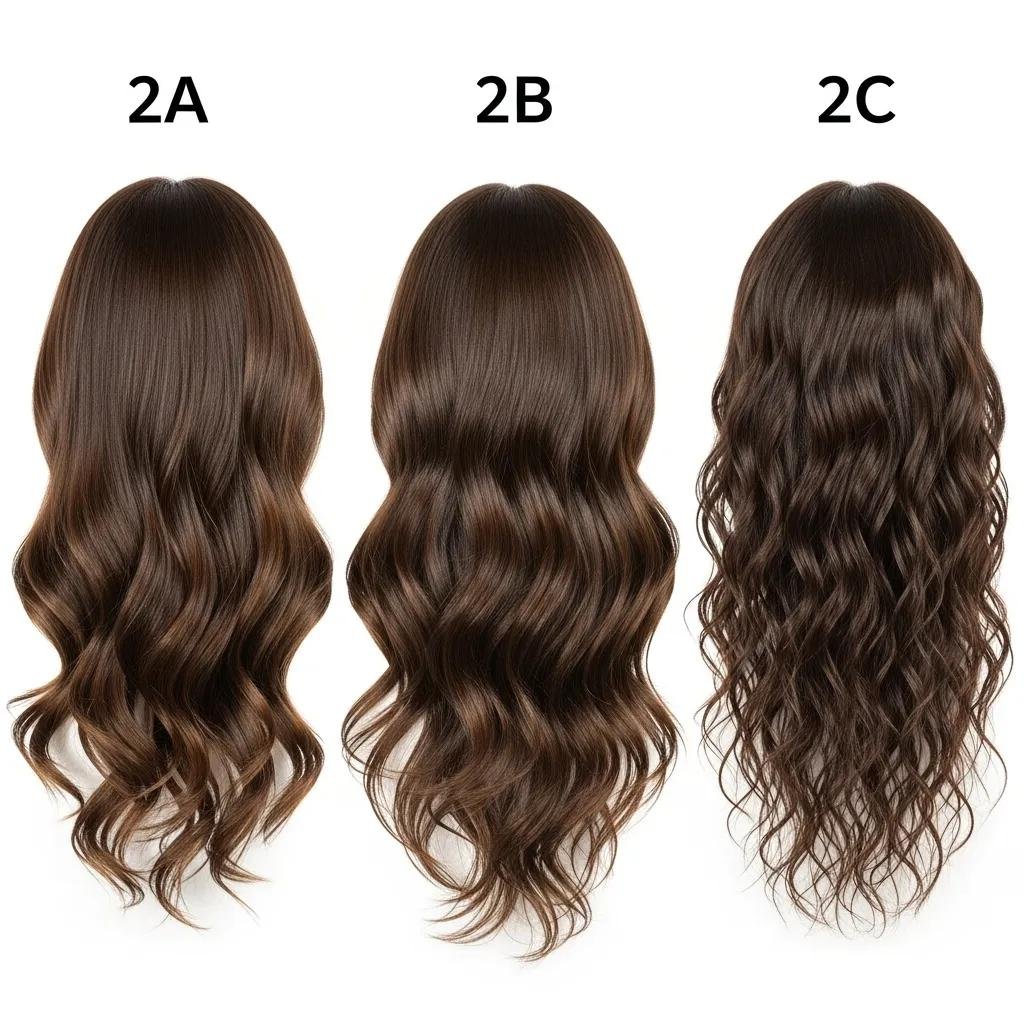
Start with visual and touch cues: 2A waves are gentle and loose, 2B waves show a clearer S-pattern with light frizz at mid-lengths, and 2C waves have deeper S-curves that edge into curls and typically need more moisture. Strand shape, diameter, and overall density change how products spread and how much weight hair can handle before losing lift — so those categories actually guide product and styling choices.
Try a simple at-home test: wash, gently scrunch damp hair with no product, and watch as it air-dries. Note where waves hold, where they break, and where frizz appears. Those observations tell you whether to use lighter leave-ins for fine waves or richer creams for thicker patterns.
Common Wavy-Hair Challenges: Frizz, Dryness, and Lost Volume
Frizz happens because wave bends expose the cuticle unevenly, so humidity can change strand shape and lift flyaways. Dryness shows up when scalp oils don’t travel easily down the waves, leaving mid-lengths and ends thirsty — which is why deep conditioning and protective styling matter. Volume problems usually come from heavy products, blunt cuts that concentrate weight, or fine density that collapses under moisture. The fix is a mix of targeted cutting and careful product layering. With those causes in mind, the next section gives you a practical wash-day routine that addresses cleansing, conditioning, and styling in the right order.
Your Essential Wavy Hair Routine — Simple, Repeatable, Effective
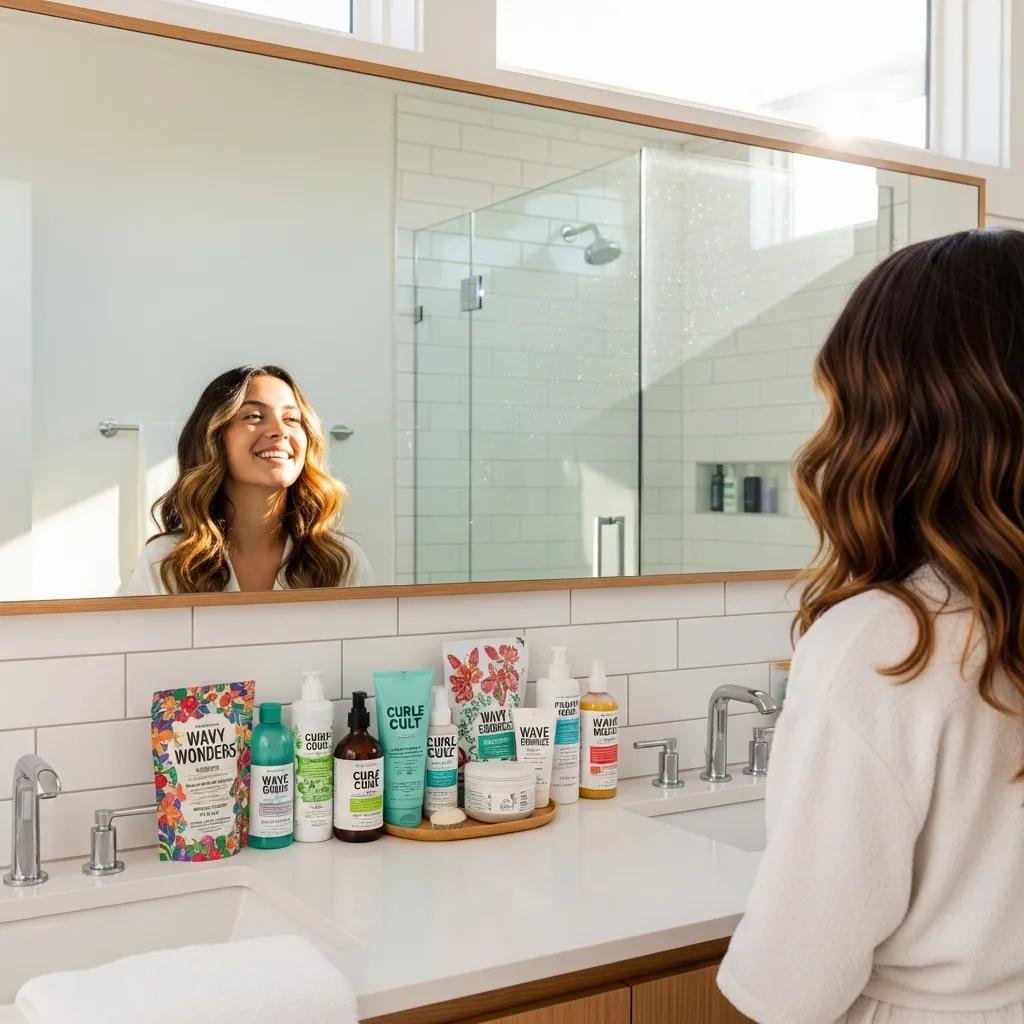
A focused routine for wavy hair includes a gentle cleanse, thoughtful conditioning, a targeted leave-in, and a drying method that protects clumps while minimizing friction. Cleansing removes buildup without stripping oils; conditioning restores slip to detangle; leave-ins lock moisture and offer light hold; and careful drying helps waves clump and form. The payoff: cleaner wave definition, less breakage during detangling, and a consistent baseline for both heatless and heat-assisted styles.
Wash-day checklist for predictable waves:
- Cleanse with a sulfate-free shampoo to keep natural oils intact and protect the cuticle.
- Condition mid-lengths to ends, using slip to detangle gently with a wide-tooth comb.
- Apply a lightweight leave-in and curl-defining product while hair is still wet to encourage clumping.
- Pick a gentle drying method — plopping, air-dry, or low-heat diffusion — based on your density and time.
- Finish with a small amount of anti-frizz serum or cream on damp ends to help block humidity.
This setup creates repeatable results and leads directly into the product categories summarized below.
Quick product overview — how categories help wavy hair:
These comparisons help you match product types to your wave needs and prepare hair for drying and styling.
Kylie Studio Salon note: If you’re local to Bethesda and want a routine built just for your waves, our textured-hair consultations customize product hierarchy and drying techniques to your pattern and porosity. We teach the exact sequencing above so you can recreate salon results at home — book online for an in-salon consultation.
Which Sulfate-Free Shampoos and Conditioners Work Best?
Sulfate-free shampoos clean using gentler surfactants so essential lipids that help waves clump aren’t stripped away. Conditioners with good slip prevent mechanical damage during detangling. Look for glycerin to balance hydration, light proteins for elasticity, and lightweight plant oils that won’t flatten fine waves. Pair products to your porosity: high-porosity hair often needs richer conditioners and occasional protein treatments; low-porosity hair generally responds better to lighter, humectant-focused formulas to avoid buildup. Following those principles gives you a base that supports natural texture through styling and drying.
Why Gentle Drying — Air-Dry vs. Diffuse — Helps Your Waves
Gentle drying protects clumps by reducing friction and heat stress, two big drivers of frizz and cuticle damage. Air-drying works well for lower-density hair when product layering is light and you set waves while hair is wet; plopping with a cotton T-shirt or microfiber wrap promotes vertical clumping and speeds drying without roughing the cuticle. Diffusing on low heat and low airflow focuses drying at the roots and mid-lengths to boost volume while letting ends dry more slowly to keep definition. Choose the method that fits your density, schedule, and local humidity for the least damage with the best shape.
Heat-Free Styling: Keep Your Texture Healthy and Defined
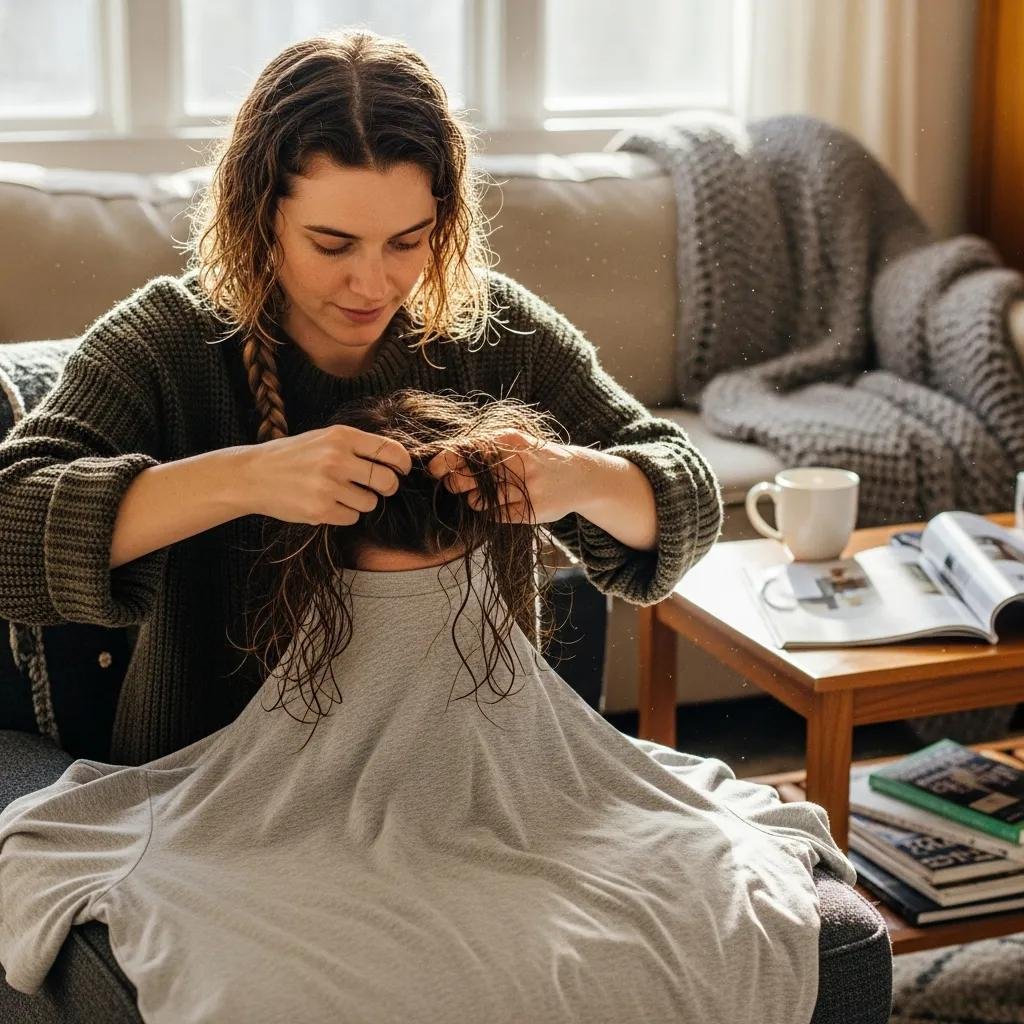
Heatless styling enhances wave shape while avoiding thermal damage. Controlled tension plus evaporative setting helps strands form a cast and clump together — giving defined waves you can soften after they set. The upside: longer-lasting texture with less cumulative damage, and better moisture balance overall.
Try these three reliable heat-free methods that work across most wave types:
- Plopping: On wet hair, apply leave-in and a light gel, then lower your head into a cotton T-shirt and wrap for 10–30 minutes to encourage clumping and speed drying.
- Braiding: On slightly damp hair, divide into 1–3 loose braids depending on wave size. Sleep on it or leave until mostly dry, then gently release and separate with fingers.
- Scrunching: With product applied to damp hair, cup sections and scrunch upward toward the roots until texture forms, then plop or air-dry.
These techniques work when matched to the right products and timing — which we outline below.
Once you’ve practiced at home, consider in-salon styling lessons or demo blowouts; many salons offer one-on-one sessions that show product placement and exact ratios for your wave pattern.
Plopping, Braiding, Scrunching — How They Work
Plopping compresses hair gently to speed drying and encourage vertical clumping; use a T-shirt or microfiber towel for 10–45 minutes depending on thickness and avoid rough terry cloth. Braiding sets the pattern using gentle tension — it’s great for longer hair or overnight convenience and preserves volume if done loosely. Scrunching builds a natural cast by gathering strands into clumps; small amounts of lightweight gel or mousse give hold without crunch.
Common missteps: twisting too tightly, using too much product, or fiddling with hair before it’s set. Avoid those to keep neat, long-lasting definition.
Best Products for Heatless Styling
Choose lightweight mousses, low-hold gels, and silicone-free creams that give slip without residue. Application order matters: blot excess water with a T-shirt, apply leave-in, follow with a gel or mousse, then scrunch or plop to set. Start with a pea-sized amount for fine 2A hair and increase for thicker 2C textures so waves don’t get weighed down. Reserve heavy oils or dense butters for ends only — keeping mid-lengths and roots light preserves bounce.
How to Keep Frizz Under Control and Waves Smooth
Frizz-control is about sealing the cuticle, balancing moisture, and reducing daily friction. Technique and timing often matter more than one “miracle” product. Key approaches include light occlusives (to seal), managing humectants so hair doesn’t over-absorb moisture, and using protein treatments when porosity calls for structural support.
Simple frizz-control regimen:
- Apply a lightweight anti-frizz serum or cream to damp hair, focusing on mid-lengths and ends to smooth the cuticle.
- Use a weekly deep-conditioning or targeted protein treatment based on your porosity to rebalance strength and moisture.
- Sleep on a satin pillowcase or use a silk bonnet to reduce friction that breaks up clumps.
These small habits, done consistently, make a big difference in daily frizz and how reliably waves hold.
Quick comparison of anti-frizz approaches — pick short- or long-term strategies:
Knowing the trade-offs helps you choose products seasonally and by hair goals.
Top Frizz-Control Products and How to Apply Them
Serums are great for targeted smoothing — start with a dime-sized amount on mid-lengths and ends and distribute by scrunching. Creams add hydration and a protective film without heavy shine, making them handy for damp-day top-ups. Technique is key: work products into damp hair before it starts to break, and avoid the roots to prevent buildup.
Layering tip: light leave-in → defining gel or mousse → small amount of serum. When each layer is applied sparingly, you get structure and seal without heaviness.
How Bethesda’s Humidity Affects Waves — and What to Do
Bethesda’s changing seasons mean your waves can behave differently from spring to winter. High humidity can swell porous hair and create frizz; cold, dry months increase static and breakage. That happens because hair exchanges moisture with the air depending on porosity: high-porosity hair soaks up humidity quickly, while low-porosity hair resists it and benefits from humectants.
Seasonal adjustments: use anti-humidity serums in summer, add protein when hair has been repeatedly exposed to moisture, and switch to lightweight occlusives when humidity spikes. Tweak product viscosity and amounts by season, and consider occasional salon treatments to rebalance porosity if needed.
Volume & Dimension: How to Make Waves Look Fuller
Volume comes from managing weight, smart cutting, and root-focused styling that lifts without disturbing mid-length clumps. Lifting at the root creates space between strands so waves can spring upward and look denser.
Cutting strategies like face-framing layers and long, graduated internal layers remove weight that flattens waves while keeping perimeter length for movement.
Use light mousses, flip-dry techniques, or root-clips to boost lift without compromising definition. The table below compares common root-lifting methods so you can pick the fastest and gentlest option for your hair.
These options let you choose a routine that matches your density, time, and tolerance for heat.
How Layered Cuts Add Movement and Fullness
Layered cuts redistribute weight so waves move and spring instead of hanging flat. Internal long layers remove concentrated mass while keeping the perimeter length for styling versatility. In short: less weight equals more natural lift and shape.
For fine 2A hair, subtle long layers maintain body; for thick 2C hair, graduated layers thin bulk and help clumps form. A stylist consultation will pinpoint the ideal layering for your density and maintenance preferences.
Volumizing Products and Root-Lifting Techniques That Actually Work
Lightweight mousses and root sprays shine when applied to damp roots and set with a flip-dry or diffuser, producing fuller shape while keeping mid-length clumps intact. If you prefer heat-free options, root-clips used during air-dry or plopping can create lasting lift when removed after hair is mostly dry. Application tips: product at roots only, avoid excess along lengths, and refresh day-two body with a touch of dry shampoo or textured spray to separate clumps. Skip heavy creams at the scalp — they flatten waves.
Wavy-Hair Services at Kylie Studio Salon in Bethesda
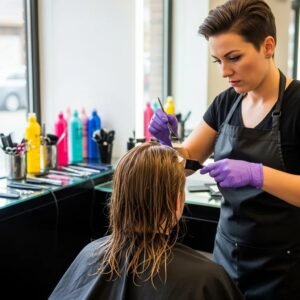
Kylie Studio Salon in Bethesda specializes in textured and wavy hair: precision haircuts, texture-enhancing perms, personalized coloring, and professional blowouts that set waves with controlled volume and definition. Our stylists focus on curly and textured techniques, and owner/stylist Ruth emphasizes one-on-one consultations to match cuts and treatments to your wave type, lifestyle, and maintenance goals. These services help you get longer-lasting definition, manage seasonal frizz, and learn at-home routines that preserve salon results.
Services popular with wavy clients include:
- Women’s, men’s, and children’s haircuts tailored to wave pattern and weight distribution.
- Perms designed to enhance or reintroduce S-shaped waves where natural pattern is inconsistent.
- Blowouts and styling sessions that teach product placement and set wave shape for longer wear.
Our in-salon approach combines technique and product education so you can recreate the look at home. Below we detail how cutting and treatments support texture.
How Expert Haircuts and Modern Perms Improve Wave Texture
Skilled haircuts use layering, point-cutting, and texturizing to remove weight and encourage natural clumping, creating movement without sacrificing length. The stylist’s goal is to shape the wave around your face and movement to maximize bounce.
Selective perms can amplify or standardize wave pattern in areas where the natural pattern is weak. Modern perm methods focus on texture enhancement rather than tight coils and come with clear aftercare instructions. After any service, we guide you on at-home routines and product ratios to preserve shape, reduce frizz, and avoid overloading hair with protein or oil that could shorten the perm’s life.
Blowouts, Keratin-style Services, and When to Use Them
Blowouts temporarily define and volumize by setting waves under controlled tension and drying — they’re perfect for events or short-term style goals and typically last several days with the right products. Keratin-style smoothing treatments reduce frizz by smoothing the cuticle and adding structural support; they can make hair less humidity-sensitive but may soften wave amplitude if overdone. Our stylists customize treatment strength to balance frizz control with texture preservation and recommend service frequency based on hair resilience and styling goals.
Book Your Wavy Hair Transformation Today!
Kylie Studio Salon offers personalized textured-hair consultations and services in Bethesda, led by experienced stylists who specialize in waves and curls. To schedule a consultation or book a textured-hair service with Ruth and our team, use our online booking or check our Google Business Profile for availability. We focus on teaching simple at-home routines while delivering salon-quality cuts, perms, blowouts, color, and treatments that enhance your natural waves and simplify daily styling.
Frequently Asked Questions
What are the best practices for maintaining healthy wavy hair?
Keep a consistent routine: gentle cleansing, regular conditioning, and smart styling. Use sulfate-free shampoos to protect natural oils, condition mid-lengths to ends, and add a leave-in plus an anti-frizz product to lock hydration. Minimize heat and use heatless techniques like plopping or braiding when possible. Regular trims and protective styles help prevent split ends and keep hair healthy.
How can I prevent my wavy hair from becoming flat or lifeless?
Add lift with lightweight volumizing products and techniques. Apply a mousse or root-lifting spray to damp roots, try layered haircuts to remove excess weight, and experiment with flip-drying for instant body. Avoid heavy products that weigh hair down and refresh day-two texture with dry shampoo or a light texturizing spray.
What role does humidity play in the care of wavy hair?
Humidity strongly affects waves. High humidity can cause porous hair to swell and frizz; low humidity can dry hair out and increase static. Use anti-humidity serums in warm months, consider protein treatments after repeated exposure to moisture, and switch to slightly heavier, lightweight finishes when the air is humid. Adjust products seasonally for predictable results.
Are there specific ingredients I should look for in products for wavy hair?
Look for ingredients that hydrate and define without weighing hair down: glycerin (a humectant), lightweight oils like jojoba or argan, and light proteins for elasticity. Avoid heavy silicones and dense butters that can build up and flatten waves. Choose products based on your wave type and porosity for the best outcome.
How often should I wash my wavy hair for best results?
Wash frequency depends on scalp oiliness and lifestyle, but 1–3 times a week is a common sweet spot to keep moisture balanced. Over-washing strips oils and can cause frizz or limpness. On non-wash days, refresh with a light mist of water or leave-in, and use dry shampoo if your scalp gets oily between washes.
What are some common mistakes to avoid when caring for wavy hair?
Avoid heavy products that flatten waves, over-manipulating hair while it’s wet (which breaks clumps), and skipping conditioning treatments. Don’t use rough towels — opt for a cotton T-shirt or microfiber to blot excess water gently. Finally, don’t overload with product; lighter, strategic layering usually wins.
Conclusion
Getting the best from your natural waves is about matching care and styling to your specific pattern and porosity. With a clear routine, the right products, and occasional in-salon tuning, you’ll see more definition, less frizz, and better volume. If you’d like personalized guidance, Kylie Studio Salon in Bethesda offers textured-hair consultations and services to help you keep salon results at home — book a consultation today and let us help you unlock your waves’ full potential.