In-Salon Deep Conditioning in Bethesda, MD — Restore, Revive, and Shine
Deep conditioning is a focused salon service that brings moisture back into the hair, repairs weakened structure, and smooths the cuticle so hair looks shinier and behaves better. In the salon, we use concentrated professional formulas and activation tools—heat or steam, timed processing, and expert application—to reach deeper and deliver longer-lasting results than most at-home options. Below you’ll find a clear explanation of what professional in-salon deep conditioning does, how it differs from consumer masks, and which ingredients and techniques reliably improve elasticity, frizz control, and color vibrancy. We outline the three main treatment approaches—moisturizing, protein, and balancing—walk through the salon process step by step, and offer practical timelines, maintenance tips for color- or chemically-treated hair, and answers to common scheduling questions. Our approach focuses on proven mechanisms—penetration, cuticle smoothing, and strand reinforcement—so you know what to expect from an intensive repair appointment.
What Are Professional In-Salon Deep Conditioning Treatments?
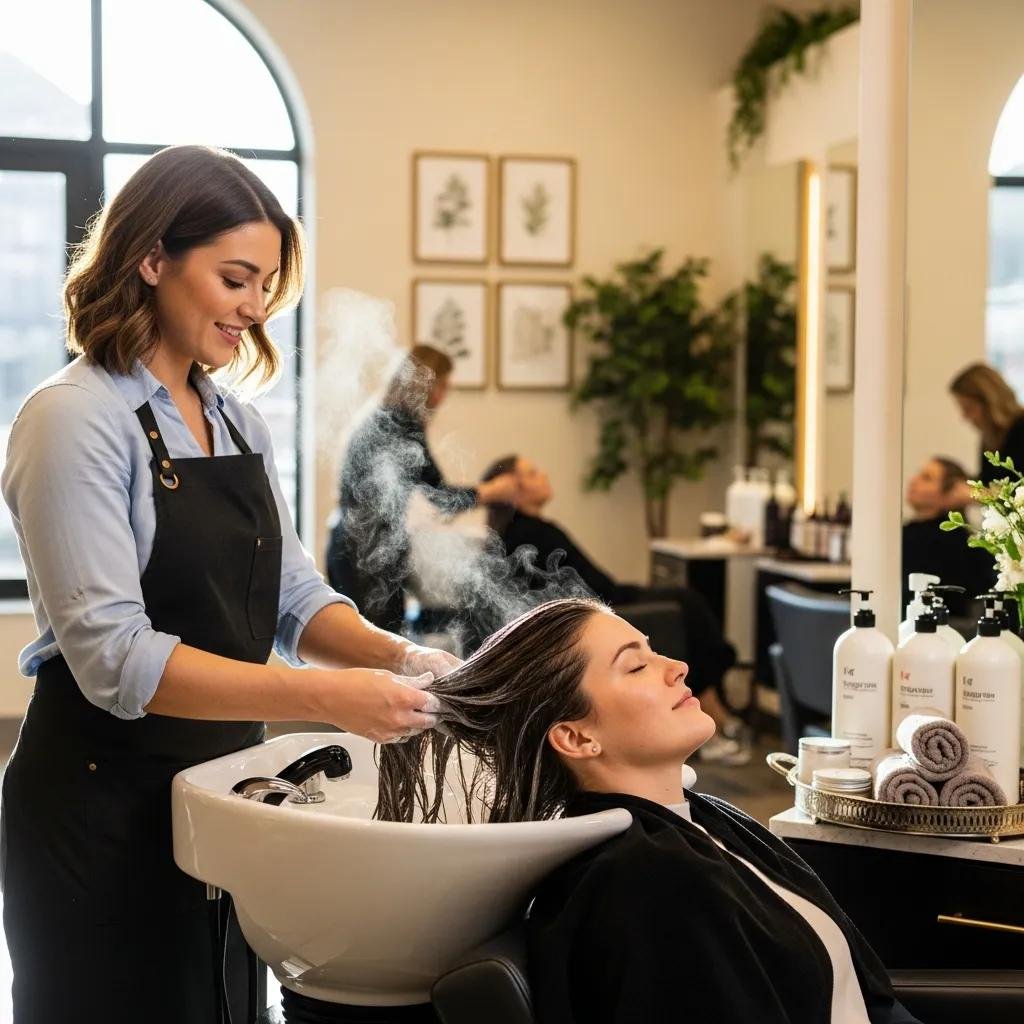
Professional in-salon deep conditioning treatments are concentrated services designed to penetrate the hair shaft, replenish moisture, rebuild weakened fiber, and smooth the cuticle using higher-performance actives and careful application. Salon-grade products often contain stronger concentrations of proteins, humectants, and emollients than retail masks, and technicians use tools like steamers or controlled heat to boost absorption. The immediate payoff is softer, more manageable hair with added shine; with repeat visits, you’ll typically see restored elasticity and less breakage over time. Knowing how these treatments work helps explain why some problems need salon-level repair rather than only at-home care.
How Do Deep Conditioning Treatments Differ from At-Home Hair Masks?
Salon deep conditioning differs from at-home masks in formula strength, application precision, and activation. Professional formulas sidestep unnecessary surfactants and include targeted actives—biomimetic keratins, peptides, and humectants with a higher molecular profile—that act beneath the cuticle. Stylists perform strand tests and adjust timing and heat so the product works effectively without overprocessing. At-home masks are great for upkeep and convenience, but when hair shows structural damage or home care no longer helps, an in-salon protocol delivers faster, more durable improvements in texture and resilience because of product potency and technician expertise.
Which Key Ingredients Are Used in Professional Deep Conditioners?
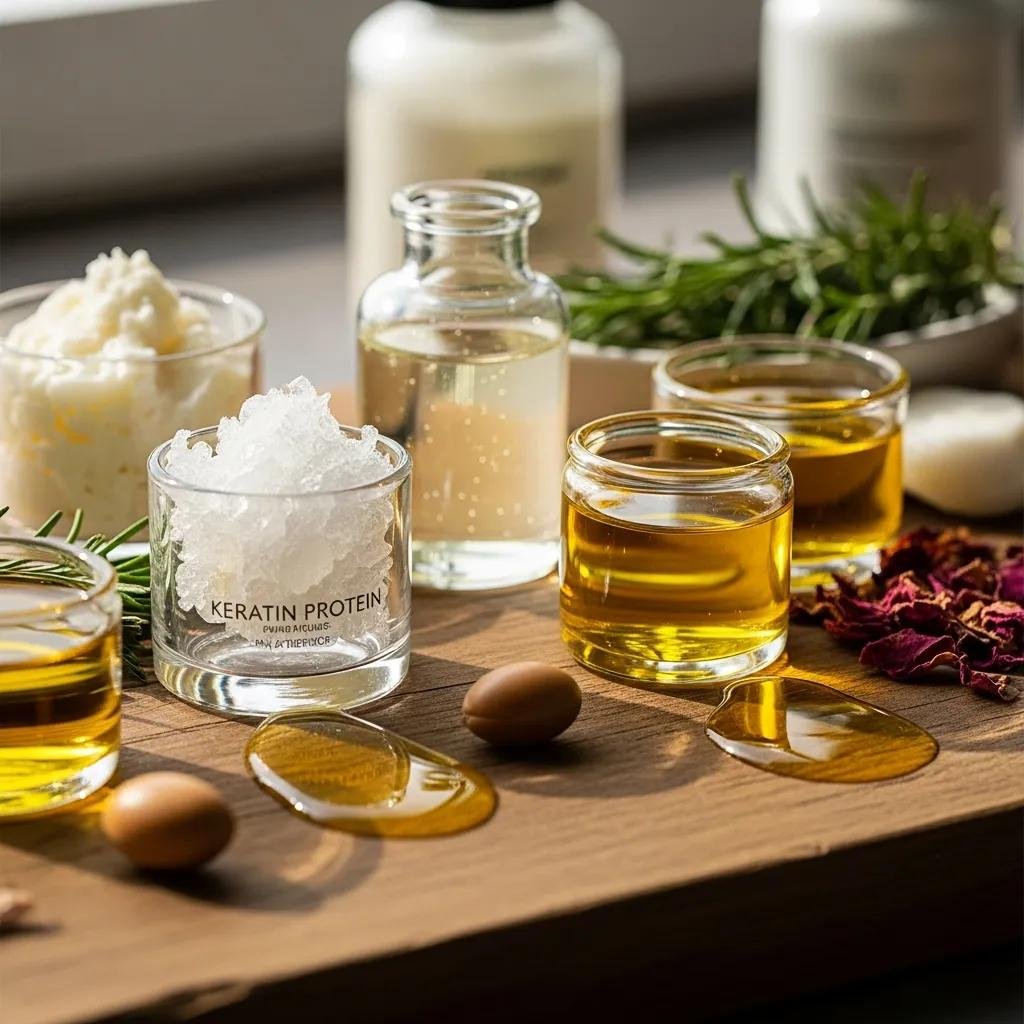
Professional deep conditioners combine structural proteins, humectants, and emollients to address specific hair needs: keratin or peptides help rebuild the cortex, glycerin and low–molecular-weight hyaluronic derivatives attract and hold water, and natural oils or silicone alternatives smooth the cuticle. Newer formulations may use fermented proteins or biomimetic keratin that more closely match the hair’s natural chemistry, and antioxidant extracts help protect against heat and color-related oxidation. In short: proteins strengthen, humectants hydrate, and emollients seal—together producing immediate softness and longer-term resilience. Understanding these groups makes it easier to pick a moisturizing, protein, or hybrid balancing treatment.
What Types of Deep Conditioning Treatments Does Kylie Studio Salon Offer?
At Kylie Studio Salon we group deep conditioning into three core approaches—moisturizing, protein, and balancing—so every service targets the specific cause of your concern. Moisturizing treatments bring back water and suppleness for dry, brittle hair. Protein treatments rebuild strands damaged by color, heat, or mechanical stress. Balancing protocols blend both strategies for maintenance or mixed concerns. During your consultation, your stylist will assess porosity, damage level, and styling habits to recommend the right path. The table below quickly compares the options so you can see which in-salon hair hydration treatment matches your goals.
This comparison shows how aligning treatment type with the hair’s needs gives better, more targeted results than a one-size-fits-all approach.
Moisturizing Deep Conditioners for Dry and Brittle Hair
Moisturizing deep conditioners focus on humectants and emollients to restore internal moisture and surface softness for hair that feels dry, rough, or static-prone. These treatments draw and lock water into the cortex, then seal the cuticle with lightweight oils or silicone alternatives to slow water loss. After one session you’ll notice smoother comb-through, less tangling, and healthier-looking strands; with a home-care routine recommended by your stylist, the improvements build between visits. Humidity-aware styling and proper follow-up extend the benefits.
Protein Deep Conditioners for Damaged and Weakened Hair
Protein deep conditioners replenish structural building blocks for hair weakened by chemical services, heat, or mechanical wear. Hydrolyzed keratin and peptides attach to compromised areas and help fill gaps in the cortex, improving tensile strength—though protein must be balanced to avoid stiffness. Stylists typically recommend cycling protein and moisturizing treatments to rebuild strength while keeping flexibility. When used correctly, protein treatments reduce breakage during combing and styling and help hair better withstand everyday stress.
Balancing Deep Conditioners for Overall Hair Health
Balancing treatments combine moderate amounts of protein and humectants to preserve both strength and moisture—ideal for ongoing maintenance or clients with mixed-service hair. These hybrid formulas suit color-treated or frequently styled hair that needs steady correction without excess protein or moisture. Balancing sessions usually act as a maintenance step between more focused moisturizing or protein treatments, helping stabilize the hair’s moisture–protein ratio and lowering the need for more intensive corrective services.
What Are the Benefits of Professional Deep Conditioning Treatments?
Professional deep conditioning delivers several measurable benefits by working at both the surface and strand levels: smoothing the cuticle for shine, rehydrating the cortex to restore elasticity, strengthening fibers to reduce breakage, and improving resistance to humidity and color fade. Salon-strength actives and activation methods speed up results that at-home care can only partially achieve, and clients usually notice immediate tactile improvements followed by structural gains over time.
Key benefits include immediate shine, improved strength over time, reduced frizz, and better color retention:
- Enhanced Shine: Cuticle smoothing plus emollients create a more reflective surface after one session.
- Improved Elasticity: Protein infusion combined with hydration increases tensile strength over 2–6 weeks.
- Frizz Reduction: Balanced moisture and surface sealing reduce humidity-related frizz, often right away.
- Color Protection: Healthier cuticles hold pigment better—benefits accumulate with regular maintenance.
Use this mapping to set realistic expectations: you’ll often see visual and tactile changes right away, while deeper structural resilience builds with a tailored care plan.
Ready to book? Kylie Studio Salon in Bethesda, MD offers targeted deep conditioning services designed around the benefits above. Call to discuss your goals and schedule a consultation at 301-922-7864 or use our Book Now option on the website. This quick booking note is here to connect you with a specialist who can apply the right treatment for your hair.
How Do Deep Conditioning Treatments Improve Hair Shine and Manageability?
Deep conditioners boost shine by smoothing and sealing the cuticle so light reflects more evenly; emollients and glossing actives fill micro-roughness and add a subtle reflective layer. Manageability improves because hydrated, smoothed strands detangle with less force, which reduces mechanical breakage during styling. Most clients notice immediate texture changes after one appointment, and following your stylist’s maintenance suggestions helps sustain those improvements. This is why professional glossing and sealing techniques usually outperform quick home fixes.
In What Ways Do These Treatments Reduce Frizz and Prevent Breakage?
Frizz drops when treatments restore moisture balance and create a surface barrier that limits rapid moisture exchange with the environment—so hair doesn’t swell in humidity. Preventing breakage depends on strengthening the cortex with protein and restoring elasticity so hair bends instead of snapping under stress. Together, these effects improve strand mechanics and cut cumulative damage from heat and brushing. Long-term frizz control also relies on consistent maintenance and the right at-home products to support salon treatments.
Can Deep Conditioning Extend the Life of Color-Treated Hair?
Yes. Maintaining cuticle integrity and optimal moisture reduces pigment loss by lowering porosity and surface abrasion that can push dye out. A single session can improve gloss and the look of color right away, but a maintenance schedule tailored to your color process and washing habits will keep vibrancy longest. Your stylist will recommend intervals based on your color type and lifestyle—balancing treatments are often a good option to avoid overloading either proteins or moisture.
What Is the Deep Conditioning Process at Kylie Studio Salon?
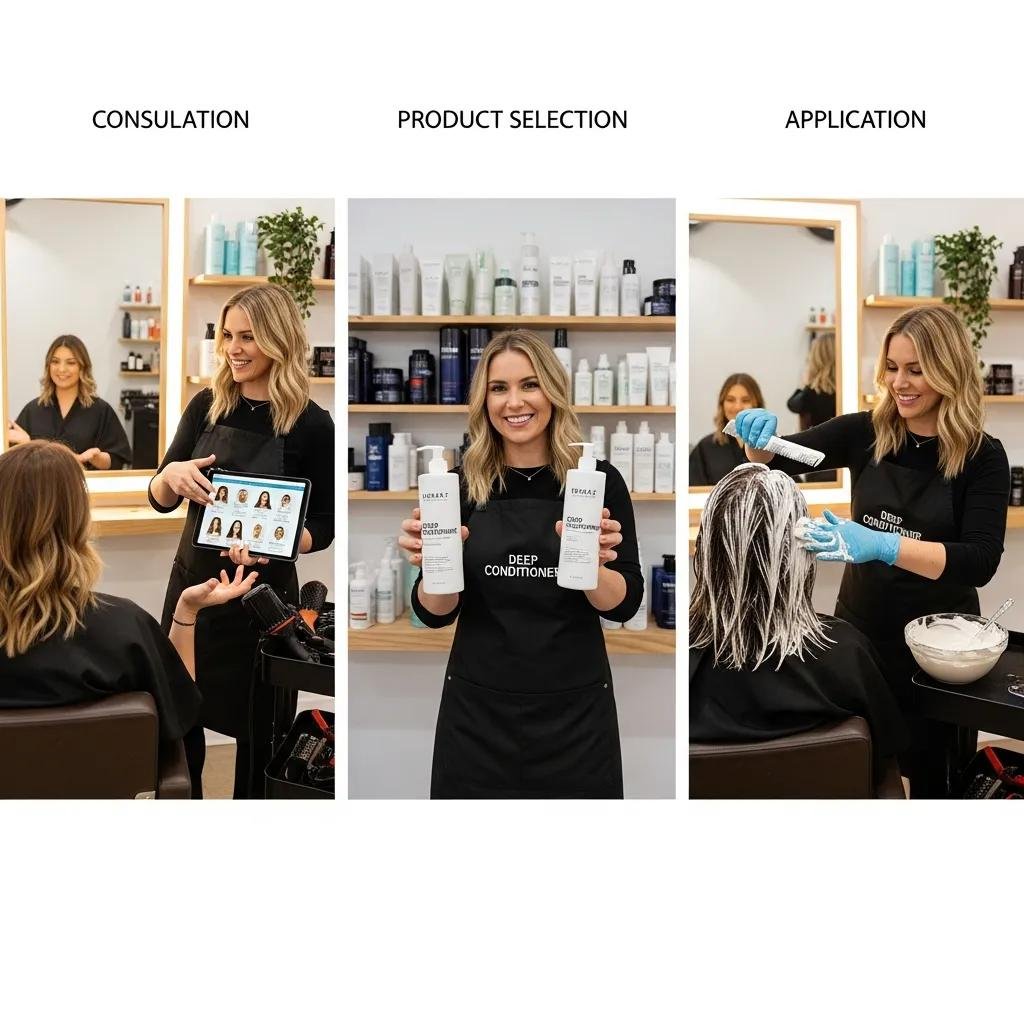
Our in-salon deep conditioning process starts with a short consultation and assessment, moves to custom product selection and precise application, and finishes with targeted activation, rinse, and professional styling to lock in the result. Each step maximizes penetration and predictable outcomes: the evaluation reveals porosity and damage patterns, product blends address specific deficits, and controlled heat or steam enhances absorption without overprocessing. We’ll also walk you through timing and sensory expectations so you know how the service will feel and what immediate results to expect. The table below shows a typical appointment flow and what happens at each stage.
This timeline helps you plan your visit and shows the role professional tools play in delivering consistent results.
What Steps Are Involved in a Professional Deep Conditioning Treatment?
The service is straightforward: your stylist begins with a focused consultation and strand assessment to identify porosity and damage. We select a formula that matches your goals and hair history, apply it to clean hair with precise technique, then activate it with heat or steam to improve penetration. Processing time is adjusted to strand response and product guidelines. After rinsing, we finish with a professional blow-dry and style so you leave with visible smoothness and shine. Your stylist will also give tailored post-care advice to help the results last. This controlled approach is what separates in-salon deep conditioning from DIY treatments.
How Does Personalized Consultation Enhance Treatment Effectiveness?
Personalized consultation makes sure the treatment addresses the root cause—whether that’s a moisture deficit, protein shortage, or a mixed imbalance—by factoring in hair history, recent chemical services, and a strand-level check. This diagnosis prevents common mismatches, like using high-protein formulas on already protein-rich hair (which can cause stiffness), or over-moisturizing low-porosity hair. Adjusting processing time and activation method also improves absorption and reduces risk. In practice, consultation-led customization yields more consistent, longer-lasting outcomes.
Why Choose Kylie Studio Salon for Your Deep Conditioning Needs in Bethesda, MD?
Kylie Studio Salon centers its deep conditioning services on careful assessment, salon-grade products, and precise technique to restore and revitalize hair for our Bethesda neighbors. Ruth, the salon owner and lead stylist, brings hands-on experience and a client-first approach to every diagnosis and product choice, so treatments are matched to your hair’s unique structure and goals. We’re conveniently located at 4711 Montgomery Ln, Suite 2, Bethesda, MD 20814, and make booking easy via online scheduling or by phone at 301-922-7864. Browse our portfolio to preview results and find the service that fits your needs before you book.
How Does Ruth’s Expertise Ensure High-Quality Hair Repair Treatments?
Ruth uses assessment-driven judgment at every appointment—strand testing and detailed consultation guide her choice of actives and processing methods to match your hair’s condition. Her experience tells her when to prioritize moisture, when to rebuild with protein, and when a balanced approach is best. That prevents one-size-fits-all mistakes and helps clients get predictable improvements in elasticity, shine, and manageability. She also measures progress over time and adjusts the plan so results last.
What Do Clients Say About Their Deep Conditioning Results?
Clients consistently report softer hair, less tangling, and brighter shine after professional deep conditioning. Many note the difference between salon conditioning and at-home masks—salon treatments feel deeper and perform better. Feedback frequently highlights immediate manageability and fewer breakage issues when treatments are part of a maintenance plan. We encourage prospective clients to view before-and-after photos in our portfolio and to bring specific goals to the consultation so expectations stay aligned.
What Are Common Questions About Deep Conditioning Treatments?
People often ask about how often to come in, what separates masks from deep conditioners, and which concerns benefit most from a salon session. The short answers below are practical and actionable so you can decide when to book and how to pair salon care with home routines. Each response includes a brief explanation so you understand the reasoning behind the recommendation.
How Often Should You Get a Professional Deep Conditioning Treatment?
We generally recommend professional deep conditioning every 4–6 weeks, adjusted for hair condition, styling habits, and recent chemical services. More damaged or color-treated hair may do better on a shorter interval; low-maintenance or unprocessed hair can wait longer. Regular maintenance helps stabilize the hair’s moisture–protein balance and cuts down on corrective sessions. For most clients, a 1–2 month cycle keeps hair steadily improving without overdoing it.
What Is the Difference Between a Hair Mask and a Deep Conditioner?
A hair mask is usually an at-home product intended for periodic use with gentler actives and shorter processing expectations. An in-salon deep conditioner uses higher-concentration actives and professional activation to penetrate deeper and create longer-lasting structural change. Masks are great for upkeep and short-term smoothing, but when hair has structural issues—significant breakage, porosity shifts, or color fade—a salon deep conditioning delivers targeted repair. Use a mask between salon visits for maintenance and book a professional treatment when lasting fiber repair is the goal.
Which Hair Concerns Are Best Addressed by Deep Conditioning?
Deep conditioning works best for dryness, frizz, reduced elasticity, breakage, and color fading by restoring moisture, reinforcing fiber structure, and smoothing the cuticle. Complex situations like mixed chemical wear may require a planned sequence of specialized sessions. Moisturizing treatments tackle hydration deficits, protein treatments rebuild mechanical or chemical damage, and balancing sessions maintain overall health. Matching the concern to the treatment during consultation ensures efficient use of salon time and products. For persistent or advanced damage, your stylist will recommend a staged plan combining types to rebuild resilience.
- Dryness and brittleness: best treated with moisturizing deep conditioners.
- Chemically-induced weakness: requires protein-focused protocols.
- Mixed concerns and maintenance: balanced treatments maintain optimal hair health.
These simple match-ups help you and your stylist choose the right in-salon intervention and get the best results from your appointment.
Frequently Asked Questions
What Should I Expect During My First Deep Conditioning Appointment?
Your first appointment starts with a thoughtful consultation where we assess your hair’s condition, porosity, and goals. From there we choose a tailored treatment and apply it precisely—often using heat or steam to boost absorption. After rinsing, we finish with a professional blow-dry and styling, and we’ll give you at-home tips to help the results last.
How Can I Maintain the Results of My Deep Conditioning Treatment?
To keep results longer, follow a consistent at-home routine: use sulfate-free shampoos and conditioners suited to your hair type, add weekly moisturizing masks if recommended, limit excessive heat styling, and protect hair from environmental stressors. Regular trims also prevent split ends and help maintain the healthy appearance you get from a salon treatment.
Are Deep Conditioning Treatments Suitable for All Hair Types?
Yes—deep conditioning benefits straight, wavy, curly, and coily hair. The specific treatment varies by need: moisturizing for dry hair, protein for chemically treated or damaged hair, and balancing for mixed concerns. Your stylist will help choose the right option during the consultation based on your hair’s texture and history.
Can I Combine Deep Conditioning Treatments with Other Salon Services?
Absolutely. Deep conditioning works well alongside color, cuts, and styling. Many clients opt for a treatment before or after color services to boost moisture retention and protect hair. Tell your stylist your goals so we can recommend the best timing and service combination for optimal results.
How Long Do the Effects of a Deep Conditioning Treatment Last?
Effects can last from a few weeks to several months depending on hair type, the treatment used, and your at-home routine. Immediate improvements in shine and manageability are common; structural benefits like increased elasticity and reduced breakage develop with regular maintenance. To prolong results, we recommend follow-up treatments every 4 to 6 weeks for damaged or color-treated hair.
What Are the Signs That I Need a Deep Conditioning Treatment?
Look for dryness, brittleness, excessive frizz, or noticeable breakage. Hair that feels rough or lacks shine usually benefits from moisture restoration. If you use heat often or have had chemical services, a protein-focused treatment can help strengthen strands. Regular assessments with your stylist will keep you on the right schedule for treatment.
Conclusion
Professional in-salon deep conditioning can make a real difference: more shine, better elasticity, and less frizz—delivered in a package that fits your hair’s specific needs. Understanding how these treatments work helps you choose the right approach and get lasting results. When you’re ready to revive your hair, schedule a consultation at Kylie Studio Salon—one appointment can start the transformation.