Easy Overnight Waves — Heatless Techniques for Textured Hair That Keep Your Hair Healthy
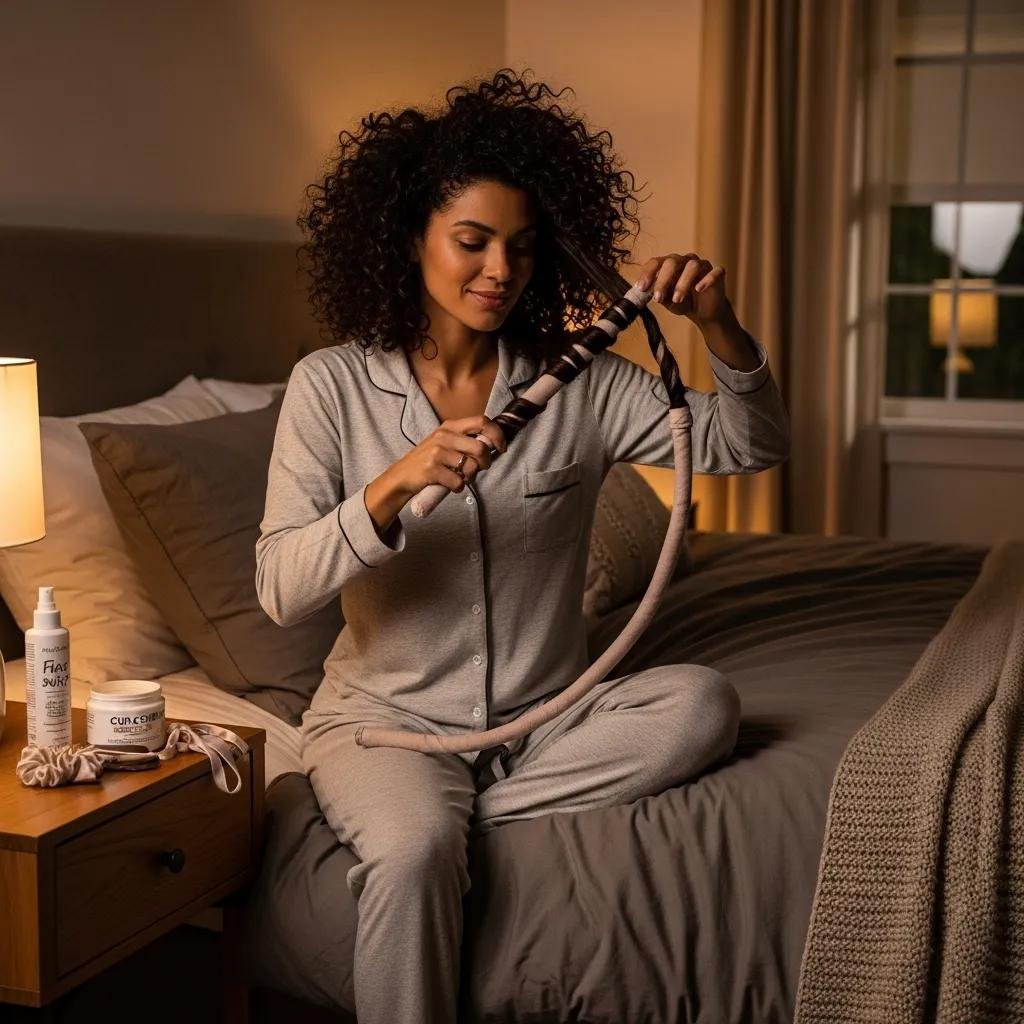
Heatless waves create soft, defined curls and texture without using heat—so your hair keeps its strength and shine. This guide explains how no-heat methods work on textured hair, walks you through the best overnight techniques, and recommends products and accessories that help waves hold longer. If you worry about heat damage, lost curl pattern, or dryness, these methods use moisture, gentle tension, and protective fabrics to set shape while you sleep. You’ll get step-by-step instructions for sock curls, robe-tie curls, and braid waves, plus tailored prep and morning-refresh tips for fine, thick, and curly hair. We also compare curl creams, mousses, and texturizing sprays and show how silk scrunchies and pillowcases reduce friction. Where it helps, we point to Kylie Studio Salon in Bethesda, MD for personalized consultations and hands-on technique tuning. By the end you’ll be ready to pick a heatless method, prep correctly before bed, and troubleshoot common issues so you can wake up to natural, damage-free waves.
What Are Heatless Waves and Why Are They Ideal for Textured Hair?
Heatless waves shape hair with wrapping, braiding, twisting, or padding instead of hot tools. They work by changing hair moisture, applying gentle tension, and holding strands in place until hydrogen bonds reset—creating long-lasting shape without the thermal stress that lifts the cuticle. For textured hair, that gentle approach keeps curl pattern, elasticity, and moisture balance intact. Over time, swapping heat for no-heat methods helps reduce breakage and dryness so curls and waves look healthier and hold better between salon visits. Understanding how these techniques protect hair sets you up to choose the right method for your texture.
Heat tools raise strand temperature, which can lift the cuticle and speed moisture loss—leading to brittleness and a softened curl pattern. Heatless methods avoid that by setting hair in a controlled, lower-moisture state and using soft fabrics or light tension to protect the cuticle. That difference is why many stylists suggest alternating heatless styling with occasional salon heat services: it balances style versatility with long-term hair health. The next section explains the biological reasons heat causes damage and how no-heat options preserve structure.
How Do Heatless Waves Prevent Hair Damage Compared to Heat Styling?
High heat can lift the cuticle, evaporate bound water, and weaken internal proteins—so repeated thermal styling increases porosity, split ends, and loss of elasticity. Heatless waves sidestep those issues by using moisture, tension, and time to reform hydrogen bonds without stressing proteins. For textured hair, keeping the cuticle smooth preserves shine and reduces frizz because intact cuticles reflect light and hold product more evenly. Stylists regularly see clients retain better curl definition and suffer less breakage when they use heatless techniques between appointments—a clear practical benefit for hair health.
In practical terms: heat can temporarily relax pattern at the cost of structure, while no-heat methods reshape without long-term protein damage. Knowing this helps you pick the technique that suits your porosity and curl type—details we break down next.
Which Hair Textures Benefit Most from Heatless Styling Methods?
Heatless techniques work well across most textured hair—wavy (2a–2c), curly (3a–3c), and coily (4a–4c)—because they enhance natural pattern without drying strands. Wavy hair often responds to lighter-tension methods (headband or robe-tie) for soft S-shaped waves. Curly and coily hair usually benefits from braids or wraps that preserve clumps and limit frizz. Fine hair can use heatless methods too, but needs lighter product and careful tension so waves don’t go limp. Very straight, low-porosity hair may take a bit more prep—slight dampening or a stronger setting approach—to hold an overnight wave. These texture-specific tips lead into practical method choices—sock curls, robe tie, and braids—in the next section.
What Are the Most Effective Heatless Curl Methods for Overnight Styling?
Overnight heatless techniques remap hair shape while you sleep using wrapping, tying, or braiding. The best method depends on length, texture, and the finished look you want. Favorites include sock curls for bouncy ringlets, robe-tie curls for comfortable, even coils, braid waves for a beachy finish, pin curls for vintage volume, and headband curls for loose, consistent waves. Comfort and setting time vary, so pick a method that fits your sleep habits and hair density. Below is a quick guide to match a method with your starting hair, followed by detailed how-tos for two versatile overnight techniques.
The most reliable results come from balancing tension and moisture: sock curls make defined, elongated curls through tubular wrapping and suit medium-to-long hair; robe-tie curls use a soft strip for even tension and work across textures; braid waves adapt to length and give a relaxed, lived-in look. Lighter-tension methods can feel comfier overnight but may need more time to set—use this when choosing between techniques. The H3 tutorials that follow walk you through execution and tweaks.
- Sock curls — Soft, tubular wraps that create uniform, bouncy curls; best for medium to long hair.
- Robe tie curls — A fabric-strip method that forms consistent coils with low overnight discomfort.
- Braid waves — Braiding variations that deliver everything from loose, beachy waves to more defined S-shapes depending on braid size.
These options lead into a length-specific sock curl tutorial below to help you begin.
How to Create Bouncy Sock Curls Overnight for Different Hair Lengths
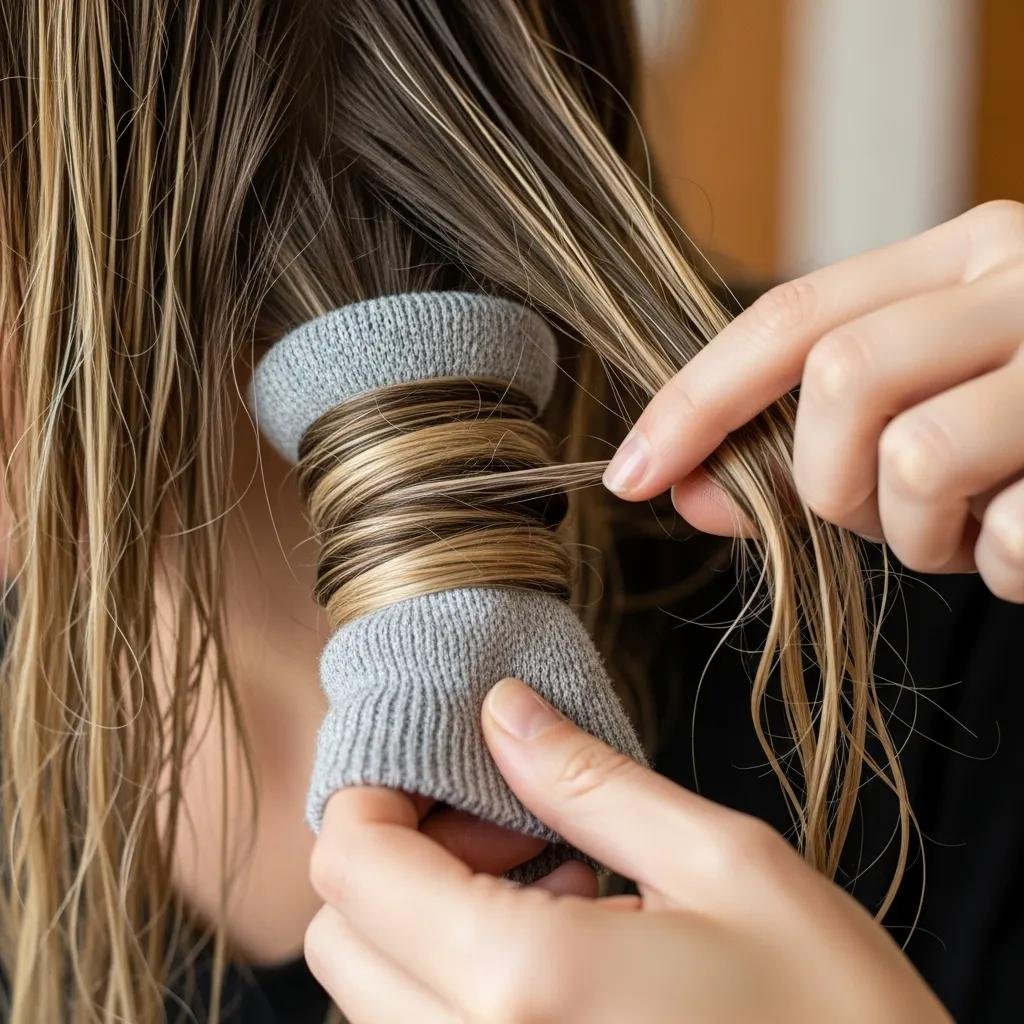
Sock curls form springy curls by wrapping damp, product-treated sections around a soft tube and securing them gently. For short hair, choose smaller-diameter rolls and wrap short, even sections with light tension to avoid bulky ends. Medium lengths do well with medium rolls and slightly longer sections for looser ringlets. For long hair, section into narrow strands and use a longer sock or multiple socks to prevent sagging—keep hair slightly damp and use a touch of mousse or curl cream at the roots for hold. In the morning, unroll gently, separate with your fingers (don’t comb), then finish with a light texturizing spray and a few drops of oil on the ends to tame frizz and boost shine.
Prep and consistent tension matter: towel-blot to damp, apply a lightweight mousse or curl cream, and wrap sections evenly so curls match. If a few curls feel flat, re-wrap those sections on a headband for an hour before unwrapping to refresh the shape. Proper removal and gentle de-frizzing are the final steps before styling—then decide if a robe-tie or braid might better suit your routine next time.
What Is the Robe Tie Curls Technique and How Does It Work?
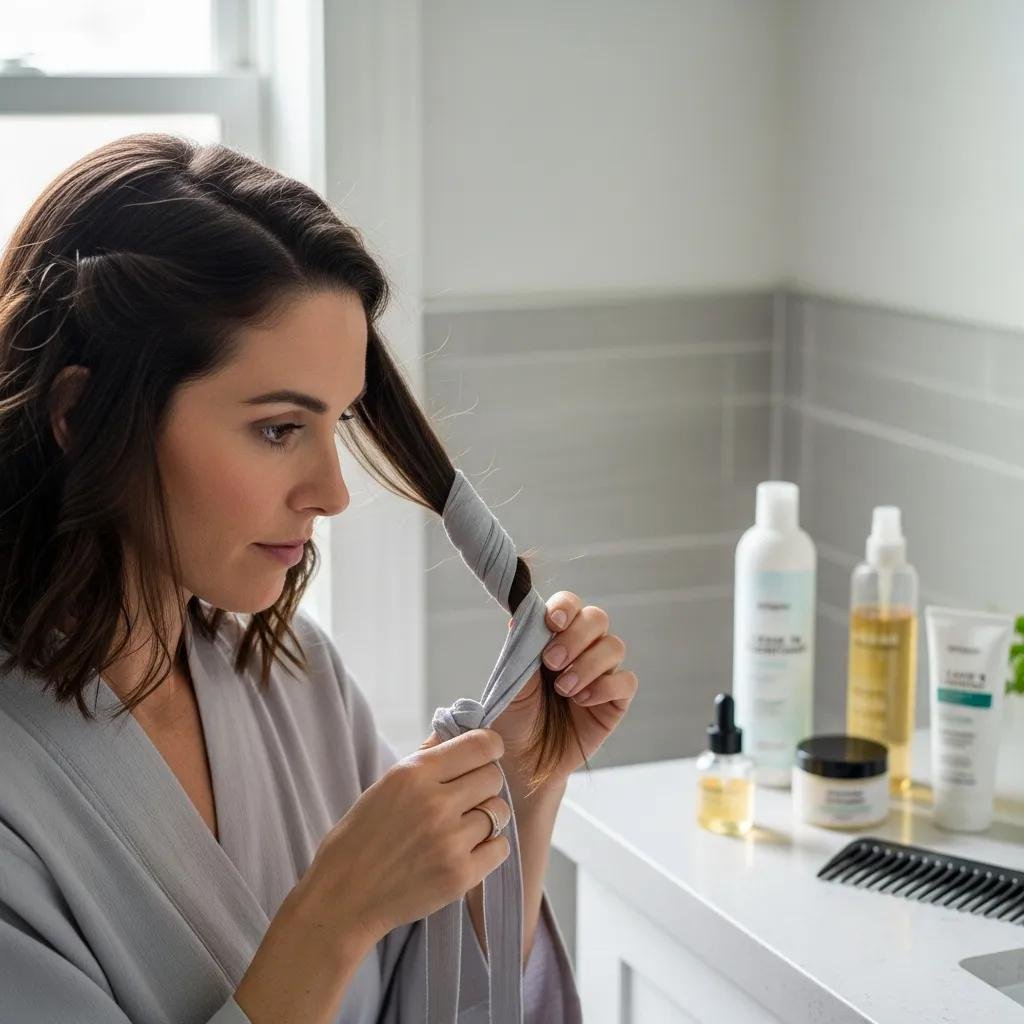
Robe-tie curls use a soft fabric strip—like a robe belt or scarf—laid along the length of your hair and tied to create gentle, even tension that sets waves while you sleep. To do it, place the tie across the top of your head, wrap sections around the fabric, and loop the tie to secure. Tension should be snug but never painful. This method suits medium to long hair and is great for people who want uniform waves without bulky rollers. It’s especially good for curly hair because the fabric helps preserve clumps and reduces friction compared with elastics or rough materials.
People often choose robe ties for comfort—the fabric spreads pressure and stays put overnight. If you want tighter rings rather than soft waves, add a small amount of light-hold mousse before wrapping. In the morning, unwrap, shake and separate with fingers, then finish with a texturizing spray for extra longevity. From there, braid techniques offer another texture option to try.
How Can Braid Waves Be Used Overnight to Enhance Natural Texture?
Braid waves use braids to form waves that range from tight, uniform S-shapes to loose, beachy texture depending on braid size and tightness. Smaller, tighter braids create more defined waves; larger, looser braids give a relaxed look. Choosing between standard three-strand braids and French braids affects volume and how the waves start at the root. Braids work well for curly and coily hair because they keep clumps intact and reduce morning frizz; for fine hair, looser braids and lighter product prevent flattening. Braiding is sleep-friendly and can double as a protective style—the next subsections compare braid types and explain how to get a beachy finish after unbraiding.
You can vary braids by adding twists or braiding in staggered sections to create a more natural, irregular pattern. Consistent sectioning and even tension help produce symmetrical results; when braiding close to the scalp, use moderate tension to protect fragile hairlines. With these basics, the comparison between French and standard braids helps you choose the right approach for your goals.
What Are the Differences Between French Braid and Standard Braid Waves?
French braids add hair to the plait as you go, so the wave pattern begins at the root and blends outward—this gives integrated volume and a slightly polished look. Standard three-strand braids usually start lower on the length and create a separate, uniform S-shaped wave that sits away from the scalp. French braids are ideal if you want root lift and a blended texture; standard braids are faster and easier to vary for different curl sizes. Both braid types respond well to a light leave-in or a small amount of mousse—curly hair often looks best braided while slightly damp with cream to encourage clumping.
Knowing when to use each braid sets you up for the post-unravel steps that create a beachy finish, which we explain next.
How to Achieve a Beachy Look with Overnight Braid Waves
For a beachy finish, use loose to medium braids on damp hair with a touch of salt spray or texturizing product before braiding to create separation and hold. In the morning, undo the braids and use your fingers—not a comb—to separate waves. Lightly scrunch with sea salt spray or a lightweight texturizing mist for that lived-in texture. Tousle at the roots for volume and add a tiny amount of smoothing oil to the ends to reduce frizz and add sheen. Embrace natural variation—avoid over-brushing.
If waves feel too tight, mist with water and loosen with your fingers; if they fall flat, re-braid a few sections for an hour to reset. These simple morning tweaks keep braid-based results fresh throughout the day and lead naturally into product and accessory choices that support hold.
Which Products and Accessories Support Long-Lasting Heatless Waves?
The right products and accessories help heatless waves set and survive humidity and movement without stiffness. Key product types are curl creams for moisture and clump definition, mousses for lightweight structure, and texturizing sprays for surface grip and separation. Protective accessories—silk scrunchies, silk pillowcases, and bonnets—reduce friction and preserve the cuticle overnight. Layering matters: start with a leave-in for moisture, follow with a curl cream or light mousse to set pattern, and finish with a texturizer after styling to lock the shape. That sequence balances hydration and hold while keeping hair bouncy.
Below is a practical comparison to help match product types to hair characteristics and explain why they help waves set and last.
What Are the Best Curl Creams, Mousses, and Texturizing Sprays for Heatless Styling?
Pick products based on porosity and thickness: fine hair needs lighter mousses to avoid collapse, while thick or high-porosity hair benefits from richer creams that lock in moisture. Apply to damp hair—leave-in first, then curl cream or a small amount of mousse through mid-lengths and ends—avoiding heavy buildup at the roots. After your wave is formed, finish with a light texturizing spray to add movement and surface bite; this step especially helps braid and sock-curl results. Use small amounts—pea-sized for fine hair, a quarter-sized amount for thick hair, and a moderate mousse for medium density—then adjust as needed.
Kylie Studio Salon carries professional-grade creams and mousses and can recommend which formulas match your texture. Picking products at the salon ensures you get professional-quality options that pair well with techniques we teach in consultations.
Intro to the EAV table: The following table compares product examples by category, hold level, and application tip to guide purchases and use.
Summary: These application tips help you choose the right product and use it to support heatless waves without compromising hair health.
Kylie Studio Salon in Bethesda, MD stocks recommended products and offers guidance on which formulas will work best with your nightly routine and texture—ask during a consultation or pick up salon-recommended items after your appointment.
How Do Silk Accessories Like Scrunchies and Pillowcases Help Maintain Waves?
Silk accessories lower friction between hair and fabric, protecting the cuticle and preserving wave definition overnight. Mulberry silk is a common recommendation because it’s smooth and helps retain moisture better than cotton, which can absorb natural oils and dry strands. Use fabric-wrapped scrunchies or silk ties to secure wraps and braids to avoid dents and snapped elastics. Sleeping on a silk pillowcase or wearing a silk bonnet keeps waves intact and extends salon-like results. Care for silk gently—hand wash and avoid harsh detergents—to keep its protective qualities.
Paired with the right product layering, silk accessories amplify benefits: silk reduces mechanical damage while curl creams and mousses set the pattern, creating a more consistent morning outcome. That combination prepares all textures to achieve their best heatless-wave results, which we cover next.
How Should Different Hair Types Prepare and Maintain Heatless Waves Overnight?
Prep and maintenance differ by hair type—fine, thick, and curly hair each need specific dampness levels, product amounts, and sectioning to set overnight and refresh in the morning. Fine hair does best with moderate dampness and minimal product: a lightweight mousse and smaller sections provide definition. Thick hair needs even product distribution and larger sections—use a richer cream and secure with robe ties or wide rolls. Curly hair benefits from more moisture, clumping with cream, and protective wrapping to preserve curl formation and reduce frizz—leave-in conditioner plus silk accessories work well.
The short table below summarizes prep steps and recommended tools so you can choose quickly and confidently.
Summary: Matching prep and tools to your hair type reduces trial-and-error and increases the chance of waking to well-defined waves.
Kylie Studio Salon personalizes prep routines for fine, thick, and curly textured hair during in-salon consultations, so clients get technique coaching that fits their schedule and styling goals. If you want hands-on guidance, book a session—stylists will recommend product amounts and wrapping strategies to refine your at-home routine.
What Are the Best Preparation Steps for Fine, Thick, and Curly Hair?
Fine hair: start damp (not dripping), use a small amount of lightweight mousse at roots and mid-lengths, section into narrow wraps or small braids, and sleep on silk to avoid flattening. Thick hair: distribute a hydrating curl cream through detangled hair, section into medium-to-large wraps or braids, and support length with robe ties or wide sock rolls. Curly hair: apply a generous leave-in and curl cream to clumps, detangle gently with fingers or a wide-tooth comb, and wrap protectively to keep curl formation and cut down on frizz. Each routine balances moisture and tension so hydrogen bonds can reset into the desired wave overnight.
How to Troubleshoot Common Issues Like Frizz and Curls Not Holding
Frizz or weak hold usually comes from incorrect dampness, the wrong product weight, or uneven tension—check and adjust one variable at a time. If frizz is the problem, add a leave-in conditioner and use silk accessories to cut overnight abrasion. If curls won’t hold, try more mousse or smaller sections to increase tension. Quick fixes: mist problem areas and re-wrap for 30–60 minutes, or refresh with texturizing spray and gentle scrunching after unwrapping. If issues continue, book an in-salon troubleshooting consult for personalized technique and product adjustments.
Callout: If at-home tweaks don’t help, consider an in-salon troubleshooting session at Kylie Studio Salon to evaluate porosity, product fit, and wrapping technique—stylists can demonstrate targeted corrections and product pairings.
How Can Kylie Studio Salon’s Experts Enhance Your Heatless Wave Results?
At Kylie Studio Salon in Bethesda, MD, our stylists combine technique coaching, precision cutting, and product selection to improve heatless-wave outcomes while protecting textured hair. A tailored cut can change weight and layering so sock curls and braids spring more evenly. Professional conditioning treatments restore elasticity and moisture so waves hold longer. Stylists also teach hands-on wrapping, braiding, and tying methods that match your sleep habits and recommend salon-grade products based on your texture and porosity. Together, these services make heatless styling repeatable, low-damage, and realistic for everyday life.
The next section lists salon services that complement heatless styling and explains how they translate into better at-home results, plus how to book a personalized consultation.
What Professional Services Complement Heatless Styling for Textured Hair?
Helpful services include precision layering and shaping to enhance natural wave formation, targeted conditioning treatments to boost elasticity, and one-on-one styling lessons to teach wrapping and sectioning. A layered cut can add lift for sock curls and remove bulk that interferes with robe-tie or braid methods. Moisture treatments help porous hair set more reliably overnight. Styling consultations combine live demos with product pairings so you can confidently replicate techniques at home. Together, these services align the cut, the hair’s biology, and your technique for consistent, long-lasting heatless results.
Combined, these professional steps reduce guesswork and shorten the learning curve so clients get repeatable results with minimal daily effort.
How to Book a Personalized Consultation for Heatless Wave Techniques in Bethesda, MD
Booking a consultation at Kylie Studio Salon is easy: expect a focused session where a stylist assesses your texture and porosity, discusses lifestyle needs, and demonstrates preferred heatless methods. Bring photos of looks you like and a brief hair history to make the session more productive. The stylist will outline a prep and product plan and may offer a short hands-on lesson to practice wrapping or braiding. Consultations typically cover product selection, sectioning patterns, and maintenance tips so you can reproduce results at home. Schedule through the salon’s online booking tool or call directly—stylists can also reserve recommended products for you to purchase during your visit.
Our team—including Ruth, who has deep experience with textured hair—focuses on practical coaching and personalized service to help you switch to low-damage, heatless styling with confidence.
Frequently Asked Questions
1. Can heatless waves work on all hair types?
Yes—heatless waves can be adapted for wavy, curly, and coily hair. Each type benefits from different techniques and product choices: wavy hair often responds to lighter-tension methods, while curly and coily hair usually gets the best results from braids or wraps that preserve clumps. Tailoring the method to your hair’s characteristics gives the best outcome.
2. How long should I leave my hair wrapped for heatless waves?
The ideal time varies by method and hair type, but overnight is usually best. If you’re short on time, 30–60 minutes can work for some styles if hair is properly prepped and slightly damp. For consistent results, overnight setting gives the most reliable hold.
3. What should I do if my heatless waves fall flat in the morning?
If waves fall flat, re-wrap a few key sections for 30–60 minutes, or mist lightly with water and scrunch to reactivate the pattern. A texturizing spray after unwrapping can add volume and definition. If the problem continues, revisit product choice and application—lighter or heavier formulas may be needed depending on your hair.
4. Are there specific products to avoid when creating heatless waves?
Avoid heavy, greasy products that weigh hair down—thick oils and heavy creams can make waves limp. Instead, choose lightweight mousses, balanced curl creams, and finishes that provide hold without stiffness. Always patch-test new products on a small section first to see how they interact with your texture.
5. How can I maintain my heatless waves throughout the day?
Use a light texturizing spray or flexible-hold hairspray to lock in shape without crunch. Minimize touching your hair to reduce frizz. If flyaways appear, a small amount of smoothing oil on the ends tames frizz and adds shine without weighing the style down.
6. Can I use heatless methods on wet hair?
Avoid applying techniques to fully wet hair—that can stretch drying time and lead to limp results. Start with towel-blotted, slightly damp hair so products can work and hair can set efficiently. Slightly damp is the sweet spot for most overnight methods.
7. How often can I use heatless styling methods?
You can use heatless methods as often as you like—one of their main benefits is low damage. Still, listen to your hair: if you notice dryness or breakage, add conditioning treatments and give hair a short break. Combining heatless styling with occasional in-salon care helps maintain long-term health.
Conclusion
Heatless wave techniques are a simple, low-damage way to get beautiful texture while protecting your hair. Methods like sock curls, robe-tie curls, and braids let you customize results for your length and curl type. Using the right products and silk accessories enhances hold and reduces frizz so your waves stay defined and healthy. Find the routine that fits your hair and lifestyle—or book a consultation at Kylie Studio Salon to get personalized coaching and product recommendations. Wake up to better waves and healthier hair.