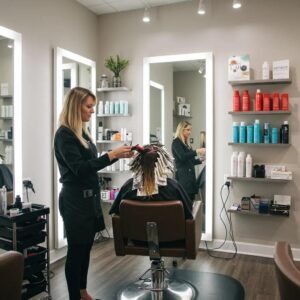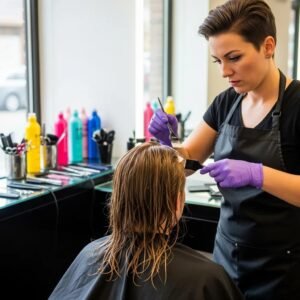
A strand test gives a stylist information about a small sample of hair under particular conditions. Before a color correction, it can help frame a discussion about color response and visible changes in the tested sample. It cannot guarantee the result, timing or safety of a full service.
The most useful question is not simply whether the test “passed.” Ask what was tested, what was observed, what remains unknown and how those limits affect the proposed plan.
What a strand test examines
A stylist may use a selected section of hair to observe its response to a proposed product and process. The assessment may include the resulting tone, how unevenly the sample changes, and its condition afterward. The actual method should follow the relevant product instructions and professional assessment.
This article does not give a formula, processing time or home testing procedure. Different products and histories require different precautions. Do not extend processing time or change a mixture based on a general online checklist.
What the sample does not represent
One section does not necessarily represent the roots, mid-lengths, ends or every previously treated area. A sample from a less processed area may not show how an overlapped or fragile section will respond. Even when more than one area is considered, uncertainty remains.
Tell the stylist about earlier color, lightening, removers, smoothing, perming, relaxing and color-depositing products. Mark unknown products or dates as unknown. A strand test cannot reconstruct a complete chemical history or identify every ingredient used in the past.
Separate observations from predictions
Ask the stylist to distinguish what happened to the sample from what they expect might happen during the service. Useful questions include:
Which part of my hair was sampled, and is it representative of the areas to be treated?
What color change and condition changes did you observe?
Were any areas excluded from the assessment?
Does the observation support the proposed goal, a smaller change, more assessment or postponement?
What could make the full service respond differently?
An acceptable-looking sample is not proof that no breakage, irritation or unwanted color change will occur later. It also does not establish the number of visits, total cost or long-term maintenance a correction will require.
A strand test is not a skin allergy test
A test on hair and an allergy test on skin address different questions. Do not treat a satisfactory strand test as evidence that you will tolerate a dye on your scalp or skin.
The FDA’s hair-dye guidance advises following the label’s precautions and skin-testing instructions each time a dye is used. Previous use without a reaction does not establish future tolerance, and a negative skin test does not guarantee that a reaction will not occur during coloring.
Tell the stylist about prior reactions or current scalp irritation. A salon consultation does not diagnose an allergy or replace medical advice when it is needed. Avoid experimenting with another chemical application to investigate a suspected reaction yourself.
Use the result to make a decision
A consultation should connect the sample’s observations with the hair history, current condition and your priorities. Ask about alternatives, including a more limited service or delaying treatment, rather than assuming the original inspiration image remains the goal regardless of findings.
Discuss estimates, what could change the plan, and when you would need to decide whether to proceed. Record the unanswered questions. An honest limit is more useful than a promise of an exact shade or a damage-free correction.
Questions to bring to Kylie Studio Salon
When contacting Kylie Studio Salon, ask how the stylist would assess your particular history and whether testing is appropriate before a correction. Confirm current consultation arrangements, any charges and what information to bring. This guide does not assert that the salon uses one mandatory test protocol for every client.
Can a strand test guarantee an even result?
No. It supplies information about the sample under the tested conditions. Other sections and a full application may respond differently.
Does a successful test prove the service is safe?
No. A strand test is not a safety certificate, an allergy test or a guarantee against damage.
What is the most useful next step?
Ask the stylist to explain the observations, their limits and the options they support before agreeing to a plan.