Find the Best Brush to Detangle Every Hair Type — Kylie Studio Salon’s Expert Guide
Detangling brushes are purpose-built tools that help remove knots with less tension, protecting strands from breakage and making hair easier to manage. In this guide we explain how the right brush reduces tugging, helps spread conditioner, and preserves curl shape — all informed by the hands-on experience of our stylists at Kylie Studio Salon in Bethesda. Tangled hair, frizz, and split ends often come from using the wrong tool or technique; here you’ll find clear selection criteria, side-by-side brand notes, and step‑by‑step methods for safely detangling wet and dry hair. Learn which brush features matter for your texture and density, why technologies like IntelliFlex can help, practical techniques to cut breakage, and when to book a professional detangling. Throughout, we include quick lists and comparison tables to speed decision-making and stylist tips from Ruth for stubborn tangles or texture-specific concerns. Read on to match brush features to your hair’s needs while keeping long-term health front of mind.
Why the Right Detangling Brush Matters for Healthy Hair
A quality detangling brush reduces mechanical stress by gliding through knots instead of pulling them apart, which lowers breakage and protects the cuticle. The right choice comes down to bristle flexibility, spacing, and handle design — these determine how force is spread across a knot and how much friction the cuticle faces during styling. Using a stiff or poorly designed brush raises friction, creates micro-tears, and speeds up split ends, which in turn leads to more tangles. Modern guidance from stylists emphasizes pairing flexible bristles with lubricating products to minimize tension and visible frizz, improving both manageability and finished styles. Understanding these mechanics will help you apply the practical selection tips that follow.
How Proper Detangling Prevents Breakage and Frizz
Good detangling lowers tensile stress at knots and helps distribute lubricants like leave‑in conditioner evenly, which reduces friction between strands. Always start at the ends and work upward toward the roots — this prevents a small knot from tightening into a larger tangle and reduces cumulative force on each section. For wet, curly, or coily hair, detangling with conditioner in place gives the bristles slip to move through clumps while keeping curl definition; fine hair usually does better with gentler strokes on damp or dry hair to avoid overstretching. In salon practice we’ve seen clients switch to sectioning, slip products, and flexible‑bristle brushes and report fewer breakage points and smoother, less frizzy hair over time. These simple habits form the foundation for choosing the right brush features.
Benefits of Brushes with Flexible Bristles
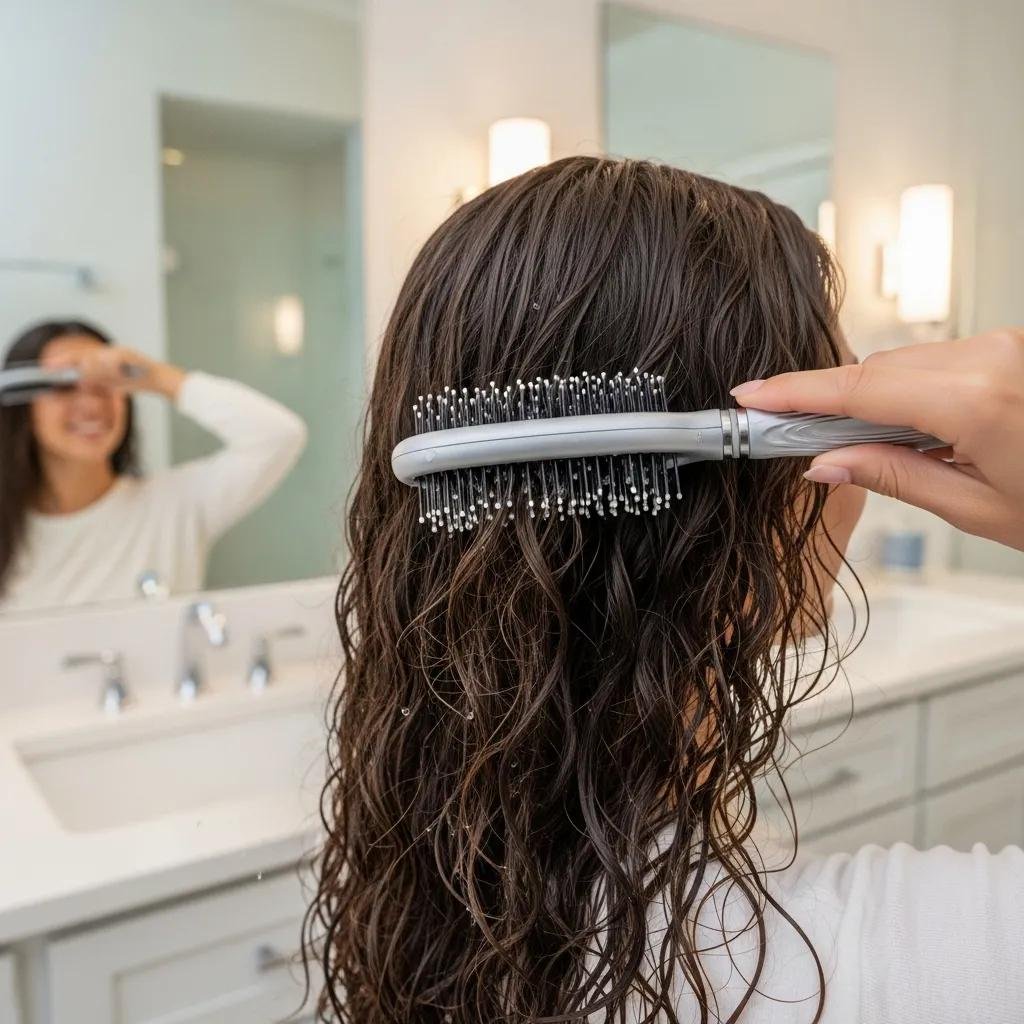
Flexible bristles — like IntelliFlex‑style filaments — absorb shock and spread pulling forces across many filaments, lowering peak tension on any one strand and cutting the risk of breakage. They bend around knots instead of catching, so detangling is less painful for kids and more effective on wet or heavily conditioned hair. On textured hair, flexible bristles separate clumps rather than stretching them, which helps keep curl definition intact while removing tangles. For these reasons, a brush with flexible, tapered bristles is an excellent go‑to for most hair types; the next section shows how to fine‑tune features for specific textures and densities.
How to Choose a Detangling Brush for Your Hair Type
Picking the best detangling brush means weighing four core factors — bristle material, bristle spacing, wet/dry suitability, and handle ergonomics — and matching them to your hair’s texture, density, and porosity. Identify whether your hair is fine, medium, thick, curly, coily, or fragile, then choose bristle flexibility and spacing that will move through knots without overstretching. Decide if you’ll detangle mainly wet (with conditioner) or dry, since some brushes perform better in the shower while others are built for quick touch‑ups. Finally, favor an ergonomic, non‑slip handle if you detangle for longer sessions or work in the shower to keep pressure consistent and controlled.
Use this quick mapping to match brush features to curly, fine, or dense hair. Next we’ll look at how stylists evaluate top brands and models in real salon situations.
Best Brushes for Curly and Coily Hair
For curls and coils, prioritize wide bristle spacing and long, flexible filaments that move through curl formations without breaking up clumps or causing frizz. Work on wet hair with a generous amount of conditioner or a slip‑producing leave‑in so bristles can separate tangles while maintaining pattern integrity. Stylists often recommend tools with long reach and soft resilience to get underneath dense curls — Denman‑style brushes or wide wet‑brush designs are common picks for balancing definition and slip. At home, section hair into manageable subsections and use short, controlled strokes to preserve curl shape while removing knots.
Best Brushes for Fine and Fragile Hair
Fine or fragile hair needs brushes with very soft, closely tapered flexible bristles that distribute tension across many filaments instead of concentrating force on a few. Avoid stiff nylon or metal‑pin brushes that can grab a handful of strands and cause snapping; opt instead for IntelliFlex‑style or highly tapered synthetic bristles that yield under pressure. Detangle fine hair in small sections with minimal force and a lightweight leave‑in detangler to lower friction and protect the cuticle. These steps help reduce cumulative breakage while preserving length, volume, and elasticity.
Key Features and Benefits of Top Detangling Brush Brands
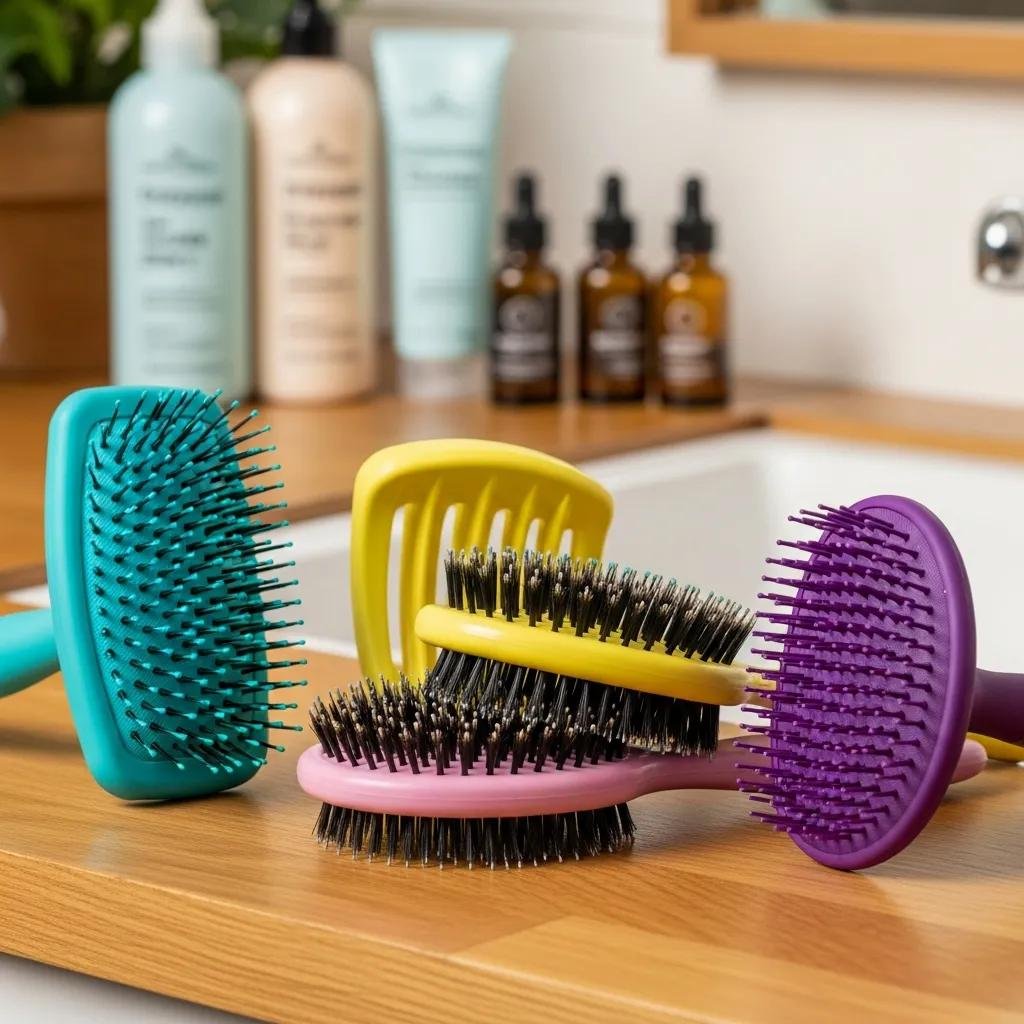
Brands distinguish themselves by bristle technology, bristle architecture, and intended use (wet vs. dry). Features like IntelliFlex filaments, two‑tier bristle systems, and ergonomic forms affect performance across textures. The compact comparison below helps you weigh trade‑offs and choose the right brush by hair type and budget.
Why Choose IntelliFlex Bristles (Wet Brush)
IntelliFlex bristles are engineered to bend around tangles and spread force across multiple filaments, which lowers peak tension and reduces breakage during detangling. Product testing and stylist experience show IntelliFlex‑style bristles work especially well on wet hair when used with conditioner, because the combination of slip and flexible filaments minimizes cuticle abrasion. Practically, that makes Wet Brush–type tools a reliable choice for routine post‑shower detangling and for clients who are recovering from chemical or heat services. Next we compare that technology approach to the Tangle Teezer design.
Tangle Teezer Review: Quick, Pain‑Reducing Design
Tangle Teezer’s two‑tier bristle layout pairs shorter and longer tapered bristles to gently break surface knots while reaching deeper tangles, creating a fast, low‑pain experience — ideal for dry styling and quick touch‑ups. Its compact, ergonomic shape is portable and easy to use on the go, and many parents choose it for children because it reduces yanking. For very dense or coily hair, though, a wider‑spaced long‑bristle tool may reach deeper tangles more efficiently than the Tangle Teezer’s footprint. Our stylists typically recommend the Tangle Teezer for dry finishing and maintenance, and wider IntelliFlex brushes for heavy wet detangling or salon treatments.
How to Use Your Detangling Brush Effectively
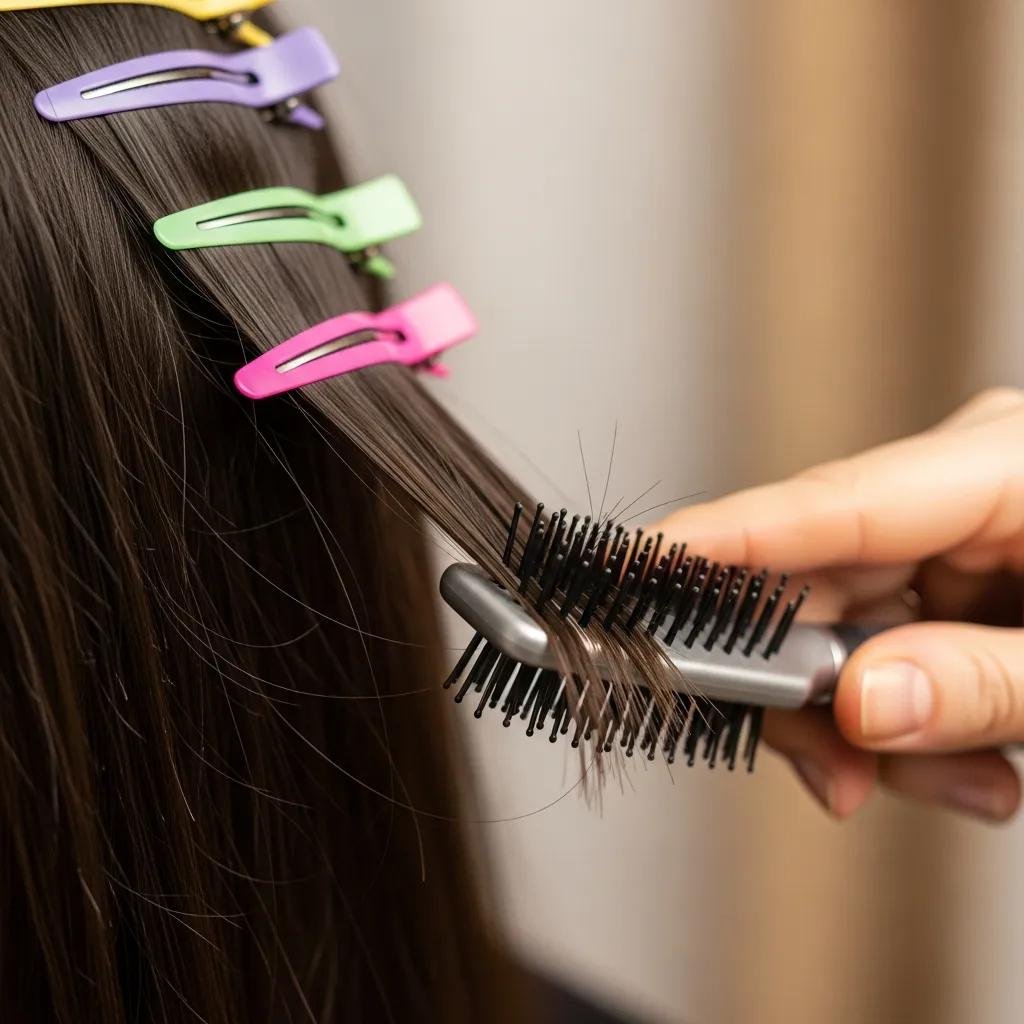
Effective detangling combines the right tool with proven technique: section the hair, add lubrication when needed, start at the ends and work up, and use short, controlled strokes instead of long yanks. This approach lowers accumulated tension on each strand, prevents knots from tightening, and spreads conditioner evenly for better slip. Pay attention to pressure and angle: hold sections gently, brush in the natural direction of growth, and keep the brush head parallel to avoid catching the cuticle. With those basics in place, the sections below cover when to detangle wet versus dry and other methods to minimize breakage.
Before getting into techniques, follow these simple steps during detangling:
- Section Hair: Work in small sections to limit tension per stroke.
- Use Lubrication: Apply a leave‑in or conditioner to increase slip and reduce friction.
- Start at the Ends: Begin at the tips and gradually work toward the roots to prevent knot consolidation.
When to Detangle Wet vs. Dry
Detangle wet hair when your hair is curly, coily, or thick and when you can apply conditioner — wet detangling with slip lowers friction and helps preserve curl clumps. For fine or fragile hair, detangle dry or slightly damp to avoid overstretching strands that can occur when they’re saturated. For example: a curly wash‑and‑go benefits from in‑shower detangling with conditioner and wide flexible bristles; delicate fine hair that tangles from static may respond better to small‑section dry detangling with a soft IntelliFlex‑style brush. If your hair is chemically treated or severely matted, seek professional guidance — salon techniques can be safer for complex cases.
Top Techniques to Minimize Breakage While Detangling
Reducing breakage depends on using the right tool, adding lubrication, working in sections, and keeping strokes controlled — each step lowers stress on fibers and the cuticle. Use small subsections, hold the section near the scalp to reduce root tension, and make short, gentle strokes focused on each knot rather than forceful sweeping motions. Avoid heat or other mechanical stress right after detangling; let hair air‑dry partially or use low heat with a protectant if needed. And a key rule: never yank through tangles — sudden force causes the most damage. These same principles guide our professional approach below.
How Our Professional Detangling Services at Kylie Studio Salon Help
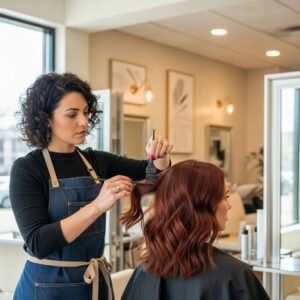
Professional detangling in the salon combines trained technique, the right tools, and targeted treatments to resolve persistent tangles while preserving length and texture. During an in‑salon detangling session, stylists use sectional control, salon‑grade conditioners and slip agents, and brushes selected for your texture to minimize mechanical damage and restore manageability. Complementary services — like deep conditioning, keratin smoothing, and glossing — increase slip, reduce future tangles, and make at‑home care easier, producing longer‑lasting results between visits. Local clients can book consultations at Kylie Studio Salon in Bethesda; stylist Ruth provides tailored recommendations and can suggest the specific at‑home brush and routine to extend salon results.
Salon Treatments That Make At‑Home Detangling Easier
Deep conditioning, keratin smoothing, and gloss services all improve detangling by adding slip, smoothing the cuticle, and reducing static — factors that lower knot formation between appointments. Deep conditioning restores moisture and elasticity; keratin treatments reduce surface friction and simplify wet detangling; glosses enhance smoothness and color, lowering micro‑abrasions that can lead to tangles. Matching treatment frequency to your hair’s condition and styling habits keeps hair manageable and makes at‑home routines simpler, which supports the long‑term benefits we see with regular care.
How Professional Detangling Improves Hair Health and Daily Manageability
Expert detangling reduces cumulative damage by resolving tangles with techniques that avoid tension hotspots and protect the cuticle over time, resulting in fewer split ends and easier styling. Stylists also assess hair condition, update product recommendations, and can spot issues like porosity imbalance or product buildup that make detangling harder. Many clients tell us salon sessions speed up daily maintenance, cut breakage during at‑home routines, and improve how color or smoothing services perform because products distribute more evenly. For persistent or complex tangling, book a consultation with Ruth at Kylie Studio Salon for a personalized plan that pairs salon treatments with an at‑home brush and regimen.
Common Questions About Detangling Brushes — Expert Answers
This FAQ section answers quick, practical questions about brush comparisons, kid‑friendly choices, and everyday technique. Each response is designed for fast clarity and includes a stylist tip where helpful — and remember, for hands‑on problems or severe matting we offer in‑salon detangling to protect hair integrity while restoring manageability.
Is a Wet Brush Better Than a Tangle Teezer for All Hair Types?
No — there’s no one‑size‑fits‑all tool. Wet Brush (IntelliFlex‑style) options usually perform better on wet hair and fine‑to‑medium textures because the flexible bristles reduce breakage, while Tangle Teezer shines at dry styling and quick touch‑ups thanks to its two‑tier bristle system. Wet Brush pros: gentle on conditioned, wet hair and effective for fragile strands. Tangle Teezer pros: portable, quick, and pain‑reducing for surface tangles and children. Choose based on whether you mostly detangle wet or dry and on your hair’s density.
How Can Parents Choose Gentle Brushes for Kids’ Hair?
Look for brushes with extra‑flexible, tapered bristles and a compact handle for better control, and always detangle with conditioner or a leave‑in to reduce discomfort. Keep sessions short and calm, use distraction and praise, work in small sections, and start at the ends to avoid pulling near the scalp. A two‑tier design works well for quick surface smoothing, while wide‑flexible bristle tools are best for deeper shower detangling. These steps make daily grooming faster and preserve healthy growth.
- Choose soft, flexible bristles: Prevents concentrated tension.
- Use conditioner or detangler: Adds immediate slip for painless brushing.
- Section and start at the ends: Stops small knots from becoming larger tangles.
- Benefits: The right brush reduces breakage, controls frizz, and improves product distribution.
- Technique: Section hair, add lubrication, and use short strokes from ends to roots.
- Maintenance: Pair occasional salon treatments (deep conditioning, trims) with daily gentle detangling.
To book an appointment, schedule a consultation, or get a personalized detangling plan, contact Kylie Studio Salon in Bethesda at 301-922-7864 or visit us at 4711 Montgomery Ln, Suite 2, Bethesda, MD 20814. Our stylists, including Ruth, will recommend salon treatments and the right at‑home tools to minimize breakage and keep hair healthy and manageable.
Frequently Asked Questions
What should I consider when detangling hair that has been chemically treated?
Chemically treated hair needs extra care. Use a wide‑toothed comb or a brush with flexible bristles made for fragile hair, and detangle when hair is damp with a leave‑in conditioner or detangling spray for slip. Work in small sections from the ends up. If tangles are severe, seek professional help to avoid further damage.
How often should I replace my detangling brush?
Replace your detangling brush every 6 to 12 months depending on use and wear. Replace sooner if bristles are bent or broken, the handle is worn, or the brush no longer glides smoothly. Regular cleaning extends a brush’s life, but if it starts causing more tangles or breakage, swap it out to protect your hair.
Can I use a detangling brush on wet hair every time?
Many detangling brushes are safe for wet use, but check your hair type first. Curly and coily hair often benefits from wet detangling with conditioner for extra slip. Fine or fragile hair usually fares better when slightly damp rather than fully soaked to avoid overstretching. Adjust your method to your hair’s condition to reduce risk.
What are the signs that I need professional detangling services?
Consider professional detangling if you regularly face severe tangling, breakage, or hair that feels very dry and brittle. Heavy product buildup or recent chemical services are also reasons to see a stylist. Professionals can safely handle severe matting and recommend treatments to restore health.
Are there specific techniques for detangling children’s hair?
Yes. Use a soft, flexible‑bristle brush with a small handle, detangle with a leave‑in or detangling spray, work in small sections starting at the ends, and keep sessions short. Add fun distractions like stories or songs to make the routine easier for children.
How can I maintain my detangling brush for longevity?
Clean your brush regularly by removing hair and washing it with mild soap and water, then let it air dry completely before using it again. Don’t use a brush on wet hair if it’s not designed for wet use, and store it in a cool, dry place. Proper care helps your brush last and protects your hair.
Conclusion
Choosing the right detangling brush is a simple, effective way to protect hair from breakage and improve manageability across textures. Knowing the features that matter — from bristle type to spacing and ergonomics — helps you pick a tool that supports your hair’s needs. For tailored recommendations and professional detangling, visit Kylie Studio Salon in Bethesda. Let our stylists help you upgrade your routine and keep your hair healthy and beautiful.