How to Build a Successful Hair Styling Career: Your Complete Guide
Becoming a successful hair stylist takes more than good hands — it’s a mix of craft, client care, and simple business systems that turn one-time visits into a steady career. This guide walks through the pillars you’ll rely on: education and licensing, core technical and people skills, personal branding and client growth, basic finance and operations, and ongoing learning plus mentorship. We answer common questions—cosmetology school vs. apprenticeship, which cutting and color techniques matter, and practical steps to build a reliable client list—then give step-by-step tactics and real-world examples you can use right away. Inside you’ll find checklists for choosing a school, consultation scripts, portfolio and social strategies, basic EAV comparisons for operations, and mentorship approaches to speed your path to senior stylist or salon ownership. Keywords like become hair stylist, stylist training, cosmetology school Maryland, and how to build hair stylist clientele are naturally woven into the advice to help with discoverability and planning. Read on to build the skills, systems, and reputation that support a resilient, growth-minded styling career.
What Education and Training Are Required to Become a Hair Stylist?
Most stylists combine formal training with hands-on practice to meet licensing rules and become client-ready. Cosmetology school offers a structured curriculum, supervised hours, and prep for state exams; apprenticeships deliver on-the-job experience, mentorship, and early client exposure. Both paths produce competent stylists but vary in pace, cost, and learning style. Many students mix classroom time with salon experience to speed skill development. Knowing these options helps you plan for licensure, build a portfolio, and attract the first clients who will shape your reputation locally.
Which steps actually lead to licensure and employability? Follow this short action list to get moving.
- Enroll in an accredited cosmetology or barber program that satisfies your state’s hour and curriculum requirements for licensing.
- Finish the required hands-on hours and coursework, logging practical experience in cutting, color, and chemical services.
- Study for and pass your state licensing exam, then pursue apprenticeships or junior roles to build client-facing experience.
These steps map training to paid work; the next section helps you evaluate schools and programs with practical criteria.
Which Cosmetology Schools and Programs Should You Choose?
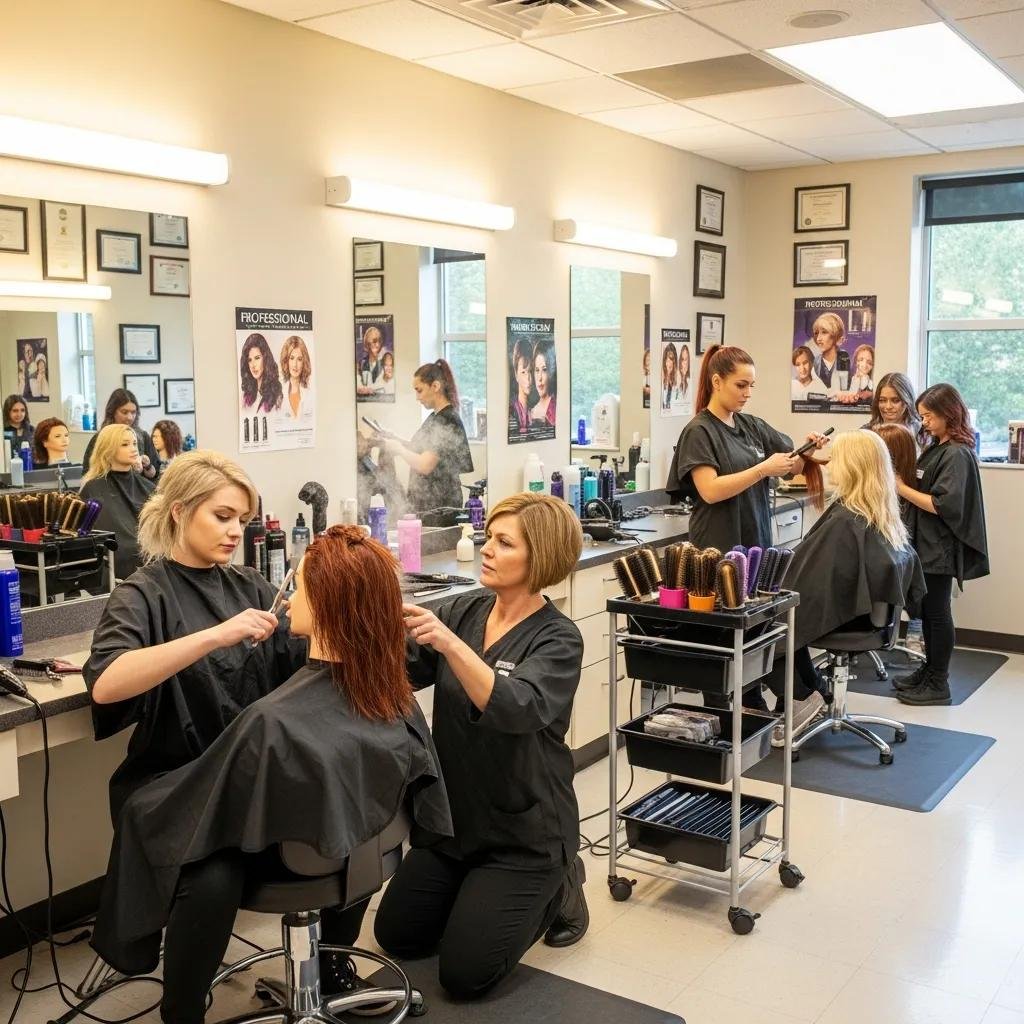
When choosing a cosmetology program, look at accreditation, required hands-on hours, instructor qualifications, and licensing pass rates — these tell you how efficiently a school prepares graduates. Prefer programs that mix theory with supervised client time and offer modules in cutting, color, chemical services, plus basic business skills like sanitation and consultations. Practical details — commute, schedule flexibility, and continuing-education options — matter because they affect completion and local networking, especially in markets like Maryland where reputation travels fast. Ask about externships or salon partnerships that place graduates into working environments to shorten the gap between training and paid styling.
Compare common program formats below to weigh trade-offs before you commit.
How Do Apprenticeships Complement Formal Education?
An apprenticeship gives real salon hours where you learn workflow, client management, and on-the-spot problem solving under a mentor while logging practical experience — and in some states, hours toward licensure. Apprenticeships speed up customer-facing skills like consultations, time management, and service sequencing because you work with live clients earlier and receive direct feedback. To find placements, network with local salons, attend industry meetups, and present a concise portfolio that shows enthusiasm and basic skills; salons value attitude, reliability, and a willingness to learn. Apprenticeships also teach client-acquisition tactics — booking, upsells, and retention — that classroom programs may gloss over.
Beyond skill, apprenticeships create referral networks and mentorship that naturally lead into the core competencies every stylist needs for a sustainable career.
What Essential Skills Must a Successful Hair Stylist Develop?
Successful stylists combine technical ability, strong consultations, and professional habits that protect client satisfaction and salon flow. Technical skill — clean cutting, color theory, and safe chemical work — delivers repeatable results that build trust. Great consultations and customer service turn new clients into regulars. Professional routines like time management, sanitation, product knowledge, and basic inventory awareness keep the business running and margins predictable. Developing these areas in a planned way ensures you consistently deliver quality, manage expectations, and grow referrals.
Here are the core skills to prioritize early in your career:
- Cutting Fundamentals: Nail sectioning, tension, and finish techniques to produce consistent shapes.
- Color Theory: Learn lift, tone, and corrective methods so color results are reliable.
- Client Consultation: Use structured questions and visuals to set clear expectations and outcomes.
With those foundations in place, the next sections dive into essential techniques and how strong consultations increase retention and revenue.
Which Technical Hair Styling and Coloring Techniques Are Crucial?
Master basic cutting methods — blunt, graduated, layered, and texture work — so you can shape hair across different growth patterns and client goals, reducing redo work and building confidence. Color skills cover formulation, lift control, highlights (including balayage), and corrective coloring; success depends on reading porosity, previous chemistry, and tone-balancing. Specialty offerings like keratin smoothing and perms diversify revenue and create package opportunities, but they require exact protocols and clear aftercare. Advanced color and certification courses are practical next steps to deepen technique and safety when working with chemicals.
Applying these techniques well raises client satisfaction and opens natural upsell paths — which brings us to consultations and service delivery.
How Do Client Consultation and Customer Service Skills Impact Success?

A clear consultation sets expectations, reveals client routines and constraints, and outlines realistic results — which lowers the chance of dissatisfaction. A reliable consultation covers: assess hair condition, discuss the desired result, show visual references, explain limitations and upkeep, and confirm the agreed plan. This structure builds trust and reduces surprises. Tough conversations — resetting unrealistic expectations or addressing past service issues — require empathy, clear alternatives, and written aftercare or follow-up notes. Track simple KPIs like rebooking rate, referrals, and post-service feedback to sharpen your consultation process and service offerings.
Strong consultations directly raise retention and referral numbers, and they feed into building your brand and client base.
How Can You Build a Strong Personal Brand and Client Base?
Your brand is a mix of a polished portfolio, steady online presence, and local relationships that convert attention into bookings. A portfolio shows before-and-after transformations, signals your range, and communicates your niche to potential clients. Social platforms like Instagram and TikTok extend reach with short demonstrations and client stories. Local networking — partnerships with nearby businesses, community events, and referral programs — roots your reputation in the neighborhood and brings repeat traffic. Consistency in imagery, transparent pricing, and dependable follow-up turn first-time bookings into loyal clients.
Start implementing these strategies with a focused portfolio checklist that aligns photos and messaging to the people you want to book with you.
What Strategies Help Create a Professional Portfolio and Online Presence?
Build a thoughtful portfolio with purposeful photos, clear captions, and client consent so images honestly show results and help search visibility with good alt-text. Capture before, during, and after shots in the same lighting and angles to highlight changes; neutral backgrounds keep attention on the hair. Write captions that mention the service (cut, balayage, keratin) and hair details (texture, level) to aid discovery and client understanding. Link portfolio items to clear booking steps and availability to remove friction between discovery and appointment.
Use this checklist when shooting and captioning your work:
- Before/During/After Shots: Keep lighting and angles consistent to show clear transformations.
- Descriptive Captions: Note service type, technique used, and recommended upkeep in captions.
- Client Consent & Notes: Get permission and record hair history to explain the result.
A strong portfolio powers your social content strategy — platform-specific tactics next will help you turn viewers into booked clients.
How Do Social Media and Local Networking Boost Client Acquisition?
Social media and local networking create a discovery-to-booking funnel: social content builds trust and curiosity, while neighborhood connections bring clients through the door. Tactics include short, educational videos and transformation reels that show technique, saved highlights that explain services, and a consistent posting rhythm to stay visible; these formats often produce DMs and booking inquiries. Local networking — cross-promos with nearby shops, event participation, and local SEO — brings in geographically relevant clients who are more likely to return. Track metrics like conversion from social leads, rebooking from referrals, and engagement-to-booking ratios to focus your efforts.
Prioritize these actions to create measurable results:
- Post transformation reels twice a week to show new techniques and client reactions.
- Keep saved highlights for pricing, services, and FAQs to reduce booking questions.
- Attend community events and partner with local businesses to build referrals and visibility.
These tactics build a dependable client funnel. Local examples show how technique + service consistency + targeted outreach work in practice: Kylie Studio Salon in Bethesda, MD, led by owner Ruth, combines personalized service and up-to-date techniques — haircuts, highlights, color, perms, blowouts, and keratin treatments for women, men, and children — to keep clients coming back. Use real salons like this as a model, then adapt strategies to your own niche and clientele.
What Business and Financial Skills Support a Hair Stylist’s Career Growth?
Operational know-how and basic finance turn styling skill into a sustainable business or a highly valued salon role. Smart pricing balances time, overhead, and market position. Simple bookkeeping tracks revenue, costs, and profitability so you can make informed decisions about services and productivity. Efficient operations — scheduling systems, integrated POS, and inventory control — cut downtime and product waste, while marketing and retention tactics increase client lifetime value. Linking these tasks to measurable outcomes helps you scale income, manage client flow, and evaluate ownership opportunities.
Begin with this checklist of core business tasks and expected outcomes to decide where to focus your time and systems.
The table highlights operational improvements that directly affect profitability; next we cover practical finance and operations tips for day-to-day running.
How Should Hair Stylists Manage Finances and Salon Operations?
Keep bookkeeping simple: log daily sales, categorize expenses, and reconcile weekly to maintain cash-flow clarity and inform pricing. Price services to reflect skill, product costs, and local demand — consider tiered services, add-on pricing, and time-blocked appointments to optimize your schedule. Reliable scheduling and inventory tools cut double-bookings and stockouts that hurt margins. Monitor KPIs like average ticket, retention rate, and weekly utilization to make data-driven choices about marketing and staffing.
Below is a compact EAV-style mapping of common operational tasks to best practices and expected results to guide your setup.
These practices build operational consistency and set the stage for marketing that increases client value and retention.
What Marketing Techniques Drive Salon Success and Client Retention?
Retention-focused marketing — follow-ups, loyalty programs, and packaged services — boosts lifetime client value, while targeted local ads and social proof bring new clients at reasonable costs. Use simple retention moves: send post-service messages, bundle services (cut + treatment), and offer referral rewards that benefit both the referring and new client. Local promotions — community sponsorships or partnerships — raise geographic visibility, and before/after galleries plus reviews reduce booking hesitation. Measure success with KPIs like rebooking percentage, referral rate, and cost per new client so you can refine campaigns.
High-impact tactics to prioritize:
- Send automated follow-ups within 48 hours to encourage rebooking and gather feedback.
- Offer loyalty or package deals to raise average ticket and repeat visits.
- Highlight social proof with before/after galleries and client reviews to ease booking decisions.
Combine these marketing moves with consistent operations to grow revenue predictably and plan next steps like specialization or salon ownership.
How Can Continuous Learning and Mentorship Enhance Your Hair Styling Career?
Ongoing education and mentorship keep you competitive by introducing new techniques, products, and business practices that match client demand. Advanced color courses, texture workshops, and treatment certifications extend what you can offer and support higher pricing because clients pay for proven expertise. Mentorship accelerates learning with real-time feedback, business insights, and local introductions that open doors to senior roles or ownership. Balancing formal courses with hands-on mentorship gives you the technical depth and salon leadership skills to advance.
Why Is Ongoing Education Important for Staying Current with Trends?
Continued training ensures you can provide in-demand services — balayage, corrective color, keratin treatments, and cleaner product options — and follow the safety practices clients expect. Regular training (quarterly workshops or monthly masterclasses) helps you adopt new methods quickly and document skills in your portfolio to attract higher-value clients. Trusted continuing-education providers and manufacturer certifications offer structured paths and often supply promotional materials to help you market new services. Displaying certificates and recent training in your portfolio boosts credibility and perceived value.
Ongoing learning naturally ties into mentorship and career growth, which we cover next.
How Does Mentorship Influence Career Progression and Salon Ownership?
Mentorship speeds career progress by pairing less-experienced stylists with seasoned pros who offer targeted feedback, client-handling techniques, and business know-how that classroom learning can miss. Effective mentorship includes in-salon coaching, scheduled reviews, and gradually greater responsibility for complex services, preparing you for leadership or ownership by growing both technical and managerial skills. Find mentors by networking in salons, joining industry groups, and volunteering to assist on advanced services to show commitment; set clear goals and request measurable feedback to get the most from the relationship. Mentor-guided learning leads to faster skill growth, stronger retention, and clearer paths to independent practice or partnership.
Pair mentorship with consistent business habits and you’ll build a long-term, resilient career in hair styling — and if you want to see these strategies in action, a local consultation can help.
For tailored advice or to observe these approaches in a working salon, consider booking a consultation or appointment at Kylie Studio Salon in Bethesda, MD. Owner Ruth and the team demonstrate how technique, branding, and simple business systems combine to grow a successful stylist career. To schedule, call Kylie Studio Salon at 301-922-7864 or visit the salon in Bethesda to ask about services, hands-on training, and mentorship options.
Frequently Asked Questions
What are the main differences between cosmetology school and apprenticeships?
Cosmetology school delivers a structured curriculum with classroom theory and supervised hands-on practice, designed to prepare you for state licensing exams. Apprenticeships focus on on-the-job learning with experienced stylists and give early client contact. School often takes longer and can cost more; apprenticeships offer faster real-world experience. Many stylists combine both routes to get the best of each and to meet local licensing rules while building skills.
How can I network effectively to grow my client base?
Networking works best as a mix of local and professional actions: connect with nearby businesses, attend community events, join stylist groups, and participate in industry meetups. Offer introductory promotions or referral incentives to encourage word-of-mouth. Keep showing your work on social media and engage with peers and potential clients — relationships and consistent visibility drive referrals over time.
What role does social media play in a stylist’s career?
Social media is a key discovery channel for stylists. Platforms like Instagram and TikTok let you share transformations, tutorials, and client stories that attract bookings. Regular, helpful content keeps you visible and gives potential clients a sense of your style and process. Use social platforms to answer questions, direct people to booking, and showcase social proof that helps close new clients.
How can I improve client retention?
Retention grows from repeatable, positive experiences. Start with clear consultations to set expectations, follow up after appointments to gather feedback, and offer loyalty or package deals to incentivize returns. Personalized reminders and small touches — recommended products, aftercare notes, or check-in messages — strengthen the client relationship and increase the chance they’ll rebook.
What marketing strategies are most effective for hair stylists?
High-return marketing includes strategic social content, a sharp portfolio, and local outreach. Use social media to show work and process, maintain a curated portfolio to communicate your niche, and pursue local partnerships or event presence to reach nearby clients. Combine these with referral incentives and review collection to lower the cost of client acquisition.
How important is ongoing education for stylists?
Ongoing education is essential. Regular courses and certifications keep you current on techniques, safety, and product knowledge, which helps you offer sought-after services and justify higher prices. Continuing education also builds confidence, credibility, and the ability to adapt as trends shift.
Conclusion
Choosing a career as a hair stylist gives you creative freedom, meaningful client relationships, and the potential for steady income. This guide lays out the practical steps — training, core skills, branding, and basic business practices — you need to grow. Take small, consistent actions: pick the right training path, sharpen consultations and technical skills, build a clear portfolio, and put simple systems in place for bookings and finances. Keep learning and seek mentorship, and you’ll stand out in a competitive market. Start today by exploring local programs and connecting with experienced professionals near you.